


 SPARK Website
Why Businesses Are Choosing Low-Code and No-Code Platforms in 2026
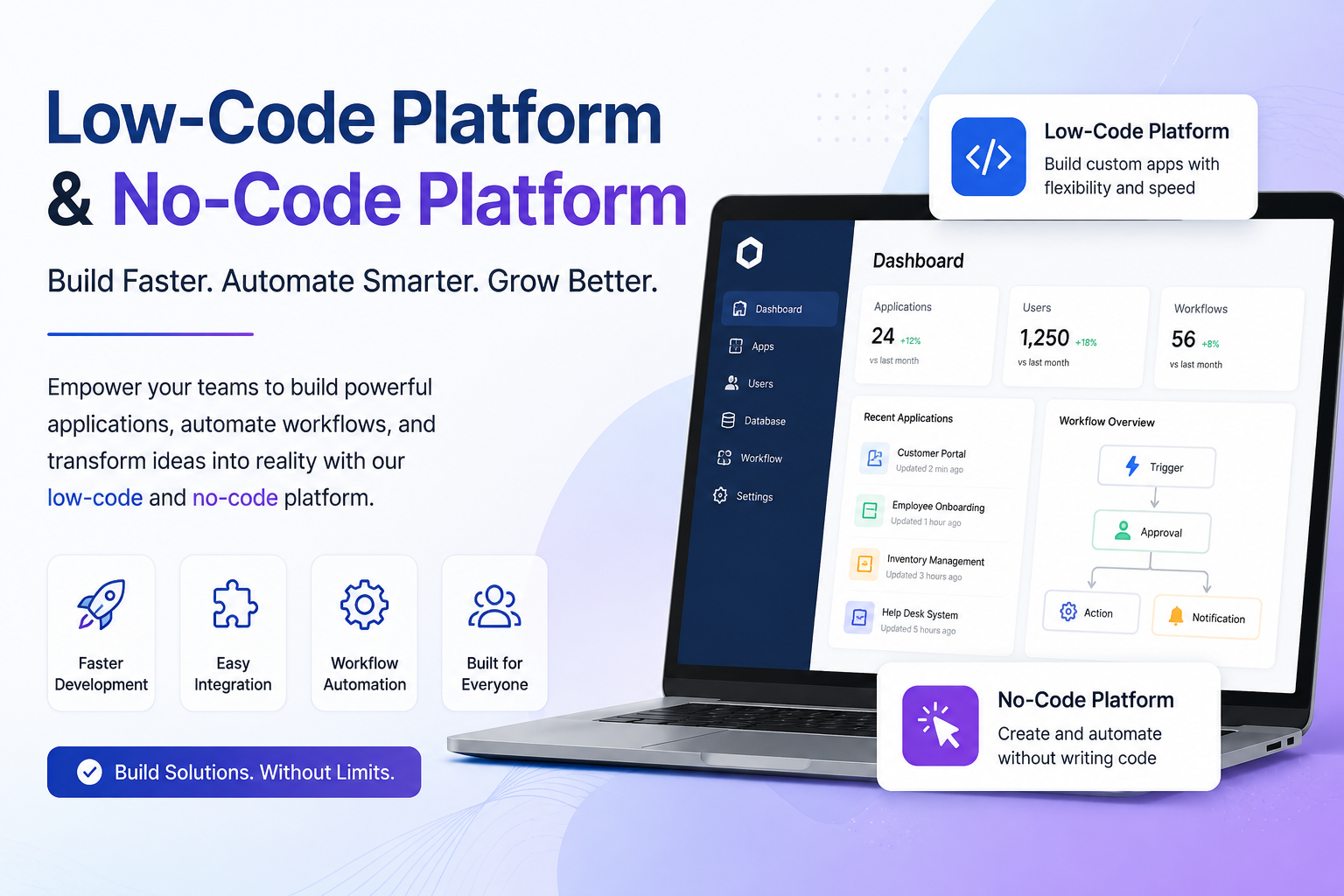
Businesses today are under constant pressure to work faster, reduce operational costs, and improve customer experiences. Traditional software development often requires large budgets, skilled developers, and long project timelines. Because of these challenges, many organizations are now turning to a low-code platform and a no-code platform to build digital solutions more efficiently.
These modern development platforms are helping businesses create applications, automate workflows, and improve productivity without relying completely on traditional programming methods.
Growing Demand for Faster Application Development
Modern businesses need software solutions quickly. Whether it is a customer portal, inventory management tool, or internal workflow system, companies want applications that can be built and launched in less time.
A low-code platform helps businesses speed up software development using visual tools and drag-and-drop features. Instead of writing thousands of lines of code, developers can create applications with reusable components and automated processes.
At the same time, a no-code platform allows non-technical users to build simple applications without any coding knowledge. This makes technology more accessible to departments like marketing, sales, HR, and operations.
Reducing Dependency on IT Teams
Many companies face delays because their IT departments are overloaded with requests. Traditional development projects often take months to complete due to limited technical resources.
A no-code platform helps business users create their own solutions independently. Teams can build forms, automate approvals, and manage workflows without waiting for developers.
A low-code platform also supports developers by reducing repetitive coding tasks. This allows IT teams to focus on more complex and strategic projects.
Improving Business Agility
Business needs change quickly. Companies must adapt to market trends, customer demands, and operational challenges faster than before.
Low-code and no-code platforms make it easier to update applications and modify workflows. Businesses can quickly adjust features, improve processes, and launch new services without rebuilding systems from scratch.
This flexibility is one of the main reasons organizations are adopting a low-code platform in various industries.
Supporting Digital Transformation
Digital transformation has become essential for businesses of all sizes. Organizations are investing in automation, cloud technology, and digital applications to improve efficiency.
A low-code platform plays an important role in digital transformation by helping companies modernize outdated systems and automate manual work. Businesses can connect different tools, manage data more effectively, and improve communication between departments.
A no-code platform also helps smaller businesses participate in digital transformation without requiring large technical teams.
Cost Savings for Businesses
Software development can be expensive. Hiring skilled developers, maintaining infrastructure, and managing long-term projects often increase operational costs.
A low-code platform reduces development costs by simplifying the application-building process. Businesses can complete projects faster with smaller teams.
A no-code platform reduces costs even further for basic applications because employees can create solutions on their own without professional development support.
This affordability makes these platforms attractive for startups, small businesses, and growing enterprises.
Common Uses of Low-Code and No-Code Platforms
Businesses use these platforms for many purposes, including:
-
Customer relationship management
-
Employee onboarding systems
-
Project management tools
-
Inventory tracking
-
Workflow automation
-
Data collection forms
-
Reporting dashboards
-
Mobile applications
Both low-code and no-code platforms provide flexible solutions for different business needs.
Challenges Businesses Should Consider
Although these platforms offer many benefits, businesses should also understand their limitations.
Limited Advanced Customization
A no-code platform may not support highly advanced or unique business requirements.
Integration Complexity
Some businesses may face challenges when connecting low-code applications with older software systems.
Security and Compliance
Organizations handling sensitive data must ensure the platform follows proper security and compliance standards.
Scalability Concerns
Small and medium applications work very well on these platforms, but very large enterprise systems may still require traditional development methods.
Future of Low-Code and No-Code Platforms
The future of software development is becoming more accessible and automated. Experts expect the demand for low-code platform and no-code platform solutions to continue growing in the coming years.
Artificial intelligence and machine learning are also improving these platforms by providing smarter automation and predictive capabilities.
As businesses continue focusing on speed, efficiency, and digital innovation, low-code and no-code development will become an important part of modern business operations.
Conclusion
A low-code platform and a no-code platform are helping businesses build applications faster, reduce costs, and improve operational efficiency. These platforms allow organizations to respond quickly to changing market needs while making software development easier for both technical and non-technical users.
As technology continues to evolve, businesses are expected to rely even more on low-code and no-code solutions to support growth and digital transformation.

 English