


 SPARK Website
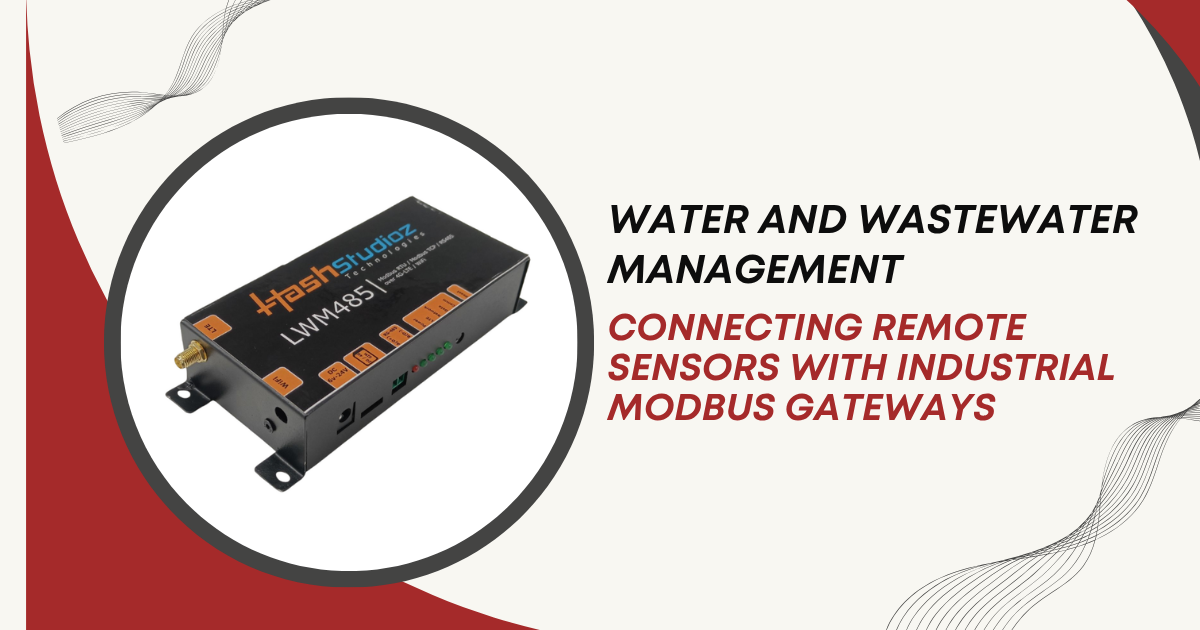
Water and Wastewater Management: Connecting Remote Sensors with Industrial Modbus Gateways
The expansion of global populations strains existing water infrastructure. Public utilities and industrial plants process billions of gallons of water daily. Recent market reports indicate the global water and wastewater management market size will reach $617.8 billion by 2029. This growth requires precise control and monitoring of remote treatment facilities.
Managing distributed water networks involves significant operational challenges. Treatment ponds, pumping stations, and flow meters often sit miles apart in harsh environments. Operators require real-time data to prevent contamination, leakage, and equipment failure. A single major pipeline leak can waste over 20% of a city’s treated water supply.
Modern automation solves this problem through remote digital sensing. However, connecting remote sensors to central control systems requires specialized hardware. An industrial Modbus Gateway serves as the critical bridge in this architecture. This technical article explains how utilities use these communication tools to maintain safe water distribution networks.
The Operational Environment of Water Infrastructure
Water treatment and distribution networks use extensive physical footprints. Facilities include storage reservoirs, chemical dosing units, and filtration beds. Each location relies on specific sensors to track physical and chemical properties.
1. Common Sensors in Water Management
Engineers install diverse sensor types across the utility network. These devices gather the fundamental metrics required for automated decision-making:
-
Flow Meters: These instruments measure the velocity and volume of water passing through a pipeline.
-
pH Sensors: These devices track hydrogen-ion activity to ensure correct chemical treatment levels.
-
Turbidity Meters: These sensors measure water clarity by analyzing particle suspension in the fluid.
-
Level Transmitters: These instruments monitor fluid depth in deep wells and storage tanks.
2. The Physical Challenge of Distance
In a standard factory, sensors sit within a few meters of the central controller. Water networks operate on a different physical scale. A flow meter might sit five miles away from the main treatment building. Standard computer cables cannot transmit data across these distances without severe signal degradation.
The Role of Modbus in Industrial Automation
Industrial networks use specific communication languages called protocols. The Modbus protocol remains the most enduring standard in the automation industry. Developed in 1979, this protocol provides a simple structure for transmitting sensor data.
1. Modbus RTU vs Modbus TCP
The Modbus protocol exists in two primary formats based on the physical transport layer:
|
Metric |
Modbus RTU |
Modbus TCP |
|
Physical Layer |
RS485 Serial Cable |
Ethernet Cable |
|
Data Format |
Binary Coding |
Standard Ethernet Packet |
|
Typical Distance |
Up to 1200 Meters |
Up to 100 Meters |
|
Network Type |
Point-to-Multipoint Serial |
Local Area Network |
Modbus RTU uses serial connections to link multiple sensors sequentially on a single wire loop. Modbus TCP uses standard internet infrastructure to move data across high-speed networks.
2. The Need for Protocol Conversion
Legacy sensors use the serial Modbus RTU format because serial hardware costs less and survives harsh conditions. Modern control rooms run on Ethernet-based Modbus TCP networks for high-speed data analysis. These two systems cannot talk directly to each other. They speak different physical and digital languages.
Implementing the RS485 Modbus Gateway
An RS485 Modbus Gateway acts as a real-time translator between serial field networks and Ethernet control systems. This device contains both serial ports and Ethernet interfaces to bridge the technical gap.
1. How the Conversion Process Works
The conversion happens continuously inside the gateway processor through specific sequential steps:
-
The gateway sends a serial command out to the field sensors using the RS485 wire loop.
-
The targeted remote sensor responds with its current data payload over the serial link.
-
The gateway receives the serial binary data packet.
-
The internal processor wraps this serial data inside a standard TCP/IP network packet.
-
The gateway transmits the new Ethernet packet to the central control room.
This entire sequence takes less than 50 milliseconds to complete. Operators receive updated sensor readings without noticeable delay.
2. Managing Multiple Serial Nodes
An RS485 Modbus Gateway does more than translate data for a single sensor. A single RS485 serial loop can support up to 32 individual sensor nodes over long distances. The gateway systematically polls each sensor on the loop one by one. It aggregates all the collected field information into a single organized digital map. The central Ethernet controller can then read this entire map in one single network query.
Enhancing Reliability in Harsh Wastewater Environments
Wastewater facilities present harsh conditions for electronic hardware. High humidity, corrosive gases, and electrical surges threaten network stability.
1. Resisting Corrosive Atmospheres
Wastewater processing generates gases like hydrogen sulfide. This gas corrodes copper and damages standard computer circuit boards. Industrial routing and gateway hardware feature specialized protective coatings. Circuit boards receive a layer of conformal coating to seal out moisture and airborne acids. The physical housings use rugged metals or high-impact plastics instead of thin commercial metals.
2. Electrical Isolation and Surge Protection
Remote water pumps use massive electric motors. When these motors turn on or off, they create large electrical voltage spikes on nearby wires. If these spikes enter a data cable, they destroy standard networking equipment.
An industrial-grade Modbus Gateway includes built-in galvanic isolation on its serial communication ports. This feature physically separates the communication circuits from the power circuits using optical components. The electrical spike cannot cross the optical gap, which saves the equipment from destruction.
Optimizing Remote Data Acquisition Architectures
Designing a remote sensor network requires careful planning of data paths. Engineers must select the correct physical medium to link the gateway to the central control room.
1. Utilizing Cellular Networks for Extreme Distances
When a water tank sits miles away in a mountainous area, running a physical Ethernet cable is impossible. Engineers pair the Modbus Gateway with an industrial cellular router.
The gateway collects the serial data from the local tank sensors. It passes the converted Ethernet data to the cellular router. The router transmits the information across public cellular networks directly to the municipal utility headquarters. This architecture eliminates the need for expensive trenching and cabling work.
2. Incorporating Fiber Optic Backbones
Large treatment plants use heavy machinery that generates extreme electromagnetic interference. In these zones, copper Ethernet cables fail due to electrical noise. Engineers connect the gateway to a fiber optic network switch. Fiber optic lines use light pulses instead of electrical signals to move data. This design allows data to travel past high-voltage pumps without suffering from signal corruption.
Technical Features for Smart Water Applications
Modern water systems do more than display numbers on a screen. They use automated software to control chemical mixing and water distribution.
1. Low Latency for Chemical Dosing
Water treatment requires adding precise amounts of chlorine or ozone based on real-time pH readings. If data delays by several minutes, the system might add too much or too little chemical. This mistake threatens public safety. Industrial gateways maintain low data latency. The real-time translation ensures the automated dosing valves adjust instantly when sensor readings change.
2. Secure Remote Configuration
Utility engineers must update system settings without driving to distant remote sites. Industrial gateways feature secure web management interfaces. These interfaces use cryptographic security protocols like HTTPS and SSH. Engineers log into the gateway from the central office to adjust polling speeds or change network addresses safely.
Real-World Examples of Connected Water Infrastructure
Examining specific field installations demonstrates the practical utility of these communication systems.
1. Municipal Wellfield Management
A city in the midwestern United States manages 15 distinct groundwater wells spread across 10 square miles. Each well contains a submersible pump, a flow meter, and a level transmitter. The sensors use serial RS485 connections inside the well house.
The city installed an RS485 Modbus Gateway at each well site. The gateway converts the serial well metrics into Ethernet packets. A wireless radio transmitter sends this data back to the central water tower. Operators monitor total water extraction rates and well draw-down levels from a single computer panel. This setup reduced manual well inspections by 85%.
2. Industrial Wastewater Compliance
A large chemical manufacturing facility must neutralize its liquid waste before discharging it into the city sewer. Environmental laws require continuous logging of discharge pH and temperature. The factory uses an industrial Modbus Gateway to connect the discharge sensors to the main facility computer.
The system records data points every 10 seconds. If the pH level nears the legal limit, the control system instantly shuts the discharge valve. The gateway ensures the company maintains an accurate data log for regulatory compliance. This automated monitoring prevents expensive environmental fines.
Selecting the Right Industrial Gateway Hardware
Engineering teams must look at specific technical specifications when purchasing networking hardware for water projects.
1. Port Density and Interface Types
The hardware must match the physical configuration of the field site. If a site has three separate serial wire loops, the gateway must feature three independent RS485 ports. Buying a device with insufficient ports forces engineers to create complex wiring loops that reduce system reliability.
2. Wide Power Input Ranges
Remote stations often rely on solar panels or battery backup systems. These DC power systems experience voltage drops during cloudy days or heavy loads. Industrial gateways accept a wide range of input voltages, often from 9 Volts to 48 Volts DC. The device continues running smoothly even when the local power supply fluctuates.
Conclusion
Water and wastewater management requires constant vigilance over vast physical distances. Reliable data transmission is the foundation of modern automated water safety. Legacy serial sensors provide accurate field measurements but require a bridge to join modern high-speed networks.
The industrial Modbus Gateway provides this vital connection link. By translating serial signals into standard Ethernet data, these devices allow operators to track water metrics from anywhere in the network. Investing in ruggedized communication infrastructure helps utilities prevent waste, ensure chemical safety, and maintain continuous operational control.

 English