


 SPARK Website
Why Is the Air Suspension Seat Market Expanding Rapidly?
Air Suspension Seat Market Market Research Report
Market Size
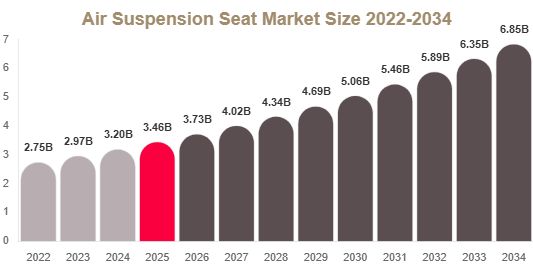
The Air Suspension Seat Market Market size was valued at USD 2.14 Billion in 2025.
The market is projected to reach USD 3.87 Billion by 2034, growing at a CAGR of 6.8% during 2025–2034.
Get Your Sample Report Here:
https://www.redlinepulse.com/report/air-suspension-seat-market/request-sample
Introduction
The global air suspension seat market is gaining considerable momentum as transportation and industrial sectors increasingly focus on operator comfort, workplace safety, and vehicle performance. Air suspension seats are specifically designed to minimize vibration, absorb shocks, and improve ergonomic support for drivers and machine operators working in demanding environments. These seats are widely used in heavy-duty trucks, buses, agricultural machinery, mining equipment, marine vessels, and construction vehicles where prolonged exposure to road and terrain vibrations can affect driver health and productivity. As fleet modernization accelerates globally, the demand for advanced suspension seating technologies continues to expand steadily.
Modern transportation systems are becoming more advanced and comfort-oriented, encouraging manufacturers to integrate intelligent seating solutions into commercial and industrial vehicles. Air suspension seats improve ride quality by using pneumatic systems that automatically adjust according to the driver’s weight and operating conditions. This capability helps reduce fatigue, lower back pain, and physical stress during long working hours. Transportation companies are increasingly recognizing the direct connection between driver comfort and operational efficiency, leading to higher investments in ergonomic seating systems across multiple industries.
Rapid industrialization and infrastructure development are also contributing significantly to market growth. Expanding logistics networks, construction activities, mining operations, and mechanized farming practices are increasing the need for heavy-duty equipment equipped with advanced operator seating systems. Governments and private companies are emphasizing workplace safety and employee well-being, creating a favorable environment for air suspension seat adoption in both developed and emerging economies.
Technological innovation continues to reshape the competitive landscape of the market. Manufacturers are introducing active suspension systems, electronic adjustment features, heating and cooling functions, and lightweight seat structures to improve comfort and efficiency. The integration of smart technologies and automated controls is expected to further enhance market demand during the forecast period, especially as electric and autonomous vehicle adoption increases globally.
Market Dynamics
Market Drivers
One of the major factors driving the air suspension seat market is the increasing demand for enhanced driver comfort in commercial transportation. Long-distance truck drivers and heavy machinery operators are exposed to constant vibrations and shocks that can negatively affect physical health and concentration levels. Air suspension seats significantly reduce these impacts by providing better cushioning and vibration isolation. As transportation companies aim to improve driver productivity and reduce workplace injuries, the adoption of advanced seating systems is increasing across global fleet operations.
The growing construction, agriculture, and mining industries are also supporting strong market expansion. Operators working in rough terrains require highly durable and ergonomic seating systems capable of minimizing physical strain during long operating hours. Air suspension seats improve comfort and operational stability, making them increasingly important in construction machinery, tractors, loaders, and mining equipment. Rising investments in infrastructure projects and industrial automation are expected to sustain demand for these seating solutions over the coming years.
Another important growth driver is the increasing integration of premium comfort technologies in commercial and industrial vehicles. Vehicle manufacturers are focusing on advanced cabin interiors that prioritize ergonomics and user experience. Features such as adjustable lumbar support, automatic height adjustment, seat heating, and intelligent damping systems are becoming more common in modern air suspension seats. These innovations are helping manufacturers differentiate their products in highly competitive automotive and industrial equipment markets.
Market Challenges
Despite strong growth potential, the air suspension seat market faces several challenges related to product cost and maintenance complexity. Advanced air suspension seating systems equipped with electronic controls and active damping technologies are more expensive compared to traditional mechanical suspension seats. Small fleet operators and price-sensitive industries may hesitate to invest in premium seating solutions due to higher upfront costs.
Maintenance requirements also create operational challenges for end users. Air suspension systems contain pneumatic components, air compressors, valves, and electronic modules that require regular servicing and technical expertise. Improper maintenance can lead to system failures, increasing repair costs and vehicle downtime. This issue can limit adoption in regions with limited technical infrastructure and service availability.
The market also faces competition from conventional mechanical seating systems that remain popular in budget-oriented vehicle categories. While air suspension seats provide superior comfort and ergonomic benefits, cost-conscious buyers may continue choosing traditional alternatives. Manufacturers must therefore focus on balancing affordability with advanced functionality to expand adoption across wider customer segments.
Market Opportunities
The increasing adoption of electric commercial vehicles presents a major opportunity for the air suspension seat market. Electric trucks and buses prioritize lightweight construction and enhanced cabin comfort, encouraging the use of advanced seating technologies. As electric mobility expands globally, manufacturers are expected to develop energy-efficient and intelligent suspension seats designed specifically for next-generation vehicles.
Emerging economies across Asia Pacific, Latin America, and the Middle East offer significant growth opportunities due to rapid industrialization and transportation modernization. Expanding logistics sectors, rising infrastructure investments, and growing agricultural mechanization are increasing demand for heavy-duty vehicles equipped with ergonomic seating systems. Companies targeting these high-growth markets are likely to benefit from rising industrial activity and increasing awareness regarding workplace safety.
The aftermarket segment also represents a promising growth avenue. Fleet operators are increasingly upgrading existing vehicles with advanced air suspension seats to improve driver comfort and comply with occupational health standards. Demand for retrofit seating systems is expected to rise steadily as transportation companies focus on employee retention, productivity improvement, and operational efficiency.
Market Trends
One of the key trends shaping the air suspension seat market is the transition toward active and semi-active suspension technologies. These advanced systems automatically adjust seat performance based on road conditions, driver weight, and vehicle movement. Active suspension seats provide superior shock absorption and vibration control, improving comfort and reducing fatigue for drivers operating under challenging conditions.
Manufacturers are also integrating smart electronic features into modern seating systems. Adjustable memory settings, automatic pressure control, seat ventilation, and advanced lumbar support technologies are becoming increasingly common in premium air suspension seats. These features enhance user experience while supporting personalized comfort preferences for drivers and machine operators.
The market is witnessing a growing focus on lightweight and sustainable seat materials. Vehicle manufacturers are under pressure to improve fuel efficiency and reduce emissions, encouraging the use of lightweight seating components. Advanced composites, recyclable materials, and high-strength polymers are increasingly being incorporated into seat structures to reduce overall vehicle weight without compromising durability or comfort.
Another notable trend involves increasing awareness regarding occupational health and ergonomic safety. Transportation companies are prioritizing seating technologies that reduce spinal stress, fatigue, and long-term physical injuries among operators. This growing focus on employee well-being is encouraging greater investment in advanced ergonomic seating systems across commercial transportation and industrial machinery sectors.
Market Segmentation
The air suspension seat market can be segmented by type into active suspension seats, passive suspension seats, and semi-active suspension seats. Active suspension seats are gaining significant popularity due to their superior vibration reduction capabilities and automatic adjustment systems. These seats are commonly used in premium commercial vehicles and industrial machinery where operator comfort is a top priority. Semi-active systems are also experiencing strong demand because they provide a balance between performance and affordability.
Based on application, the market includes commercial vehicles, construction equipment, agricultural machinery, marine vessels, and other industrial vehicles. Commercial vehicles represent one of the largest application segments due to increasing demand for comfortable and ergonomic truck and bus interiors. Fleet operators are investing heavily in advanced seating systems to improve driver performance and reduce fatigue-related risks.
The construction and agriculture segment is expected to experience rapid growth during the forecast period. Operators in these industries often work in harsh and uneven terrains that generate intense vibrations and shocks. Air suspension seats improve operational comfort and allow operators to work more efficiently for extended periods. Rising mechanization in agriculture and increasing infrastructure development activities are supporting segment growth globally.
Marine applications are also contributing steadily to market demand. Boats and offshore vessels operate in highly dynamic environments where vibration control and passenger stability are essential. Air suspension seats help reduce physical strain for marine operators and improve overall ride quality, making them increasingly popular in both commercial and recreational marine sectors.
Regional Analysis
North America
North America remains a major market for air suspension seats due to the strong presence of commercial transportation industries and advanced vehicle manufacturing capabilities. The region has a high adoption rate of premium cabin technologies and ergonomic seating systems, particularly in heavy-duty trucks and industrial machinery. Transportation companies are increasingly investing in advanced seating solutions to improve driver retention and workplace safety.
The United States dominates the regional market due to its large logistics network, extensive construction activities, and growing demand for technologically advanced commercial vehicles. Increasing adoption of electric trucks and smart fleet management systems is expected to further support market expansion across North America.
Europe
Europe represents a technologically advanced market driven by strict workplace safety regulations and strong emphasis on driver ergonomics. Countries such as Germany, France, and the United Kingdom are witnessing growing demand for advanced suspension seating systems in commercial vehicles and industrial equipment.
European manufacturers are focusing heavily on sustainability, lightweight vehicle components, and intelligent seating technologies. The region’s premium automotive sector is also contributing significantly to market growth through increasing integration of advanced comfort features in commercial and passenger vehicles.
Asia Pacific
Asia Pacific is expected to witness the fastest growth during the forecast period due to rapid industrialization, urbanization, and transportation infrastructure development. Countries including China, India, Japan, and South Korea are experiencing strong demand for construction machinery, agricultural equipment, and commercial vehicles equipped with ergonomic seating systems.
Expanding logistics industries and rising investments in manufacturing and infrastructure projects are creating significant opportunities for market participants. Growing awareness regarding driver health and workplace safety is further supporting adoption of advanced air suspension seats across the region.
Latin America
Latin America is gradually emerging as an important market for air suspension seats due to expanding industrial activities and modernization of transportation infrastructure. Countries such as Brazil and Mexico are witnessing increased demand for heavy-duty commercial vehicles and construction equipment.
The region’s growing agriculture and mining industries are also supporting market growth. Fleet operators are beginning to recognize the productivity benefits associated with ergonomic seating systems, leading to increasing adoption of advanced suspension seat technologies.
Middle East & Africa
The Middle East & Africa region is experiencing steady market growth driven by infrastructure expansion, mining activities, and industrial development projects. Gulf countries are investing heavily in transportation modernization and commercial vehicle upgrades, creating favorable conditions for air suspension seat adoption.
Mining and oilfield operations across Africa are also generating demand for advanced operator seating systems capable of reducing fatigue and improving comfort in harsh working environments. As industrialization continues expanding across the region, the market is expected to witness stable long-term growth.
Competitive Landscape
The air suspension seat market is highly competitive, with manufacturers focusing on innovation, durability, ergonomic performance, and technological advancement. Companies are investing heavily in research and development activities to introduce intelligent suspension systems, lightweight seat structures, and electronically controlled comfort features. Strategic partnerships with commercial vehicle manufacturers and industrial equipment producers remain important growth strategies across the industry.
Market participants are also expanding their aftermarket presence by offering retrofit seating solutions for existing commercial fleets and heavy machinery. Product customization, smart seating technologies, and improved vibration reduction systems are becoming major differentiators in the competitive landscape. As demand for advanced ergonomic seating continues growing, manufacturers are expected to intensify investments in automation and sustainable product development.
Top Players Analysis
1. UES International
UES International is recognized for developing advanced seating systems designed for heavy-duty transportation and industrial applications. The company focuses on ergonomic innovation and vibration reduction technologies that improve operator comfort and productivity during long operating hours.
The company continues expanding its product portfolio through technological advancements and lightweight seat designs. Its strong emphasis on durability and customizable seating solutions has helped strengthen its market position across commercial and industrial sectors.
2. Sears Seating
Sears Seating is a leading manufacturer specializing in premium suspension seating systems for commercial vehicles, agricultural machinery, and industrial equipment. The company is known for its advanced ergonomic designs and high-performance seating technologies.
Continuous investment in product innovation and customer-focused solutions has supported the company’s global market presence. Its seating systems are widely recognized for comfort, durability, and superior shock absorption capabilities.
3. KAB Seating
KAB Seating focuses on manufacturing high-performance air suspension seats for construction, agriculture, and mining industries. The company has established a strong reputation for delivering durable and ergonomically advanced seating solutions for demanding work environments.
The company continues introducing innovative comfort features including adjustable lumbar support and intelligent suspension mechanisms. Its focus on operator safety and productivity remains a key factor supporting long-term business growth.
4. SHOCKWAVE
SHOCKWAVE specializes in advanced suspension seating technologies for marine and military applications. The company emphasizes impact mitigation and high-performance shock absorption systems designed for extreme operating conditions.
Its strong engineering expertise and commitment to operator protection have strengthened its presence in specialized industrial sectors. The company continues expanding its technological capabilities to address evolving customer requirements.
5. Milsco
Milsco provides a wide range of seating systems for commercial transportation, agriculture, and industrial equipment applications. The company focuses on delivering durable and cost-effective seating solutions without compromising comfort or ergonomic performance.
Its commitment to manufacturing excellence and product innovation has supported strong customer relationships across global markets. The company continues investing in advanced seating technologies to enhance competitiveness and expand market reach.
Future Outlook
The future of the air suspension seat market appears highly promising as industries continue prioritizing driver comfort, ergonomic safety, and operational efficiency. Increasing demand for technologically advanced commercial vehicles and industrial machinery is expected to sustain strong market growth throughout the forecast period.
Technological advancements will continue transforming seating system capabilities. Future air suspension seats are expected to incorporate smart sensors, automated adjustment technologies, and connected vehicle integration that enhance user comfort and operational performance. Manufacturers focusing on lightweight and energy-efficient seating solutions are likely to gain competitive advantages in evolving transportation markets.
The expansion of electric and autonomous vehicle technologies will create new opportunities for market participants. Advanced cabin designs and enhanced passenger comfort expectations will drive demand for intelligent suspension seating systems capable of supporting next-generation mobility solutions.
Emerging economies are expected to remain key growth centers due to rising industrialization, infrastructure development, and transportation modernization. As awareness regarding occupational health and driver safety continues increasing, adoption of advanced air suspension seats is likely to accelerate significantly across global markets.
Buy Now:
https://www.redlinepulse.com/report/air-suspension-seat-market
Conclusion
The air suspension seat market is experiencing steady growth due to increasing demand for operator comfort, workplace safety, and advanced ergonomic technologies across transportation and industrial sectors. Air suspension seats play a critical role in reducing vibration, improving ride quality, and minimizing fatigue for drivers and machinery operators working in challenging environments.
Technological innovation, expanding industrial activities, and growing investments in transportation modernization are expected to continue supporting market expansion over the coming years. Manufacturers focusing on intelligent seating systems, lightweight materials, and enhanced ergonomic features are well-positioned to capitalize on emerging opportunities in this rapidly evolving market landscape.

 English