


 SPARK Website
Top Benefits of Using Admission Management Software for Colleges
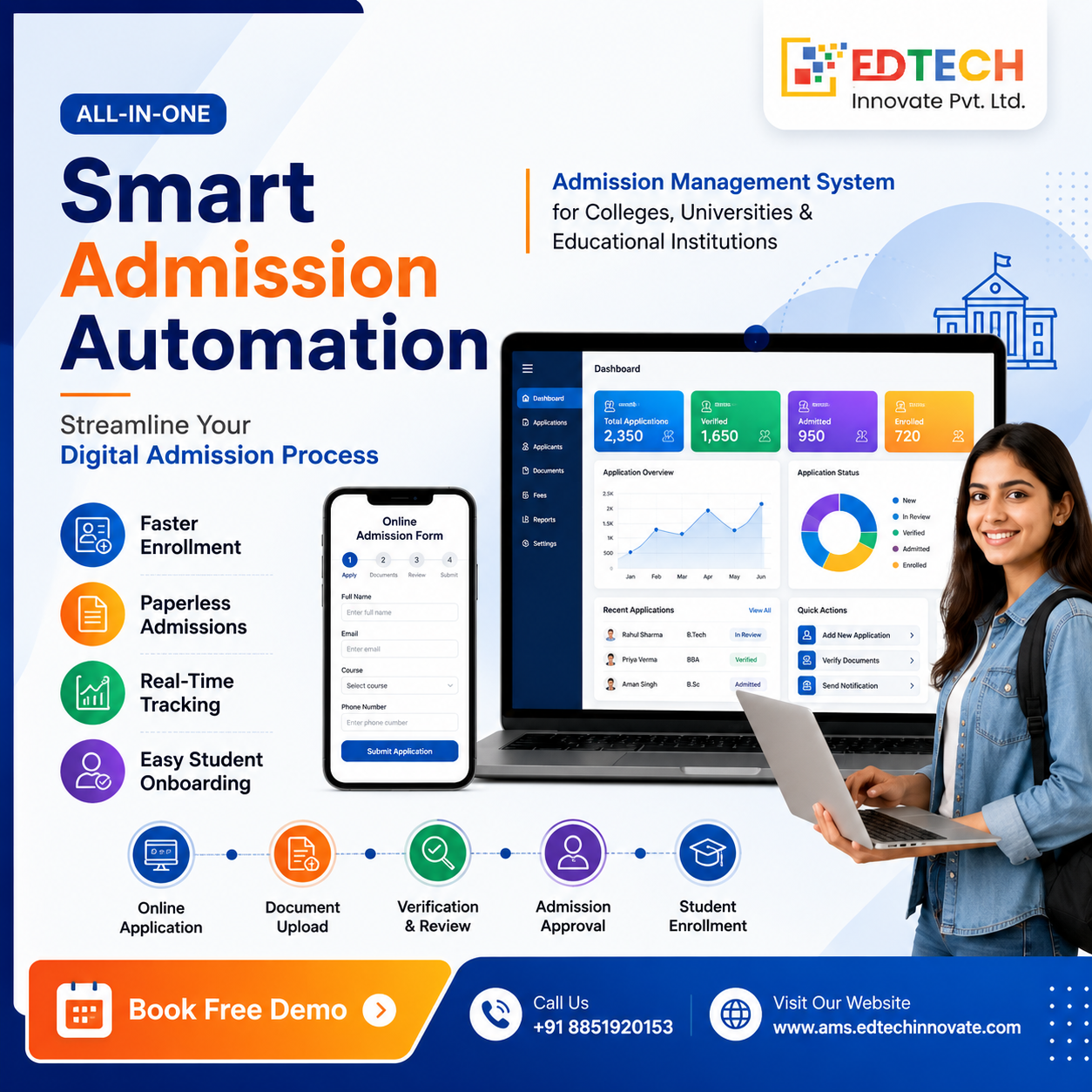
College admission teams are under more pressure than ever. Application volumes keep climbing, applicant expectations keep rising, and administrative staff are expected to handle it all with the same resources they had years ago.
Manual processes — paper forms, email chains, scattered spreadsheets — can't keep pace. Errors slip through. Applications stall. Qualified students lose interest and enroll elsewhere.
Admission Management Software solves this directly. It automates routine tasks, centralizes applicant data, and gives colleges a faster, more accurate way to manage student enrollment from first inquiry to final confirmation. This article breaks down exactly how it works, what to look for, and why more institutions are making the switch in 2026.
What Is Admission Management Software?
Admission Management Software is a digital platform that handles the full lifecycle of the college admissions process — from collecting applications to managing documents, approvals, communications, and enrollment records.
It powers an Online Admission Management System that replaces disconnected manual steps with a single, structured workflow. Key capabilities typically include:
-
Applicant tracking across every stage of the process
-
Automated document verification with real-time prompts for missing items
-
Online admission portal where students apply, upload documents, and track status
-
Communication tools for automated email and SMS notifications
-
Fee payment integration for secure online transactions
-
Analytics dashboards with real-time enrollment data
The core purpose is admission process optimization — giving your team better tools so they can process more applications with fewer errors and less manual effort.
Challenges Colleges Face with Traditional Admission Processes
Understanding why this matters starts with looking honestly at what traditional admissions actually costs your institution.
The Manual Workload Never Ends
Staff spend hours entering applicant data by hand, printing forms, chasing documents, and filing paperwork. This isn't a scalable model when application volumes increase every cycle.
Errors Create Downstream Problems
Manual data entry produces mistakes. A wrong ID number or missing field can create duplicate records that affect financial systems, compliance reports, and student records for years.
Communication Gaps Lose Applicants
Without automated updates, applicants are left in the dark. Many don't wait — they accept offers from institutions that responded faster.
Tracking Is Inconsistent
When applications come in through multiple channels, there's no single view of where each one stands. Staff work reactively, and nothing moves efficiently through the pipeline.
Approvals Take Too Long
Manual handoffs between departments create bottlenecks. Applications sit idle while staff wait on responses, and admission cycles stretch far longer than they need to.
Top Benefits of Using Admission Management Software for Colleges
Here's where the return on investment becomes clear. Modern Admission Management Software addresses each of these problems with purpose-built features.
Faster Student Enrollment
Automated workflows compress multi-day processes into hours. Applications move through review stages based on predefined rules, removing the wait time that comes with manual handoffs. Colleges reduce their admission cycle time significantly — which means enrolled students sooner and revenue recognized earlier.
Improved Accuracy and Fewer Errors
Automated data collection through a structured online admission portal enforces field validation at the point of entry. Required information can't be skipped. Formats are standardized. This creates clean, consistent records from day one — eliminating the corrections that waste staff time later.
Better Applicant Experience
Students expect a digital-first experience. An intuitive portal lets them apply from any device, track their application status in real time, and receive automatic updates at every stage. Clear communication builds confidence in your institution — and directly reduces drop-offs.
Centralized Admissions Workflow
All applications, documents, and communications flow through a single platform. Every team member — admissions, finance, academic departments — works from the same data. Digital admissions management ends the confusion that comes from juggling multiple inboxes and spreadsheets.
Automated Document Verification
The system flags missing or incomplete documents instantly and notifies applicants automatically. Staff only review complete, validated submissions. This speeds up verification, reduces back-and-forth, and keeps applications moving.
Enhanced Reporting and Analytics
Real-time dashboards show where applications stand, what the conversion rate looks like at each stage, and how enrollment trends compare to previous cycles. These insights help leadership make faster, better-informed decisions — without waiting for manually compiled reports.
Higher Operational Efficiency
Enrollment automation handles repetitive tasks: acknowledgment emails, stage transitions, reminder messages, offer letter generation. Your team focuses on decisions and exceptions — not administrative tasks that software handles better anyway.
Secure and Compliant Data Management
All applicant data is stored in an encrypted, cloud-based environment with role-based access controls. Audit trails support compliance requirements, and secure storage reduces the risk of data loss or unauthorized access.
Essential Features to Look for in Admission Management Software
When evaluating platforms, prioritize these capabilities:
-
Cloud-based platform for remote access and multi-campus support
-
Mobile-friendly dashboard for applicants and staff
-
CRM integration to manage prospect relationships across the full enrollment funnel
-
AI-powered admission automation for smart routing, anomaly detection, and workload prioritization
-
Analytics and reporting tools with customizable views for different stakeholders
-
Multi-user access with role-based permissions to protect data integrity
-
Secure document storage with automated verification prompts
-
Customizable admissions workflow to match your institution's specific process
-
Online fee payment integration with instant receipt generation
A platform that combines these features will support both current operations and future growth without requiring a full system overhaul.
read more: The Ultimate Guide to Implementing a Student Admission Management System
Why Colleges Are Adopting Digital Admissions Management in 2026
The shift toward digital admissions management is no longer a forward-looking trend — it's the operational standard for competitive institutions.
Several forces are driving adoption. Remote applications are now the default for most applicants, who expect to complete the entire process without visiting campus. Institutions competing for the same student pool need every efficiency advantage they can get.
Paperless enrollment, AI-driven workflows, and integrated student onboarding tools are increasingly table stakes in higher education. Colleges that automate their digital admission process respond faster, make fewer mistakes, and project a more organized, professional image — all of which directly influence an applicant's enrollment decision.
The Future of College Admission Automation
The next generation of admission tools is already taking shape.
AI-based applicant screening will analyze submissions at scale, surfacing the strongest candidates faster than any manual process can. Predictive analytics will help enrollment management teams forecast class size more accurately and identify applicants most likely to convert.
Chatbot support will handle routine inquiries 24/7, answering questions about deadlines, required documents, and process steps without staff involvement. Fully automated student onboarding — from digital offer acceptance through orientation scheduling — will become standard.
Colleges that invest in smarter admission automation now will scale efficiently while others struggle to keep pace.
Conclusion
The case for Admission Management Software is straightforward: it makes college admissions faster, more accurate, and better for everyone involved. Applicants get clarity and speed. Staff get tools that actually match the scale of their work. Leadership gets real-time data to make better decisions.
The digital admission process isn't the future of higher education — it's the present. Colleges that haven't modernized their admissions operations are already behind. The good news is that the right platform makes the transition faster and less disruptive than most teams expect.
Frequently Asked Questions (FAQs)
1. What is Admission Management Software, and how does it work for colleges?
Admission Management Software is a digital platform that automates and manages the entire college admissions process. It collects applications through an online portal, validates data, routes applications through approval workflows, manages document verification, and provides real-time tracking — all from a single dashboard.
2. How does admission management software improve student enrollment rates?
By automating follow-ups, sending timely notifications, and reducing the time it takes to process and respond to applications, the software keeps applicants engaged throughout the process. Faster responses and clearer communication directly reduce drop-offs and improve enrollment conversion rates.
3. What should colleges look for in an Online Admission Management System?
Colleges should prioritize a cloud-based platform with mobile access, automated workflow management, CRM integration, secure document storage, AI-powered automation, and a real-time analytics dashboard. The system should be customizable to fit the institution's specific admissions process.
4. How does a digital admission process reduce administrative workload?
A digital admission process automates routine tasks like data entry, document requests, status updates, and report generation. This frees admission staff to focus on higher-value work — reviewing applications, supporting applicants, and coordinating with academic departments — rather than manual administrative tasks.
5. Is Admission Management Software suitable for large universities and smaller colleges alike?
Yes. Most modern platforms are scalable and configurable for institutions of any size. Whether a college processes hundreds or thousands of applications per cycle, the software adapts to volume while maintaining accuracy and efficiency.

 عربي
عربي