


 SPARK Website
Laminated Labels Market Industry Analysis Forecast 2034
Market Overview
The laminated labels market is experiencing strong growth due to increasing demand for durable, moisture-resistant, and visually appealing labeling solutions across multiple industries. Laminated labels are widely used in food and beverages, pharmaceuticals, personal care, industrial products, and consumer goods packaging because they provide enhanced protection against environmental damage, chemicals, and abrasion.
The growing emphasis on product branding, packaging aesthetics, and long-lasting label performance is significantly supporting market expansion. Manufacturers are increasingly adopting advanced printing technologies and sustainable labeling materials to improve product visibility and comply with evolving packaging regulations.
Get Your Sample Report Here:
https://packagingmarketinsights.com/report/laminated-labels-market/request-sample
Laminated Labels Market Size
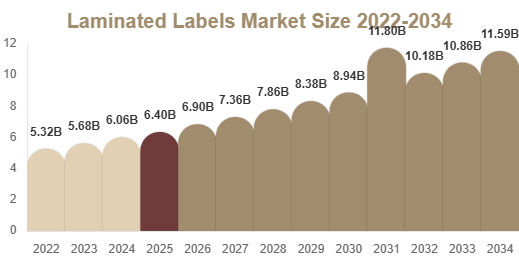
The global laminated labels market size is estimated at USD 6.4 billion in 2025, and it is projected to reach USD 6.9 billion in 2026.
By 2034, the market is expected to attain approximately USD 11.8 billion, registering a CAGR of 6.7% during 2025–2034.
Market Drivers
Growing Demand for Durable Labeling Solutions
Industries such as pharmaceuticals, chemicals, food and beverages, and personal care require labels that can withstand moisture, heat, and harsh environmental conditions. Laminated labels offer superior durability and resistance, making them highly preferred across industrial and commercial applications.
Increasing Focus on Product Branding
Brand owners are increasingly investing in premium packaging and visually attractive labels to improve product differentiation and customer engagement. Laminated labels enhance product appearance through glossy finishes, vibrant printing quality, and long-lasting graphics.
Expansion of Food and Beverage Industry
The rapid growth of the food and beverage sector is significantly increasing demand for advanced labeling solutions. Laminated labels are extensively used on packaged food products, beverage bottles, and frozen food packaging due to their moisture resistance and durability.
Rising Adoption of Sustainable Packaging Materials
Manufacturers are increasingly focusing on recyclable and eco-friendly label materials to meet sustainability goals and regulatory requirements. This trend is encouraging innovation in biodegradable laminates and environmentally friendly adhesives.
Market Challenges
High Production Costs
Laminated labels involve additional lamination processes and advanced printing technologies, which can increase production costs for manufacturers. Small-scale labeling companies may face challenges in adopting advanced manufacturing systems.
Fluctuating Raw Material Prices
Variations in the prices of plastic films, adhesives, and specialty papers can impact overall manufacturing costs and profitability within the laminated labels market.
Environmental Concerns Regarding Plastic Laminates
The use of plastic-based laminates has raised environmental concerns regarding recycling and waste management. Manufacturers are under pressure to develop sustainable alternatives without compromising label durability and quality.
Market Size Link:
https://packagingmarketinsights.com/report/laminated-labels-market
Market Segmentation
By Material Type
Plastic Films
Plastic films dominate the laminated labels market due to their excellent durability, moisture resistance, and print quality. Polypropylene and polyester films are widely used for premium labeling applications.
Paper
Paper-based laminated labels are increasingly gaining popularity because of rising demand for sustainable packaging solutions. These labels are commonly used in food, beverage, and consumer goods packaging.
Foil Materials
Foil laminated labels provide superior visual appeal and premium finishing for luxury and specialty products. They are widely utilized in cosmetics, personal care, and premium beverage packaging applications.
By Printing Technology
Flexographic Printing
Flexographic printing holds a major share of the laminated labels market due to its cost-effectiveness, high printing speed, and suitability for large-scale production.
Digital Printing
Digital printing technologies are gaining popularity because they allow short-run customization, faster production cycles, and high-quality graphics for premium labeling applications.
Offset Printing
Offset printing is widely used for high-resolution laminated labels requiring superior image quality and color consistency.
By End User
Food and Beverage Industry
The food and beverage industry represents a major end-user segment due to increasing demand for moisture-resistant and visually appealing labels for packaged food and beverage products.
Pharmaceuticals
Pharmaceutical manufacturers utilize laminated labels for medicine bottles, healthcare products, and medical packaging requiring high durability and clear product information.
Personal Care and Cosmetics
Laminated labels are extensively used in cosmetics and personal care products because they offer premium aesthetics and strong resistance against moisture and chemicals.
Industrial and Chemical Sector
Industrial manufacturers use laminated labels for chemical containers, machinery products, and hazardous materials requiring durable and long-lasting labeling solutions.
Regional Analysis
North America
North America holds a significant share of the laminated labels market due to strong demand from food and beverage, pharmaceutical, and consumer goods industries. The region is witnessing increased adoption of premium and sustainable labeling solutions.
Europe
Europe is experiencing steady market growth supported by strict packaging regulations, increasing sustainability initiatives, and growing demand for high-quality labeling technologies.
Asia Pacific
Asia Pacific is expected to witness substantial growth during the forecast period due to expanding manufacturing industries, rising consumer goods production, and increasing adoption of advanced packaging technologies.
Latin America and Middle East & Africa
These regions are gradually witnessing rising demand for laminated labels due to growing retail industries, expanding packaged goods sectors, and increasing industrial production activities.
Top Players Analysis
1. Avery Dennison Corporation
Avery Dennison Corporation is a leading manufacturer of labeling and packaging materials offering advanced laminated label solutions for food, pharmaceutical, and industrial applications.
2. CCL Industries Inc.
CCL Industries Inc. provides innovative laminated labeling products designed to improve product branding, durability, and packaging efficiency across multiple industries.
3. Multi-Color Corporation
Multi-Color Corporation specializes in premium label printing and laminated labeling solutions used for consumer goods, beverages, and personal care packaging.
4. 3M Company
3M Company develops high-performance labeling materials and adhesive technologies for industrial, healthcare, and consumer product applications.
5. Coveris Holdings S.A.
Coveris Holdings S.A. offers flexible packaging and laminated labeling products focused on sustainability and product protection.
6. Fuji Seal International Inc.
Fuji Seal International Inc. manufactures shrink sleeve and laminated labeling solutions for beverage, food, and personal care packaging applications.
7. UPM Raflatac
UPM Raflatac provides sustainable self-adhesive label materials and laminated labeling products for retail and industrial packaging sectors.
8. Constantia Flexibles
Constantia Flexibles develops advanced packaging and laminated labeling solutions designed for food and pharmaceutical applications.
9. Huhtamaki Oyj
Huhtamaki Oyj offers sustainable packaging and labeling solutions with focus on environmentally friendly materials and innovative packaging technologies.
10. LINTEC Corporation
LINTEC Corporation specializes in adhesive products and laminated labeling materials used across industrial and consumer goods applications.
Conclusion
The laminated labels market is expected to witness strong growth during the forecast period due to increasing demand for durable labeling solutions, premium packaging designs, and sustainable packaging materials. Technological advancements in printing systems, rising product branding activities, and expanding food and beverage industries are further supporting market expansion. The market is expected to continue growing through 2034 as industries increasingly adopt high-performance laminated labeling solutions.

 English