


 SPARK Website
Car Accident Physiotherapy Edmonton for Support After an Auto Injury
Introduction
A car accident can affect more than just your schedule. Even a minor collision may lead to stiffness, pain, reduced mobility, or discomfort that shows up hours or days later. That is why car accident physiotherapy Edmonton is often part of a steady recovery plan for people dealing with whiplash, neck pain, back pain, shoulder strain, or general movement changes after an MVA.
This type of physiotherapy focuses on helping you move more comfortably, understand your symptoms, and return to your routine step by step. For many people, the most useful part of treatment is having a clear plan that feels manageable, practical, and centred around daily life.
What Car Accident Physiotherapy Means
Car accident physiotherapy, also called MVA physiotherapy, is designed to support recovery after a motor vehicle accident. Every injury is different, and symptoms do not always appear right away. Some people notice tightness in the neck, headaches, or a sore lower back. Others may feel discomfort in the shoulders, hips, or mid-back when they sit, stand, or drive.
A physiotherapy plan usually starts with a conversation about how the accident happened, what symptoms you are noticing, and what activities feel harder than usual. From there, the focus is on understanding your movement, reducing strain, and supporting better function over time. The goal is not to rush recovery. It is to create a clear path forward that fits your condition and your pace.
Common Concerns After a Motor Vehicle Accident
After an accident, the body may react in different ways. Some people notice stiffness in the morning. Others feel pain when turning their head, reaching overhead, lifting groceries, or getting in and out of a car. Whiplash is one of the more common concerns after a collision, especially when the neck moves quickly during impact.
Back discomfort can also happen when the spine and surrounding muscles are affected by sudden force. Shoulder pain may appear if the seatbelt tightened during the collision or if the body braced hard at the moment of impact. In some cases, people feel tired, tense, or hesitant to move the way they did before.
These changes can make everyday tasks feel more difficult. That is one reason early support can be helpful. Physiotherapy may guide you through movement in a way that feels more controlled and less overwhelming.
How Physiotherapy May Support Recovery
A careful first assessment
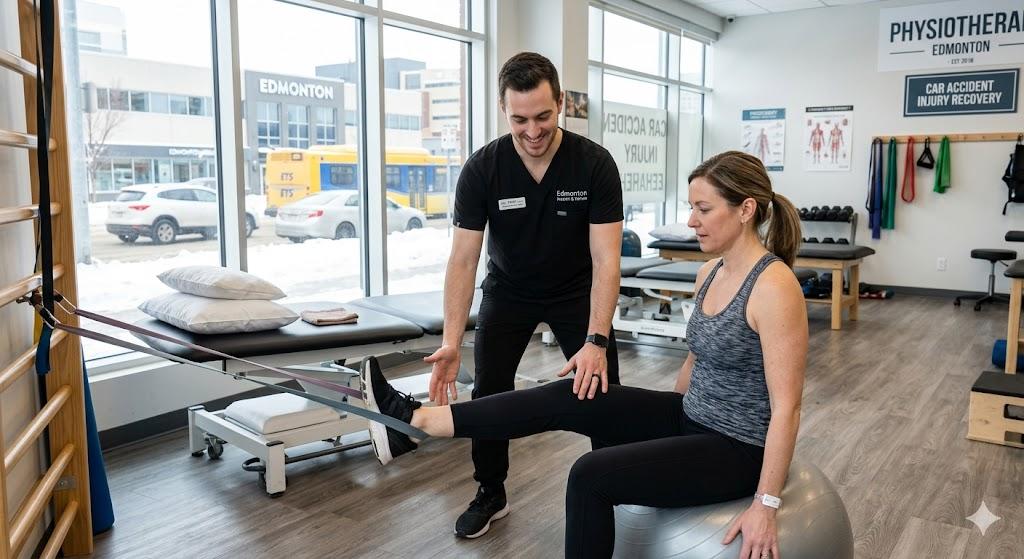
The first appointment is usually focused on learning what your body needs. A physiotherapist may assess your posture, joint motion, muscle tension, and the way you move during simple activities. This helps shape a plan that matches your symptoms and current ability.
Gentle movement and exercise
Movement is often a key part of recovery. Exercises may begin in a simple and manageable form, then progress as your comfort improves. These exercises may focus on neck mobility, core support, shoulder movement, balance, or general strength. The idea is to help your body regain confidence without adding unnecessary strain.
Manual therapy and hands-on care
Some treatment plans include manual therapy. This may involve hands-on techniques to help reduce stiffness and improve movement in specific areas. It is often used alongside exercise and education so the plan feels balanced and practical.
Education for daily life
Learning how to move through day-to-day activities can make a real difference. A physiotherapist may talk with you about sitting, standing, sleeping, lifting, and driving in ways that place less stress on the body. Small changes in posture and movement habits may support recovery over time.
Why Early Support Can Matter
After a car accident, some people try to “wait it out” and see if the pain settles on its own. While that may happen in some cases, others find that symptoms stay around or begin to affect work, sleep, or daily routine. Early physiotherapy can help you understand what your body is doing and what type of movement feels appropriate.
It can also be reassuring to have a plan. Recovery often feels easier when there is structure, especially when pain or stiffness makes normal activity feel uncertain. A guided approach can help you keep moving while staying mindful of your limits.
Returning to Daily Activities
One of the main goals of car accident physiotherapy in Edmonton is helping you return to normal activities with more comfort and confidence. This may include walking, working, driving, exercising, or caring for your family. The pace will depend on your symptoms, your goals, and how your body responds over time.
Progress often happens in small steps. That is normal. For many people, recovery is less about doing everything at once and more about building tolerance gradually. A thoughtful physiotherapy plan can support that process.
What to Expect During Ongoing Care
As treatment continues, your plan may change based on how you are feeling. Exercises may become more challenging. Movement goals may shift from basic comfort to strength, stability, or a return to more active tasks. Your physiotherapist may also help you adjust your home routine so you can keep making progress between visits.
The process is usually personal. Some people need support for a short time, while others benefit from a longer period of care. The important part is that the plan is adapted to your needs, not forced into a fixed timeline.
Conclusion
Car accident physiotherapy Edmonton offers practical support for people dealing with pain, stiffness, and movement changes after an MVA. Whether your concern is whiplash, back pain, shoulder tightness, or general discomfort after a collision, physiotherapy may help you move forward in a steady and supported way.
If you are looking for care that is patient-focused and easy to follow, Granville Physiotherapy Clinic offers a welcoming place to start. The clinic provides direct billing, accepts most insurance plans, offers same-day appointments, does not require a referral, welcomes walk-in patients, and includes free parking and wheelchair accessibility.
Book your appointment today at the Granville Physiotherapy Clinic booking page.
FAQ
What does car accident physiotherapy help with
Car accident physiotherapy may help with whiplash, neck pain, back pain, shoulder discomfort, stiffness, and reduced movement after a motor vehicle accident.
When should I start physiotherapy after a car accident
Many people start as soon as they are able, especially if symptoms are affecting daily activities. Early support may help you understand your condition and begin recovery with a clear plan.
Contact Details
Granville Physiotherapy Clinic
WE ARE LOCATED AT:
3010 Granville Drive NW Edmonton, AB, T5T4V3
Phone: +(587) 400-2011
Fax: 780-249-1161
Email: info@granvillephysiotherapy.ca
Monday – Friday : 8:00am–8.00pm
Saturday : 9.00am–3:00pm
Sunday : Closed
Hashtags
#CarAccidentPhysiotherapyEdmonton #MVAPhysiotherapy #EdmontonPhysio #WhiplashRecovery #NeckPainCare #BackPainRelief #AutoInjuryRecovery #PhysiotherapyEdmonton

 English