As power demand continues to grow across cities, industrial zones, and rural electrification projects, utilities and EPC contractors require transmission solutions that offer high strength, excellent conductivity, and long-term reliability. One of the most trusted solutions in overhead power transmission is the ACSR conductor.
ACSR conductor, short for Aluminum Conductor Steel Reinforced, has become a preferred choice for utility companies and power infrastructure developers worldwide. Its combination of lightweight aluminum strands and high-strength steel core makes it suitable for long-span transmission lines, harsh weather conditions, and heavy mechanical loads.
For engineers, procurement managers, and project developers, selecting the right conductor is critical for ensuring efficient power delivery and minimizing maintenance costs. In this article, we will explain what an ACSR conductor is, how it works, its advantages, applications, specifications, and key factors to consider before purchasing.
What Is an ACSR Conductor?
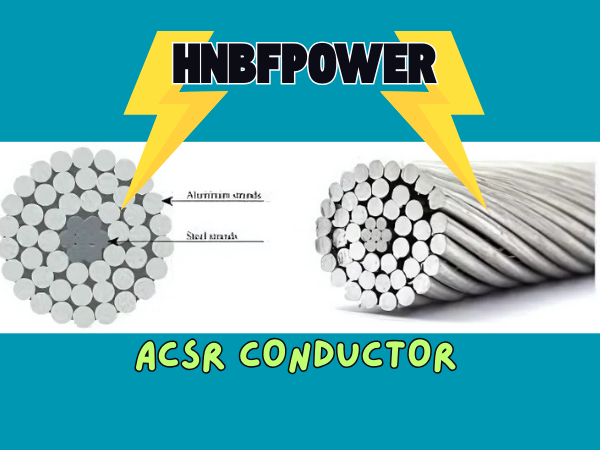
An ACSR conductor is a type of overhead conductor made of two main components:
- Aluminum strands surrounding the outside
- Galvanized steel core at the center
The aluminum layers provide excellent electrical conductivity, while the steel core delivers mechanical strength and supports long-distance installations.
This unique design allows ACSR conductors to carry high electrical loads while maintaining structural stability in demanding environments such as:
- High wind regions
- Mountainous areas
- River crossings
- Long-span transmission networks
Because of its balanced performance, ACSR conductor is widely used in power transmission and distribution systems around the world.
Structure and Working Principle of ACSR Conductors
Aluminum Outer Layers
The outer aluminum strands are responsible for conducting electricity. Aluminum is commonly used because it offers:
- Good conductivity
- Lightweight performance
- Corrosion resistance
- Cost efficiency
The stranded construction also improves flexibility during installation.
Steel Reinforced Core
The steel core increases tensile strength and reduces sag over long transmission distances. This reinforcement allows the conductor to withstand:
- Mechanical tension
- Ice loading
- Strong winds
- Thermal expansion
The steel core is usually galvanized to improve corrosion resistance and extend service life.
Key Advantages of ACSR Conductors
High Tensile Strength
One of the biggest advantages of ACSR conductors is their excellent mechanical strength. The steel core enables the conductor to handle heavy loads and long spans without excessive sagging.
This makes ACSR ideal for transmission lines crossing valleys, rivers, highways, and challenging terrain.
Excellent Conductivity
The aluminum strands ensure efficient electrical conductivity, helping utilities reduce transmission losses and improve power system performance.
Cost-Effective Solution
Compared to some alternative conductor types, ACSR offers a practical balance between performance and cost. Its durability and long operational life also help reduce maintenance expenses.
Lightweight Construction
Despite its strength, ACSR conductor remains lighter than many traditional conductor materials, making transportation and installation easier.
Reliable Performance in Harsh Environments
ACSR conductors perform well in extreme weather conditions including:
- High temperatures
- Heavy wind
- Ice accumulation
- Industrial pollution zones
This reliability is especially important for critical infrastructure projects.
Common Applications of ACSR Conductors
ACSR conductors are widely used across transmission and distribution networks.
High Voltage Transmission Lines
Utilities commonly use ACSR conductors for medium and high-voltage overhead transmission systems because of their strength and conductivity.
Rural Electrification Projects
ACSR is frequently installed in rural grid expansion projects where long-distance power delivery is required.
Industrial Power Networks
Factories, mining operations, and industrial plants often rely on ACSR conductors for stable external power supply connections.
Substation Connections
Many substations use ACSR conductors for incoming and outgoing overhead transmission lines.
Cross-Country Power Infrastructure
National grid projects often require durable conductors capable of supporting long transmission distances with minimal sag.
Important Technical Factors to Consider
Choosing the correct ACSR conductor requires careful evaluation of project requirements.
Conductor Size
The conductor size determines current-carrying capacity and mechanical strength. Larger conductors support higher electrical loads but may require stronger support structures.
Current Carrying Capacity
Engineers must calculate the required ampacity based on load demand, environmental conditions, and transmission distance.
Tensile Strength
Projects involving long spans or harsh climates require conductors with higher tensile strength to maintain stability.
Corrosion Resistance
In coastal or industrial regions, corrosion resistance becomes essential for long-term reliability.
Sag Performance
Low sag performance helps maintain safe ground clearance and improves operational safety.
Compliance Standards
Reliable manufacturers supply ACSR conductors according to international standards such as:
These standards ensure product quality and consistent performance.
Why Utilities Prefer ACSR Conductors
Many utility companies continue to choose ACSR conductors because they provide a dependable combination of strength, efficiency, and affordability.
Compared with other conductor options, ACSR offers:
- Proven field performance
- Easy installation
- Broad availability
- Long operational lifespan
- Adaptability for different voltage levels
For procurement teams, these benefits translate into reduced project risk and improved return on investment.
How HNBF Power Supports Global Power Projects
HNBF Power is a professional manufacturer of overhead conductors and power cable solutions for utility and industrial applications. The company supplies a wide range of products including:
- AAC conductors
- AAAC conductors
- ACSR conductors
- ABC cables
- LV power cables
- Concentric cables
HNBF Power focuses on delivering reliable products for transmission and distribution projects worldwide. With strict quality control, advanced production technology, and international manufacturing standards, the company supports utilities, EPC contractors, and infrastructure developers with customized cable solutions.
For projects requiring specific conductor designs, voltage ratings, or environmental performance, HNBF Power provides technical support to help clients select suitable conductor configurations.
Conclusion
ACSR conductor remains one of the most trusted solutions for overhead power transmission due to its strong mechanical performance, excellent conductivity, and long-term reliability. Its reinforced steel core and lightweight aluminum construction make it ideal for demanding transmission environments and large-scale infrastructure projects.
Whether for utility transmission networks, industrial facilities, or rural electrification systems, selecting the right ACSR conductor is essential for achieving safe and efficient power delivery.
HNBF Power continues to support global energy infrastructure with high-quality conductor solutions tailored to modern transmission requirements. Companies seeking reliable overhead conductor products can benefit from customized manufacturing support and technical expertise designed for today’s evolving power industry.
FAQs
What does ACSR stand for?
ACSR stands for Aluminum Conductor Steel Reinforced. It is an overhead conductor that combines aluminum strands with a steel core for improved strength and conductivity.
Why is steel used inside ACSR conductors?
The steel core provides mechanical strength and helps reduce sag during long-span installations and heavy loading conditions.
Where are ACSR conductors commonly used?
ACSR conductors are widely used in overhead transmission lines, utility distribution systems, substations, and rural electrification projects.
What are the benefits of ACSR conductors?
Key benefits include high tensile strength, good electrical conductivity, long service life, cost efficiency, and reliable performance in harsh weather conditions.
How do I choose the right ACSR conductor?
The correct conductor depends on factors such as voltage level, current capacity, span length, environmental conditions, and project specifications.
Contact HNBF Power for Customized ACSR Conductor Solutions
If you are looking for reliable ACSR conductor solutions for utility, industrial, or infrastructure projects, contact HNBF Power today. Our team can help you select customized overhead conductor products designed to meet your transmission and distribution requirements.



 SPARK Website

 عربي
عربي