


 SPARK Website
How to Convert DST Files to EMB Format for Better Embroidery Editing
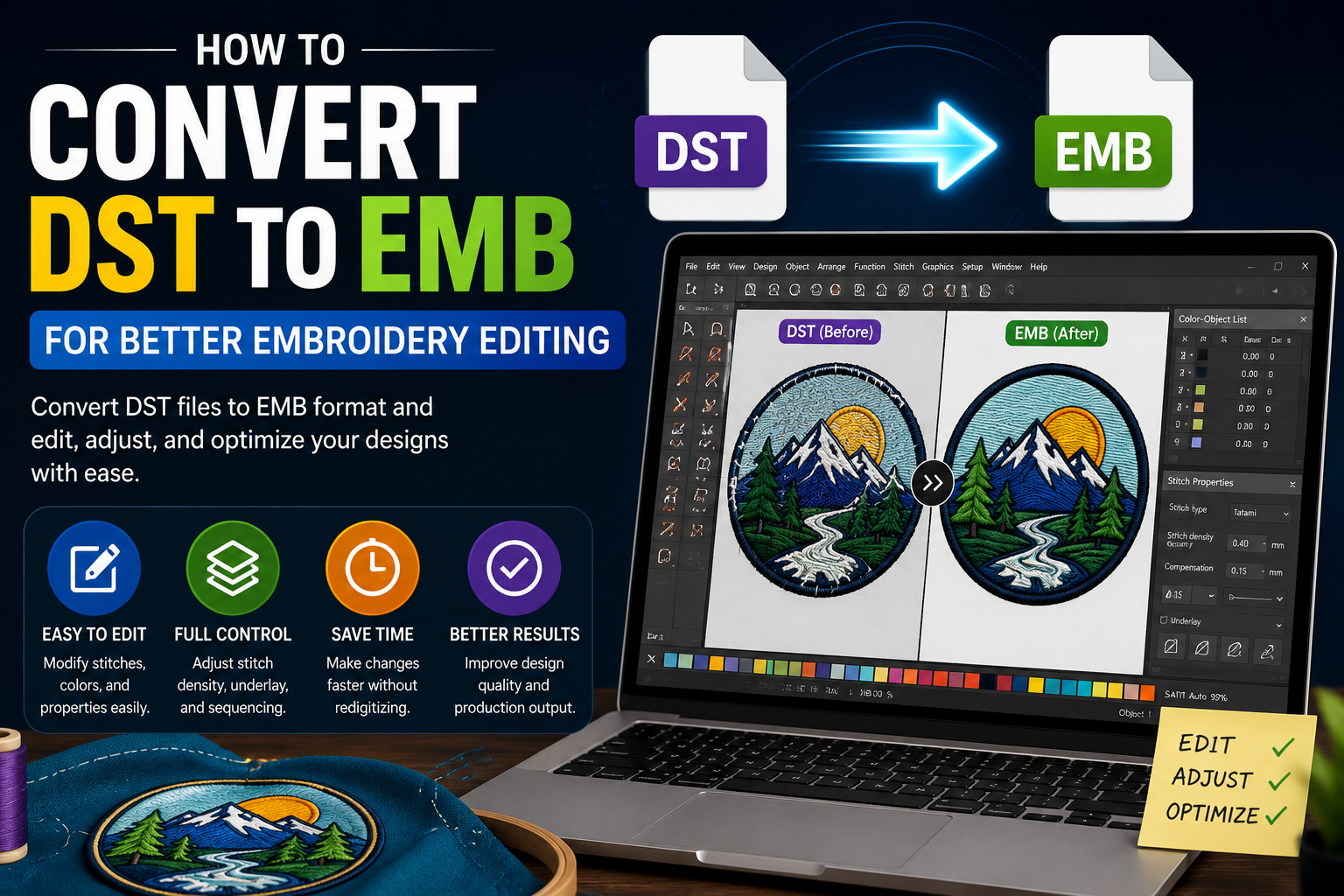
Many embroidery professionals need to convert DST to EMB when editing embroidery designs inside professional digitizing software. While DST files are widely used for embroidery machines, they are limited when it comes to advanced editing and design modifications. This is why EMB format is commonly preferred during embroidery editing workflows.
Unlike DST files, EMB files retain editable embroidery object information such as stitch settings, color layers, underlay, and sequencing data. This allows designers to make adjustments more efficiently without rebuilding the entire design manually.
Why Designers Convert DST to EMB
DST files are mainly designed for machine stitching. They store stitch coordinates effectively, but they do not preserve detailed object properties required for advanced embroidery editing.
When embroidery professionals convert DST to EMB, they gain more flexibility during the editing process. EMB files make it easier to resize designs, modify stitch density, adjust stitch directions, and optimize embroidery settings inside software such as Wilcom or Hatch.
This workflow is especially useful when embroidery designs need corrections or production adjustments before stitching begins.
Benefits of EMB Files in Embroidery Editing
One of the biggest advantages of EMB format is editability. Designers can adjust embroidery elements directly without recreating the entire file from scratch.
EMB files also improve workflow organization because they maintain color information and embroidery object layers. This becomes helpful when working with complex embroidery projects that require multiple design revisions.
Another benefit is improved production control. Editable EMB files help digitizers optimize stitch paths and improve embroidery accuracy across different fabrics and garment types.
Common Challenges During Conversion
Although converting DST to EMB improves flexibility, some manual adjustments may still be required after conversion. Since DST files contain limited object data, embroidery software may not reconstruct every element perfectly.
Digitizers often review stitch density, sequencing, and underlay settings after conversion to ensure smooth embroidery performance during production.
Proper file optimization remains important for maintaining clean stitch quality and avoiding embroidery issues such as puckering or uneven stitching.
Conclusion
Learning how to convert DST to EMB helps embroidery professionals improve editing flexibility and production efficiency. EMB files provide better control over embroidery adjustments compared to standard DST files, making them more suitable for advanced embroidery workflows.
For businesses and digitizers focused on accurate embroidery production, proper embroidery file conversion plays an important role in maintaining high-quality and production-ready embroidery designs.

 English