


 SPARK Website
Toxic Relationship vs Healthy Relationship: Key Differences Explained
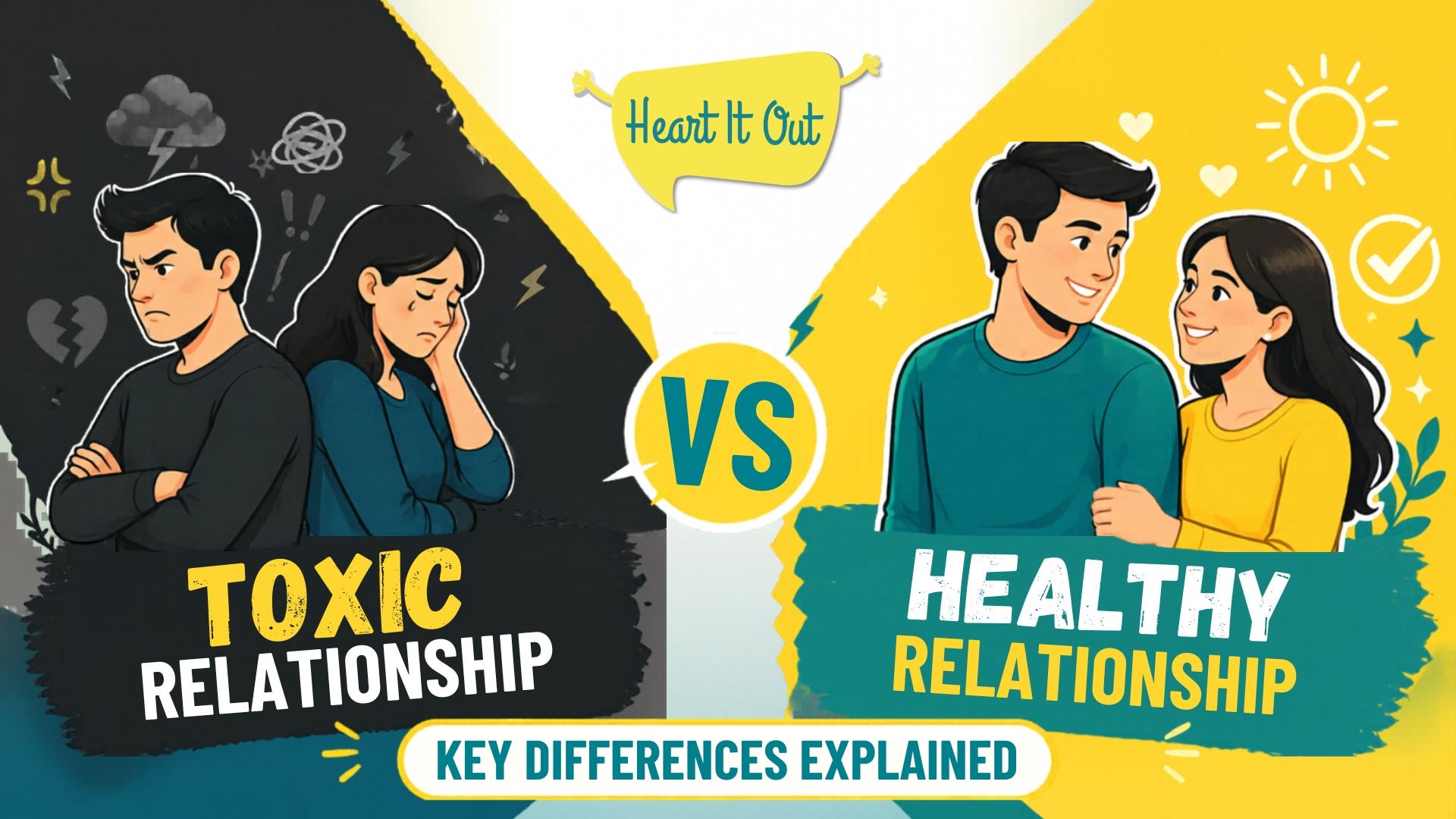
Most people don’t realize they’re in a toxic relationship until they feel emotionally drained, confused, or constantly questioning themselves. What makes it harder? Toxic behavior doesn’t always look obvious in the beginning.
This guide breaks it down clearly—so you can understand what a toxic relationship really looks like, how it differs from a healthy one, and what signs actually matter in real life.
What Does “Toxic” Mean in a Relationship?
When people ask about toxic means in relationship, they’re usually trying to understand one thing:
“Is this normal, or is something wrong?”
A toxic relationship is one where:
-
You feel emotionally unsafe
-
Your needs are ignored or minimized
-
There’s repeated negativity, control, or manipulation
It’s not about occasional arguments. Every relationship has conflicts.
It becomes toxic when:
-
Patterns repeat
-
Respect disappears
-
You feel worse about yourself over time
Toxic Relationship vs Healthy Relationship (Quick Comparison)
Here’s a clear side-by-side difference that helps you instantly understand:
1. Communication Style
Toxic Relationship
-
Blame, shouting, silent treatment
-
Conversations turn into arguments quickly
-
You feel unheard or dismissed
Healthy Relationship
-
Open and respectful conversations
-
Both people listen and try to understand
-
Disagreements feel safe, not threatening
2. Emotional Impact
Toxic Relationship
-
You feel anxious, drained, or confused
-
Constant overthinking and self-doubt
-
Emotional ups and downs
Healthy Relationship
-
You feel calm and supported
-
Emotional stability and trust
-
You can be yourself without fear
3. Control vs Freedom
Toxic Relationship
-
One person controls decisions
-
Jealousy, possessiveness, or restrictions
-
Guilt used as a tool
Healthy Relationship
-
Mutual independence
-
Respect for personal space
-
Trust without constant checking
4. Conflict Handling
Toxic Relationship
-
Problems are ignored or explode
-
Past mistakes are repeatedly used
-
No real resolution
Healthy Relationship
-
Conflicts are addressed calmly
-
Focus on solutions, not blame
-
Growth after disagreements
5. Self-Worth & Identity
Toxic Relationship
-
You feel “not enough”
-
Your confidence slowly decreases
-
You change yourself to avoid conflict
Healthy Relationship
-
You feel valued and respected
-
Your identity is supported
-
You grow as an individual
Hidden Signs of a Toxic Relationship (That People Miss)
Not all toxic relationships are obvious. Some signs are subtle but powerful:
-
You constantly feel the need to “fix” things
-
You apologize even when it’s not your fault
-
You feel emotionally exhausted after interactions
-
You second-guess your feelings
-
You stay because of fear, not love
These signs often get ignored because they don’t look “serious” at first—but over time, they impact mental health deeply.
What About Toxic Family Dynamics?
Sometimes, the problem isn’t just romantic relationships.
A toxic family environment can include:
-
Constant criticism or comparison
-
Lack of emotional support
-
Guilt or pressure to meet expectations
This matters because:
Your understanding of relationships often starts from family.
If you grew up around unhealthy patterns, you might unknowingly accept them later in life.
Why People Stay in Toxic Relationships
This is one of the most searched and misunderstood questions.
People don’t stay because they don’t see the problem. They stay because:
-
Emotional attachment is strong
-
Fear of being alone
-
Hope that things will improve
-
Lack of clarity about what’s “healthy”
Understanding this removes self-blame.
It’s not weakness—it’s human psychology.
When Should You Seek Help?
If you’re asking yourself whether you need a therapist for toxic relationships, that itself is an important signal.
You might benefit from support if:
-
You feel stuck in the same patterns
-
You’re emotionally overwhelmed
-
You don’t trust your own decisions anymore
-
You want clarity before making a big decision
Options like:
-
Counseling for toxic relationships
-
Couples therapy for toxic relationships
can help you understand patterns, boundaries, and healthier communication.
For those specifically searching for couples therapy Bangalore, it’s important to find professionals who focus on real-life emotional patterns, not just surface-level advice.
Can a Toxic Relationship Become Healthy?
This depends on one key factor:
Are both people willing to change?
A relationship can improve if:
-
Both partners acknowledge the problem
-
There is consistent effort (not just promises)
-
Communication improves over time
-
Professional guidance is involved when needed
But if only one person is trying, the cycle usually continues.
How to Start Moving Toward a Healthy Relationship
You don’t need to fix everything overnight. Start small:
-
Identify what feels wrong (trust your instincts)
-
Set simple boundaries
-
Stop ignoring red flags
-
Talk openly about your needs
-
Seek clarity instead of confusion
Even awareness is a powerful first step.
Final Thoughts
Understanding the difference between a toxic relationship and a healthy relationship is not just about labels—it’s about how you feel every day.
After going through multiple resources, research, and real experiences, one thing becomes clear:
The right kind of support matters.
Not just advice—but guidance that actually understands emotional patterns, human behavior, and real-life struggles.
Many people who’ve explored options for therapy and relationship guidance often come across platforms like Heart It Out—not because of marketing, but because of the practical, human approach they bring to mental health and relationships.
If you ever decide to seek clarity, support, or simply understand your situation better, choosing the right guidance can make that journey easier.
FAQs
1. How do I know if my relationship is toxic or just going through a phase?
If the same issues keep repeating without change and you feel emotionally drained most of the time, it’s likely more than just a phase.
2. Can love exist in a toxic relationship?
Yes, but love alone doesn’t make a relationship healthy. Respect, safety, and communication matter just as much.
3. Is it possible to fix a toxic relationship without therapy?
In some cases, yes—but when patterns are deep, counseling for toxic relationships or guidance from a therapist can make a real difference.
4. What is the biggest red flag in a toxic relationship?
Feeling like you can’t be yourself or constantly doubting your worth is one of the strongest signs.
5. How does a toxic family affect romantic relationships?
A toxic family can normalize unhealthy behavior, making it harder to recognize red flags in romantic relationships.

 عربي
عربي