


 SPARK Website
How to Cut Last-Mile Delivery Costs: 5 Simple Strategies
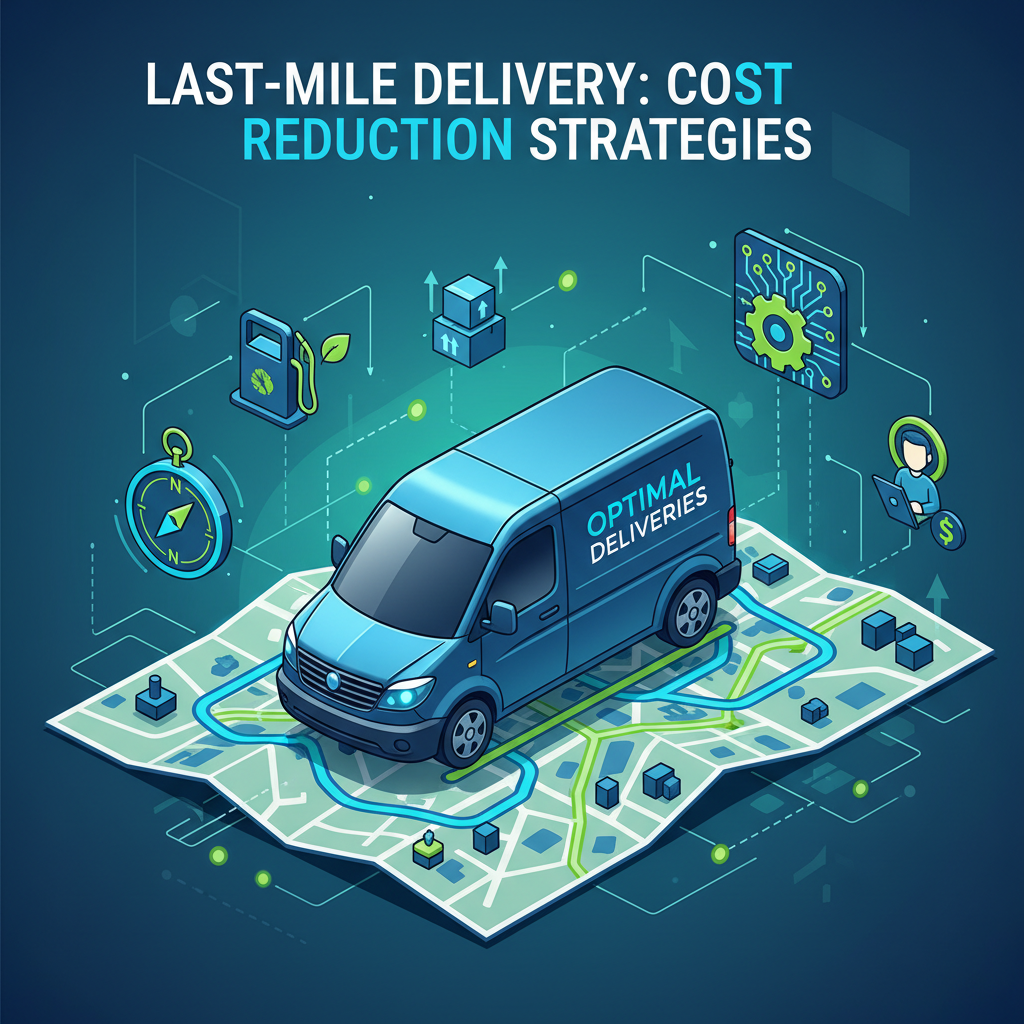
The final leg of a product’s journey, from the local distribution center to the customer’s doorstep, is often the most expensive and complex part of the entire supply chain. In the logistics industry, this phase is known as last-mile delivery. While it may only cover a few miles, it frequently accounts for more than 50% of the total shipping cost. As e-commerce continues to grow at an unprecedented pace, businesses are under immense pressure to provide faster, cheaper, and more reliable delivery services without eroding their profit margins.
Understanding the mechanics of these expenses is the first step toward optimization. According to a technical definition provided by Wikipedia, the "last mile" refers to the final movement of goods from a transportation hub to the final delivery destination. This stage is notoriously inefficient because it involves multiple stops with low package volumes at each location, often in congested urban areas or remote rural regions.
For modern enterprises, the challenge is twofold: meeting the "Amazon effect" expectations of consumers while managing a budget that is being squeezed by rising fuel prices, labor shortages, and urban congestion. Fortunately, by implementing a few strategic changes, companies can significantly reduce these overheads. Whether you are a small local retailer or a large corporation, these five simple strategies will help you streamline your operations and improve your bottom line.
1. Implement Advanced Route Optimization
One of the most effective ways to slash last-mile delivery costs is through the use of sophisticated route optimization software. Traditional manual planning is no longer sufficient in a world where traffic patterns, delivery windows, and weather conditions change by the minute.
Route optimization does more than just find the shortest path from point A to point B. It utilizes complex algorithms to sequence dozens or hundreds of stops in the most efficient manner possible. This reduces the total mileage driven, which directly translates to lower fuel consumption and less wear and tear on your vehicle fleet. Furthermore, by reducing the time drivers spend on the road, businesses can often complete more deliveries per shift, effectively increasing their capacity without adding more staff or vehicles.
Recent reports in Google News highlight how artificial intelligence and machine learning are now being integrated into these systems to predict traffic congestion before it happens. By proactively rerouting drivers around delays, companies can ensure they meet their promised delivery windows, thereby avoiding the high costs associated with redelivery attempts or customer service inquiries.
2. Leverage Micro-Fulfillment Centers and Local Hubs
The distance between the warehouse and the customer is a primary driver of last-mile costs. To combat this, many successful retailers are moving their inventory closer to the end consumer through micro-fulfillment centers (MFCs). These are small, highly automated distribution sites located in densely populated urban areas, often in the back of existing retail stores or in converted "dark stores."
By decentralizing your inventory, you can:
-
Reduce Stem Time: This is the time a driver spends traveling from the distribution center to the first delivery stop.
-
Enable Faster Delivery: Shorter distances make same-day or even one-hour delivery feasible and cost-effective.
-
Lower Fuel Costs: Shorter routes naturally consume less fuel and produce fewer emissions.
For companies managing complex global supply chains, integrating these local hubs with broader shipping strategies is essential. While a local hub handles the final few miles, a partner like TerraLinkLogistics` offers international freight and forwarding services to ensure that the inventory reaches those hubs efficiently from manufacturing centers across the globe. This holistic approach ensures that every link in the chain is optimized for both speed and cost.
3. Enhance First-Attempt Delivery Success
A failed delivery attempt is a logistical nightmare. When a driver arrives at a location and cannot complete the drop-off, the package must be returned to the hub, processed, and scheduled for a second attempt. This effectively doubles or triples the cost of that specific delivery.
To improve your first-attempt success rate, consider the following tactics:
-
Real-Time Tracking and Notifications: Provide customers with accurate, real-time updates via SMS or email. When customers know exactly when to expect their package, they are much more likely to be home.
-
Delivery Windows: Allow customers to choose specific time slots for their delivery. While this adds a layer of complexity to route planning, it significantly reduces the likelihood of a missed connection.
-
Photo Proof of Delivery: Implementing digital proof of delivery, such as taking a photo of the package at the doorstep, reduces "where is my order" (WISMO) calls and helps resolve disputes regarding lost or stolen items.
4. Utilize Alternative Delivery Methods
Sometimes, the best way to cut last-mile costs is to avoid the "doorstep" altogether. Alternative delivery models, such as "Click and Collect" or parcel lockers, are gaining popularity among consumers and businesses alike.
Parcel lockers, often placed in convenient locations like grocery stores or transit hubs, allow drivers to drop off multiple packages at a single stop. This dramatically increases delivery density, which is the number of packages delivered in a specific geographic area over a set period. Higher density is the "holy grail" of logistics, as it spreads the fixed costs of the vehicle and driver across a larger number of orders.
5. Analyze Data for Continuous Improvement
You cannot manage what you do not measure. Professional analysis, as often discussed in Forbes, suggests that the most successful logistics operations are those that treat data as a strategic asset. By tracking Key Performance Indicators (KPIs) such as cost per delivery, average time per stop, and fuel efficiency, you can identify bottlenecks and inefficiencies in your process.
Modern logistics platforms provide dashboards that visualize these metrics in real time. For example, if you notice that deliveries in a specific neighborhood consistently take 20% longer than expected, you can investigate the cause. Is it a lack of parking? Complex apartment building access? Once the issue is identified, you can adjust your pricing or your delivery strategy for that specific zone to maintain profitability.
Conclusion
Cutting last-mile delivery costs does not require a complete overhaul of your business model. By focusing on smart routing, localizing your inventory, and improving communication with your customers, you can make significant gains in efficiency. Remember that the last mile is often the only physical touchpoint you have with your customer, so optimizing this process is not just about saving money; it is about protecting your brand reputation.
As you look to scale your operations and manage the complexities of modern commerce, remember that efficiency starts at the beginning of the journey. While you optimize the final mile, ensure your global logistics are in expert hands. Companies like TerraLinkLogistics offers international freight and forwarding services to help you navigate the complexities of global trade, ensuring your goods move seamlessly from the factory to the local hub, and finally, to your customer’s door.
Ready to take control of your logistics costs? Start by auditing your current delivery routes and exploring how micro-fulfillment could work for your business today.

 English