


 SPARK Website
Prediction Markets Explained: A Complete Guide to Forecasting Systems
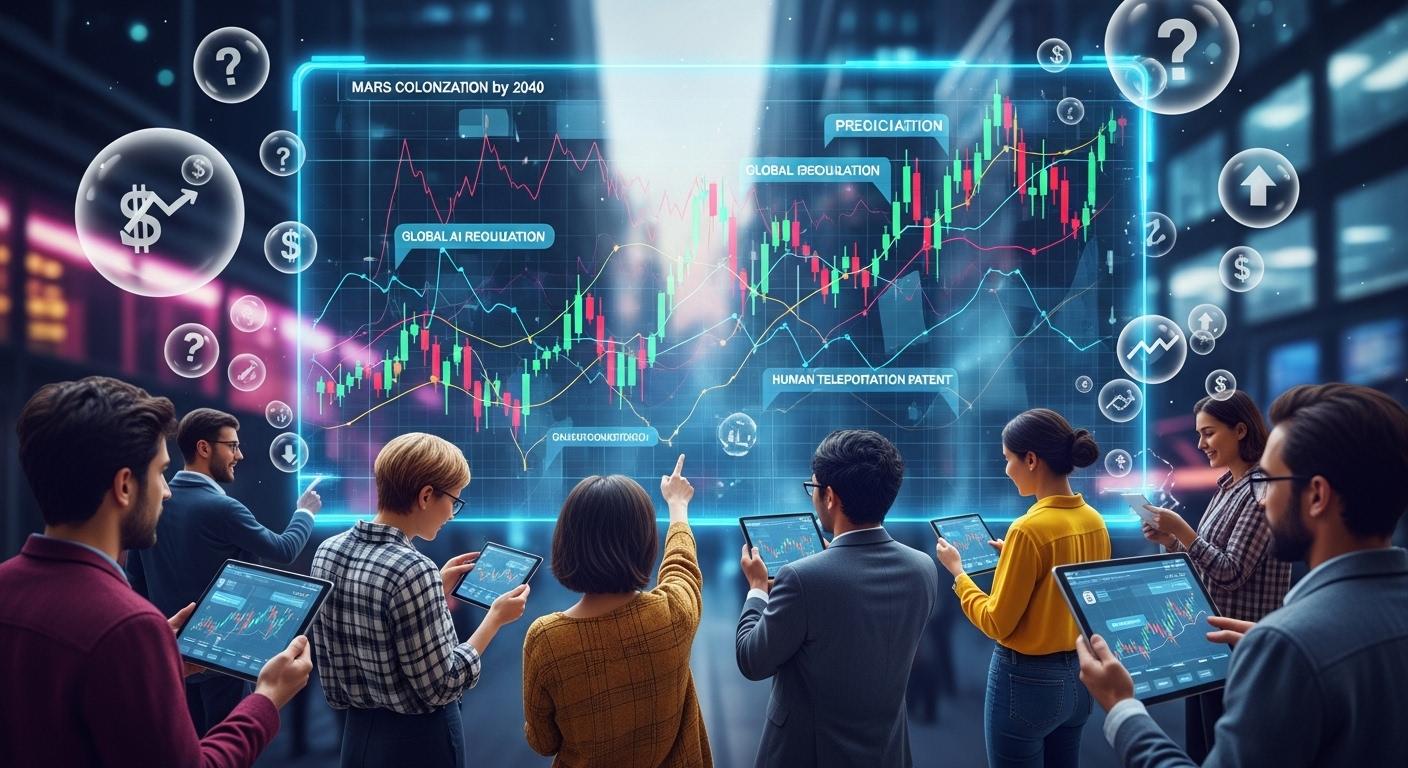
Prediction markets are trading systems where people buy and sell contracts based on the outcome of future events. These events can include elections, economic indicators, sports results, weather outcomes, crypto prices, policy decisions, or company milestones. The core idea is simple: when people put money behind their beliefs, market prices can reveal what the crowd thinks is likely to happen.
The CFTC describes event contracts as financial contracts whose value comes from the outcome of an event. Chainlink defines prediction markets as trading environments where participants buy and sell shares that represent future outcomes, with prices acting as probability signals.
This is why prediction markets are often described as forecasting systems. They are not just polls. A poll asks people what they think. A prediction market asks people what they are willing to risk money on. That difference can create stronger incentives for accuracy, although it also introduces risks such as manipulation, insider trading, and liquidity problems.
What Are Prediction Markets?
A prediction market is a platform where users trade contracts linked to a future event. A simple market may ask, “Will Bitcoin close above $100,000 by the end of the year?” Traders can buy “Yes” or “No” contracts. If the event happens, the winning contract pays out. If it does not, the losing side becomes worthless or settles at zero.
In many markets, the contract price can be read as an implied probability. If a “Yes” contract trades at $0.70 and pays $1 if correct, the market is roughly suggesting a 70% chance of that outcome. This makes prediction markets useful because they convert scattered opinions into one visible price.
NBER research on prediction markets found that these markets can aggregate dispersed information into forecasts and often outperform many standard benchmarks. That does not mean they are always right, but it explains why economists, traders, journalists, and analysts pay attention to them.
How Prediction Markets Work
Prediction markets work through a few key steps. First, a market is created around a clearly defined future outcome. The wording matters because settlement depends on whether the event can be judged clearly. A vague market creates disputes.
Second, traders buy and sell outcome contracts. Prices move as new information enters the market. If news increases confidence that an event will happen, the “Yes” price may rise. If confidence falls, the price may drop.
Third, the event is resolved. A trusted source, platform operator, oracle, or settlement mechanism determines the result. The winning side receives the payout, and the losing side receives little or nothing.
In blockchain-based markets, smart contracts can manage trading and payouts. Chainlink explains that decentralized prediction markets rely on smart contracts to execute trades and distribute payouts, but they need secure offchain data to resolve real-world events.
Why Prediction Markets Are Used for Forecasting
Prediction markets are valuable because they reward useful information. If a trader believes the market is wrong, they can buy the underpriced outcome. If many informed traders do this, the price adjusts. This process can turn private knowledge, public data, and expert judgment into a live forecast.
This is different from social media opinions or expert commentary. A prediction market puts pressure on claims because traders can profit from being right and lose money from being wrong. That incentive can make the forecast more disciplined.
For businesses, governments, and analysts, prediction markets can help estimate uncertain outcomes such as product demand, election results, regulatory decisions, sales targets, or macroeconomic events. This is why prediction market development has become a growing area for companies that want data-driven forecasting tools.
Types of Prediction Markets
Prediction markets can be built in different formats. The most common is a binary market, where the outcome is yes or no. For example, “Will a candidate win the election?” or “Will inflation exceed 4% this month?”
There are also categorical markets, where several outcomes compete. A market may ask which party will win an election, which team will win a tournament, or which company will reach a milestone first.
Some markets use scalar outcomes. These are based on a number, such as GDP growth, inflation rate, rainfall amount, or token price. These are more complex because payout depends on how close the final result is to a value.
Prediction markets may also be centralized, regulated, decentralized, or hybrid. Kalshi is an example of a regulated event-contract platform in the U.S., while Polymarket became widely known as a crypto-based prediction market during recent election cycles. Reuters reported that Polymarket recorded $3.1 billion in U.S. election-bet volume by early November 2024.
Prediction Markets vs Traditional Polls
Prediction markets and polls both try to measure expectations, but they work differently. Polls ask a sample of people what they believe or prefer. Prediction markets ask traders to price outcomes based on what they think will happen.
Polls can be useful, but they may suffer from sampling problems, response bias, timing issues, or poor turnout assumptions. Prediction markets can react faster to new information because traders update prices whenever they see an opportunity.
However, prediction markets are not always better. Thin liquidity can distort prices. A few large traders may move a market. Some traders may bet for entertainment rather than accuracy. Insider information can also create ethical and legal issues.
The best use of prediction markets is not to treat them as perfect truth machines. They should be read as one forecasting signal among several.
Blockchain-Based Prediction Markets
Blockchain has changed how prediction markets can be built. In traditional systems, a central operator manages accounts, trades, balances, and settlement. In blockchain systems, smart contracts can hold funds, process trades, and pay winners based on verified outcomes.
This model can improve transparency because trades, liquidity, and settlement activity may be visible onchain. It can also support global wallet-based access, depending on local laws and platform restrictions.
Blockchain prediction markets usually need three layers:
- smart contracts for trade execution and payouts
- oracles for real-world outcome data
- user interfaces for market discovery and participation
This is why prediction market development company support is often important for businesses entering this space. Building a reliable market requires more than a simple betting interface. It needs contract logic, liquidity design, oracle integration, dispute rules, security review, and compliance awareness.
The Role of Oracles
Oracles are essential in blockchain-based prediction markets because blockchains cannot naturally know what happened in the real world. A smart contract can hold funds, but it cannot independently know who won an election, whether a weather event happened, or what an official inflation report said.
Chainlink defines a prediction market oracle as secure middleware that fetches, verifies, and delivers real-world event data to blockchains so smart contracts can resolve markets and trigger payouts correctly.
This makes oracle quality central to trust. If the oracle is slow, unclear, biased, or manipulable, the market can fail. Strong prediction markets need clear resolution criteria, reliable data sources, fallback rules, and dispute procedures.
For example, a market should not simply ask, “Will a project succeed?” That is too vague. It should define a measurable condition, such as “Will the project reach $50 million in TVL by December 31, 2026, according to a named data source?” Clear wording reduces disputes.
Benefits of Prediction Markets
The first major benefit is information aggregation. Prediction markets can combine many views into one price. That price may reflect public news, expert opinion, private research, and trader sentiment.
The second benefit is speed. Prices can update quickly when new information appears. This makes prediction markets useful during fast-moving events such as elections, regulatory decisions, sports finals, or major economic releases.
The third benefit is transparency. In blockchain-based markets, users may inspect market activity, contract balances, and settlement flows. This can make the system more open than closed forecasting tools.
The fourth benefit is hedging. The CFTC notes that event contracts can be used to hedge economic risk or speculate on event outcomes. For example, a business affected by weather, policy, or economic data may use event contracts to offset uncertainty.
Risks and Limitations
Prediction markets also carry serious risks. The first is liquidity risk. A market with low trading volume may not produce a reliable forecast. If only a few people trade, the price may reflect their views rather than the crowd’s knowledge.
The second risk is manipulation. A wealthy trader may move prices to influence perception. This can matter during elections or public controversies where market prices are quoted by media.
The third risk is insider trading. Reuters reported in March 2026 that Kalshi planned to block politicians and athletes from trading in their own markets due to scrutiny around potential insider trading.
Recent reporting also shows why this issue matters. AP reported in April 2026 that Kalshi fined and suspended three U.S. political candidates for betting on their own election outcomes, highlighting growing concerns around market integrity.
The fourth risk is legal uncertainty. Prediction markets may be treated as derivatives, gambling products, or restricted financial instruments depending on jurisdiction and market type. Reuters reported in 2026 that legal disputes and regulatory pressure continued as prediction markets expanded.
Real-World Examples
Polymarket is one of the best-known crypto prediction market examples. It gained major attention during the 2024 U.S. election cycle, when Reuters reported billions in election-related volume. This showed that crypto-based prediction markets could attract mainstream attention during high-interest events.
Kalshi is another important example because it operates in a more regulated event-contract environment. Its growth has also attracted regulatory debate. In 2026, Reuters reported that Kalshi moved to block certain insiders such as politicians and athletes from trading in markets tied to their own activities.
These examples show both sides of the category. Prediction markets can be powerful forecasting tools, but they also create hard questions around legality, ethics, insider access, and market integrity.
Business Use Cases for Prediction Markets
Prediction markets are not limited to politics or sports. Businesses can use forecasting systems for product demand, sales targets, market expansion, supply chain risk, hiring needs, customer behavior, and internal planning.
For example, a company could create an internal prediction market asking whether a product will meet a quarterly revenue goal. Employees with different information can trade based on their expectations. The resulting price may give leadership a useful signal before official results arrive.
Crypto projects can use prediction markets for token price events, governance outcomes, launch performance, protocol metrics, or community forecasting. Financial platforms can use them for macroeconomic indicators, interest rate expectations, or regulatory decisions.
Professional Prediction market development services can help businesses design these systems with proper market wording, trading logic, security controls, user access, analytics, and settlement rules.
What Makes a Strong Prediction Market?
A strong prediction market starts with clear event wording. The outcome must be specific, measurable, and tied to a trusted source. Poorly worded markets create confusion and disputes.
Liquidity is the second requirement. Without enough traders and capital, prices may not reflect meaningful probabilities. Market makers, incentives, and strong user engagement can help improve liquidity.
The third requirement is fair access. If only insiders can trade profitably, the market loses public trust. Platforms need rules to prevent conflicts of interest and misuse of nonpublic information.
The fourth requirement is secure settlement. In blockchain systems, this means reliable oracles and audited smart contracts. In regulated systems, it means strong compliance, surveillance, and dispute handling.
The Future of Prediction Markets
Prediction markets are likely to grow, but their future will depend on regulation, trust, and product design. Recent scrutiny around insider trading and political markets shows that platforms cannot rely only on user demand. They need strong governance and market integrity rules.
At the same time, demand for forecasting tools is rising. Businesses, analysts, traders, and media outlets want faster signals about uncertain events. If prediction markets can improve liquidity, reduce manipulation, and clarify legal status, they may become a more accepted part of financial and decision-making infrastructure.
Blockchain will likely remain important in this space because it supports transparent settlement, programmable payouts, and global market access. But the strongest platforms will combine decentralization with clear rules, reliable data, and responsible safeguards.
Conclusion
Prediction markets are forecasting systems where users trade contracts tied to future events. Their prices can act as live probability signals, helping people understand what the market believes is likely to happen. They are useful because they turn information, incentives, and uncertainty into tradable signals.
Still, prediction markets are not perfect. They can suffer from low liquidity, manipulation, insider trading, legal uncertainty, and poor market design. Blockchain can improve transparency and automation, but it also depends on secure smart contracts and reliable oracles.

 عربي
عربي