


 SPARK Website
Subscription vs Ads: What Mobile Game App Development Companies Recommend
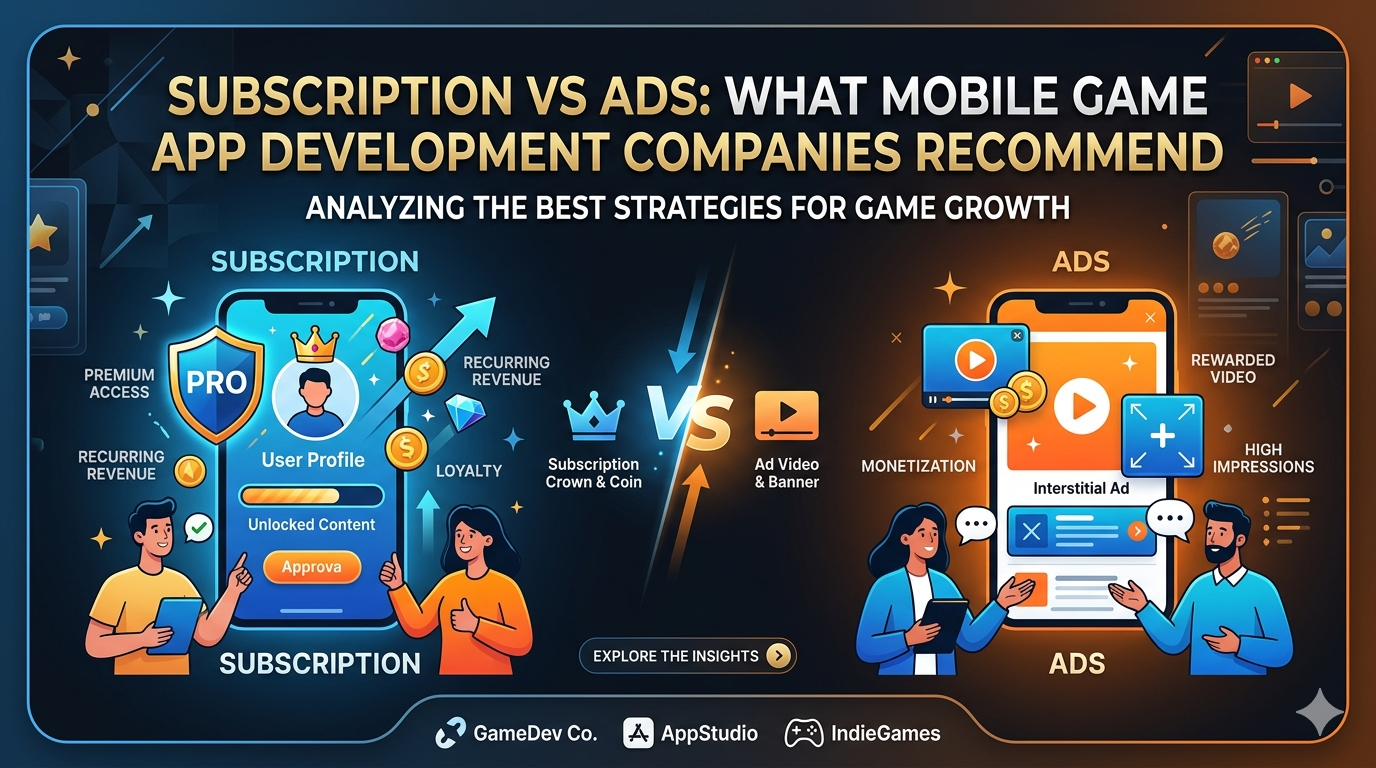
Mobile game monetization has evolved significantly over the past decade. What once relied heavily on banner ads and simple in-app purchases has now expanded into sophisticated models like subscriptions, hybrid monetization, and personalized revenue strategies. Today, game owners are faced with a critical question: Should you monetize your game using ads or subscriptions?
Both models offer unique advantages and challenges. Ads-based monetization enables developers to generate revenue from a broad audience, including non-paying users. On the other hand, subscription models focus on creating recurring income streams by offering premium value to loyal players.
Choosing the right approach is not just a technical decision—it’s a strategic one that directly impacts user experience, retention, and long-term revenue. This is where mobile game app development companies step in. With expertise in player behavior, analytics, and monetization frameworks, they guide businesses in selecting and implementing the most effective revenue models.
In this blog, we’ll break down the differences between subscription and ads-based monetization, explore their pros and cons, and uncover what top development companies actually recommend for building profitable mobile games.
Understanding Mobile Game Monetization Models
Monetization in mobile gaming refers to the strategies used to generate revenue from a game while maintaining an engaging player experience. Modern mobile games rarely rely on a single revenue stream. Instead, they adopt a combination of monetization models tailored to their audience and gameplay.
Key Monetization Models
1. Ads-Based Monetization
This model generates revenue by displaying advertisements to players. It works particularly well for free-to-play games with large user bases.
2. Subscription-Based Monetization
Players pay a recurring fee (weekly, monthly, or yearly) to access premium features, exclusive content, or ad-free gameplay.
3. Hybrid Monetization
A combination of ads, subscriptions, and sometimes in-app purchases (IAPs), allowing developers to maximize revenue across different user segments.
Why Monetization Strategy Matters
The success of a game depends heavily on how well the monetization model aligns with:
- Game genre (casual, mid-core, hardcore)
- Target audience behavior
- Player engagement patterns
For example, casual games often rely on ads due to high traffic and low spending behavior, while mid-core and hardcore games benefit more from subscriptions and in-app purchases.
Mobile game app development companies analyze these factors early in the development lifecycle to ensure the monetization strategy supports both user satisfaction and long-term profitability.
Ads-Based Monetization: A Deep Dive
Ads-based monetization remains one of the most widely used strategies in mobile gaming, especially in free-to-play ecosystems.
1. Types of In-Game Ads
Rewarded Ads
Players voluntarily watch ads in exchange for in-game rewards such as coins, extra lives, or boosters. This is the most user-friendly ad format.
Interstitial Ads
Full-screen ads that appear between gameplay sessions, such as after completing a level.
Banner Ads
Small ads displayed on the screen, typically at the top or bottom, offering lower revenue but minimal disruption.
Native Ads
Integrated seamlessly into the game interface, making them less intrusive and more engaging.
2. Advantages of Ads
- Monetizes All Users: Even non-paying players contribute to revenue
- Low Entry Barrier: No upfront cost for users
- Scalable Revenue: Works well with high user acquisition
3. Challenges of Ads
- User Experience Impact: Excessive ads can frustrate players
- Lower Revenue Per User: Compared to subscriptions
- Churn Risk: Poor ad placement can lead to player drop-off
Expert Insight
Mobile game app development companies recommend ads primarily for:
- Hyper-casual and casual games
- Games targeting a broad audience
- Early-stage monetization before introducing premium features
When implemented strategically—especially through rewarded ads—this model can generate consistent revenue without harming engagement.
Subscription-Based Monetization: A Deep Dive
Subscription-based monetization is rapidly gaining popularity, particularly among mid-core and hardcore games that offer long-term engagement.
1. How Subscription Models Work
Players pay a recurring fee to access:
- Premium content
- Exclusive features
- Ad-free experiences
Common subscription formats include:
- Monthly VIP memberships
- Seasonal battle passes
- Weekly reward programs
2. Benefits of Subscriptions
- Predictable Revenue: Stable and recurring income
- Higher LTV (Lifetime Value): Players spend more over time
- Stronger Retention: Subscribers are more engaged
3. Challenges of Subscriptions
- Content Demand: Requires regular updates and fresh content
- Higher Expectations: Players expect continuous value
- Limited Audience: Not all players are willing to subscribe
Expert Insight
Mobile game app development companies suggest subscriptions for:
- Games with strong progression systems
- Titles with ongoing content updates
- Games with loyal player communities
When executed correctly, subscriptions can transform a game into a recurring revenue engine, reducing dependency on ad-based income.
Subscription vs Ads: Key Differences
Understanding the differences between these two models is crucial for making the right decision.
Revenue Model
- Ads: Volume-based revenue (depends on user traffic)
- Subscriptions: Predictable recurring revenue
User Experience
- Ads: Can disrupt gameplay if overused
- Subscriptions: Typically offer a smoother, ad-free experience
Player Retention
- Ads: Lower retention if intrusive
- Subscriptions: Higher retention due to commitment
Scalability
- Ads: Scales with user base size
- Subscriptions: Scales with user loyalty and engagement
Best Fit by Genre
- Ads: Hyper-casual, puzzle, arcade games
- Subscriptions: RPGs, strategy games, multiplayer games
Key Takeaway
Neither model is universally better. The choice depends on your game’s design, audience, and long-term vision.
What Mobile Game App Development Companies Recommend
A top mobile game app development company rarely recommends choosing just one monetization model. Instead, they rely on data-driven strategies to determine the best approach.
Factors Considered
1. Target Audience
- Casual players prefer free experiences with ads
- Dedicated players are more likely to pay for subscriptions
2. Game Genre
- Casual games → Ads-heavy models
- Mid-core/hardcore games → Subscription-focused
3. Player Lifecycle
- New users → Ads monetization
- Engaged users → Subscription upselling
When to Choose Ads
- Your game targets a mass audience
- You expect high download volumes
- Players are less likely to spend money
When to Choose Subscriptions
- Your game offers continuous content
- You have strong retention metrics
- Players are highly engaged
Why Hybrid Models Are Recommended
Most development companies advocate for a hybrid monetization strategy, combining:
- Ads for non-paying users
- Subscriptions for premium users
This ensures:
- Maximum revenue coverage
- Balanced user experience
- Higher overall profitability
Real-World Approach
Experts continuously test and refine monetization strategies using analytics and player feedback. This iterative process ensures the game remains both profitable and player-friendly.
Hybrid Monetization: The Best of Both Worlds
Hybrid monetization is the most effective approach for modern mobile games.
How It Works
- Free users generate revenue through ads
- Paying users subscribe for premium benefits
User Segmentation
Non-Paying Users
- Monetized via ads
- Encouraged to upgrade
Paying Users
- Offered ad-free experience
- Given exclusive rewards
Benefits of Hybrid Models
- Maximizes revenue across all user types
- Reduces dependency on a single model
- Enhances user satisfaction
Implementation Strategy
Mobile game app development companies:
- Carefully balance ad frequency
- Offer compelling subscription value
- Continuously optimize through data
This approach ensures sustainable growth without compromising user experience.
Role of Analytics in Choosing the Right Model
Analytics plays a crucial role in monetization decisions.
Key Metrics
- ARPU (Average Revenue Per User)
- LTV (Lifetime Value)
- Retention Rate
A/B Testing
Developers test:
- Ad placements
- Subscription pricing
- Reward structures
Personalization
Advanced analytics enables:
- Personalized offers
- Dynamic pricing
- Tailored user experiences
Continuous Optimization
Monetization is not static. Development companies constantly refine strategies based on real-time data to maximize revenue and engagement.
Common Mistakes to Avoid
Avoiding common pitfalls is essential for success.
Overloading Ads
Too many ads can frustrate users and increase churn.
Weak Subscription Value
If users don’t see value, they won’t subscribe.
Ignoring Player Feedback
User feedback provides insights into monetization issues.
Lack of Testing
Failing to test different strategies leads to missed opportunities.
One-Size-Fits-All Approach
Every game requires a customized monetization strategy.
Future Trends in Mobile Game Monetization
The future of mobile game monetization is shifting toward player-centric strategies.
Emerging Trends
- Growth of ad-free premium subscriptions
- AI-driven monetization personalization
- Increased focus on user experience
- Expansion of hybrid models
Development companies are leveraging these trends to create more engaging and profitable gaming ecosystems.
Conclusion
Choosing between subscriptions and ads is not a simple decision—it requires a deep understanding of your game, audience, and revenue goals. While ads provide scalability and accessibility, subscriptions offer stability and higher lifetime value.
Mobile game app development companies recommend a balanced, data-driven approach, often combining both models to maximize revenue and user satisfaction.
By leveraging expert insights, analytics, and continuous optimization, you can build a monetization strategy that not only generates revenue but also enhances the overall player experience—ensuring long-term success in the competitive mobile gaming market.

 عربي
عربي