


 SPARK Website
How many grafts are needed for full hair restoration?
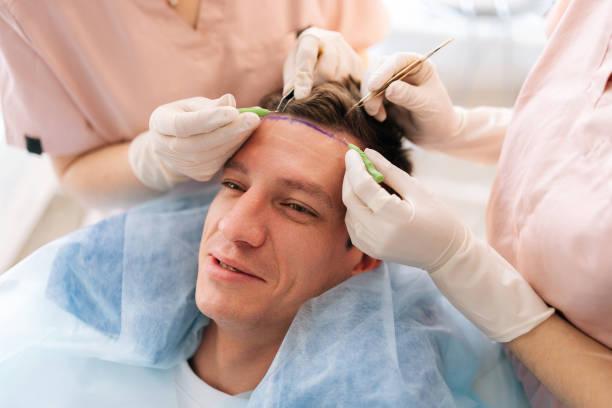
Hair loss affects people differently, and the level of baldness or thinning varies from person to person. Because of this, the number of grafts needed for full hair restoration is not the same for everyone. Many individuals exploring long-term solutions consider Hair Transplant in Riyadh (زراعة الشعر) because it offers advanced techniques that can restore natural density and improve overall appearance.
Modern hair transplant procedures are designed to provide customized results based on each patient’s hair loss pattern. Clinics offering Hair Transplant in Riyadh carefully evaluate the scalp, donor hair availability, and desired hair density before deciding how many grafts are required for a natural and balanced outcome.
Understanding Hair Grafts in Hair Transplant
A hair graft refers to a small unit of hair follicles that is taken from the donor area and implanted into areas experiencing hair loss. Each graft may contain one to four hair follicles, depending on natural grouping.
The number of grafts required depends on how much area needs coverage and how dense the patient wants the final result to look.
How Grafts Work in Hair Restoration
Hair grafts are carefully extracted and implanted using advanced techniques to ensure natural growth.
- Donor Hair Extraction: Healthy follicles are taken from the back or sides of the scalp
- Graft Preparation: Follicles are grouped into grafts for transplantation
- Implantation: Grafts are placed into thinning or bald areas
- Growth Phase: Transplanted grafts grow naturally over time
This process ensures that the new hair blends naturally with existing hair.
Factors That Determine Number of Grafts Needed
The number of grafts required for full hair restoration varies based on several important factors.
Extent of Hair Loss
The level of baldness plays a major role in determining graft count.
- Mild hair loss requires fewer grafts
- Moderate hair loss requires a medium number of grafts
- Advanced baldness requires a higher number of grafts
Desired Hair Density
Some individuals prefer higher density for a fuller appearance, which increases the number of grafts needed.
Donor Hair Availability
The amount of healthy donor hair available also limits how many grafts can be safely used.
Hair Characteristics
Hair thickness, texture, and curl also affect how many grafts are needed to achieve good coverage.
Average Graft Requirements for Full Restoration
Although every case is unique, general estimates can help understand typical graft ranges.
- Hairline Restoration: 800 to 1500 grafts
- Mild Hair Thinning: 1500 to 2500 grafts
- Moderate Baldness: 2500 to 4000 grafts
- Advanced Hair Loss: 4000 to 6000+ grafts
These numbers are only estimates and may vary depending on individual needs and clinical evaluation.
Techniques That Influence Graft Usage
Modern hair transplant methods help optimize graft usage and improve results.
Follicular Unit Extraction (FUE)
FUE is widely used for precise graft extraction.
- Individual grafts are removed one by one
- Minimally invasive technique
- Allows accurate placement for natural results
Follicular Unit Transplantation (FUT)
FUT allows harvesting a larger number of grafts in one session.
- A strip of scalp is used to collect grafts
- Efficient for covering larger bald areas
- Often used for advanced hair loss cases
Both methods are effective, and the choice depends on patient needs.
Planning a Full Hair Restoration
Full hair restoration is not just about numbers; it is about designing a natural and balanced look.
Key Planning Steps
- Assessing hair loss pattern
- Evaluating donor area strength
- Designing natural hairline
- Distributing grafts strategically
- Ensuring long-term density balance
This planning ensures that the results look natural and age-appropriate.
What to Expect After Graft Implantation
After graft implantation, the scalp goes through a natural healing and growth cycle.
Early Recovery Phase
- Mild redness or swelling may appear
- Small scabs form around grafts
- Healing begins within a few days
Growth Timeline
- First Few Weeks: Temporary shedding may occur
- 3 to 4 Months: New hair starts growing
- 6 to 12 Months: Full density becomes visible
This gradual process ensures natural and long-lasting results.
Importance of Professional Evaluation
A proper consultation is essential to determine the exact number of grafts needed. Specialists carefully analyze:
- Hair loss severity
- Donor hair strength
- Scalp condition
- Desired final appearance
This ensures that the treatment plan is safe, realistic, and effective.
Book Your Consultation
If you are considering full hair restoration and want to understand how many grafts you may need, professional evaluation is the first step. At Royal Clinic Saudia (عيادات رويال كلينك), experts design personalized hair transplant plans based on individual hair loss patterns and goals. Book your consultation today to receive a tailored treatment plan for natural and long-lasting results.
FAQs:
How many grafts are needed for full hair restoration?
The number of grafts varies depending on hair loss severity, but full restoration typically requires anywhere from 2000 to 6000 or more grafts.
Can a single hair transplant session cover full baldness?
In many cases, multiple sessions may be needed depending on the extent of hair loss and donor hair availability.
Do more grafts always mean better results?
Not always. Proper placement and natural design are more important than just the number of grafts used.
How is the number of grafts decided?
A specialist evaluates the scalp, donor area, and hair loss pattern during consultation to determine the exact graft requirement.

 عربي
عربي