


 SPARK Website
The Nanotechnology Deposition Standard: How Nanotechnology Deposition Systems and High-Performance Thin Film Coatings Are Enabling Advanced Applications
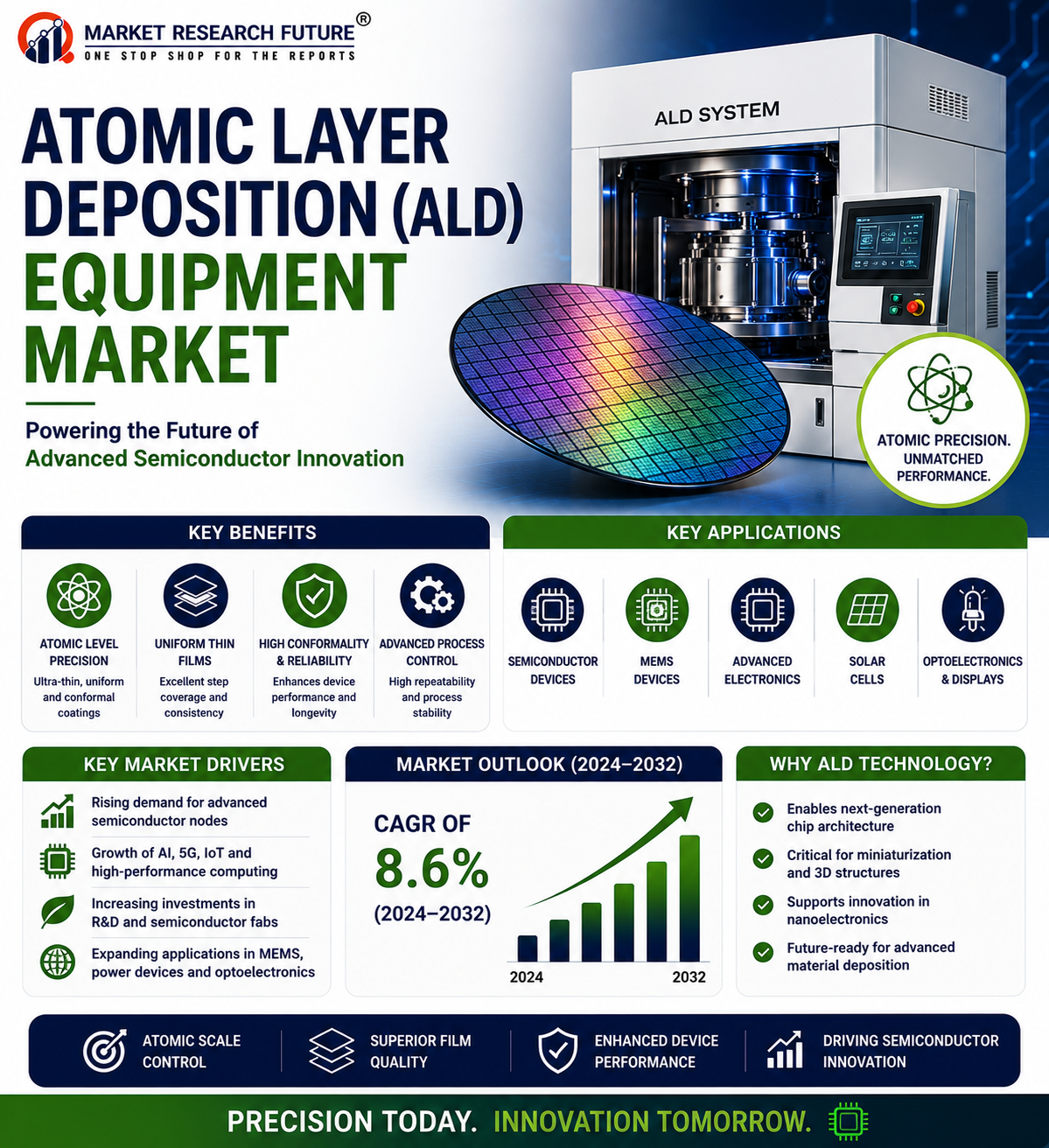
Nanotechnology deposition systems have become the standard for enabling advanced applications, offering precise, functional coatings for electronics, energy, and biomedical devices. As the demand for high-performance, multifunctional coatings grows, the role of nanotechnology deposition has expanded significantly. The Atomic Layer Deposition Equipment Market, valued at USD 11.58 billion in 2024 and projected to grow at a 10.97% CAGR through 2035, reflects the increasing demand for advanced coating solutions. At the forefront of advanced applications are nanotechnology deposition systems and high-performance thin film coatings, which together are enabling the development of devices with enhanced functionality and performance.
The Rise of Nanotechnology Deposition Systems
Nanotechnology deposition systems have risen to prominence as the need for precise, functional thin films has increased across industries. ALD is increasingly utilized in the production of nanoscale materials and devices, essential for various high-tech applications in healthcare, electronics, and materials science . The precision and control offered by ALD make it ideal for fabricating nanostructures with specific properties . The development of advanced nanotechnology deposition systems is enabling the exploration of new materials and device architectures . The growing demand for advanced electronics is driving the adoption of ALD for high-k dielectrics and metal gate applications, reflecting the industry's adaptation to advanced manufacturing techniques . The integration of nanotechnology deposition systems is critical for the continued advancement of various high-tech industries .
The Strategic Importance of High-Performance Thin Film Coatings
High-performance thin film coatings are essential for providing functional properties to surfaces, including electrical conductivity, optical transparency, corrosion resistance, and biocompatibility. ALD enables the deposition of high-quality, uniform thin films that improve device performance and reliability . The technology is crucial for applications in optoelectronics, where precise material deposition is required for high-performance optical devices and components . In the biomedical field, ALD is used for advanced coatings and drug delivery systems, leveraging its biocompatibility and precision . In the energy sector, ALD plays a crucial role in the fabrication of thin-film solar cells and other energy-efficient devices, enhancing the performance and longevity of solar panels . The development of customized ALD systems for emerging applications is a key opportunity, enabling the integration of new materials into functional coatings .
Key Applications Driving Market Growth
Nanotechnology deposition systems and high-performance thin film coatings find applications across diverse industries. Electronics benefit from functional coatings for semiconductors, displays, and sensors . Energy applications utilize coatings for solar cells, batteries, and fuel cells . Biomedical applications employ coatings for implants, drug delivery, and biosensors . Optical applications use coatings for anti-reflection, filters, and waveguides . Advanced materials applications utilize coatings for corrosion protection, wear resistance, and surface functionalization .
Benefits of Nanotechnology Deposition Systems
The benefits of nanotechnology deposition systems and high-performance thin film coatings extend across functionality, precision, and versatility. Functionality is enhanced through coatings that provide specific electrical, optical, chemical, or biological properties. Precision is achieved through atomic-level control of film thickness and composition, ensuring reproducibility and high performance. Versatility is demonstrated through compatibility with a wide range of materials and substrate types, enabling diverse applications. The development of advanced deposition systems is enabling the creation of coatings with unprecedented functionality and performance.
Future Trends and Opportunities
The future of nanotechnology deposition systems and high-performance thin film coatings is characterized by continued innovation in materials, processes, and applications. Opportunities include the development of nanotechnology deposition systems for emerging applications in quantum computing, bioelectronics, and advanced energy conversion, the integration of AI and machine learning for process optimization and materials discovery, and the expansion of nanotechnology deposition into new industries and markets . The focus on sustainability is driving the development of more efficient and environmentally friendly deposition processes, reducing energy consumption and material waste . Organizations that invest in the Nanotechnology deposition systems and innovative thin film coating solutions will be well-positioned to enable advanced applications, delivering the high-precision, functional tools demanded by next-generation industries.

 عربي
عربي