


 SPARK Website
KP Automations Pasta Machines: How Process Integration Drives Efficiency in Industrial Pasta Machine Operations
Industrial Production Complexity and the Need for Integration
In modern pasta manufacturing facilities, efficiency is not determined by individual machine performance alone. Pasta machines must operate as part of a fully integrated system where each stage is interconnected and dependent on the others. In real industrial environments, lack of integration often leads to inefficiencies that reduce overall productivity despite having advanced equipment.
Pasta production involves multiple stages including mixing, extrusion, drying, and packaging. When these stages operate independently without proper coordination, it creates delays, material buildup, and inconsistent output. Process integration ensures that all components of the pasta production line function as a unified system, improving both efficiency and product quality.
Understanding Process Integration in Pasta Machine Systems
Process integration refers to the seamless coordination of all stages within the pasta production line. It involves aligning machine capacities, operational speeds, and process parameters to ensure continuous and balanced production.
In industrial pasta machines, integration ensures that material flows smoothly from one stage to another without interruptions. This reduces idle time, minimizes waste, and maintains consistent production rates. Integrated systems are designed to handle variations without disrupting overall performance.
Raw Material Handling and Upstream Integration
The integration process begins at the raw material handling stage. Consistent feeding of ingredients into the mixing system ensures stable dough preparation. Any inconsistency at this stage affects downstream processes.
In a pasta machine setup, improper integration of raw material handling can lead to irregular dough properties, which impact extrusion and drying. Ensuring synchronized operation between storage, feeding, and mixing systems is essential for maintaining process continuity.
Extrusion Stage Integration with Upstream and Downstream Processes
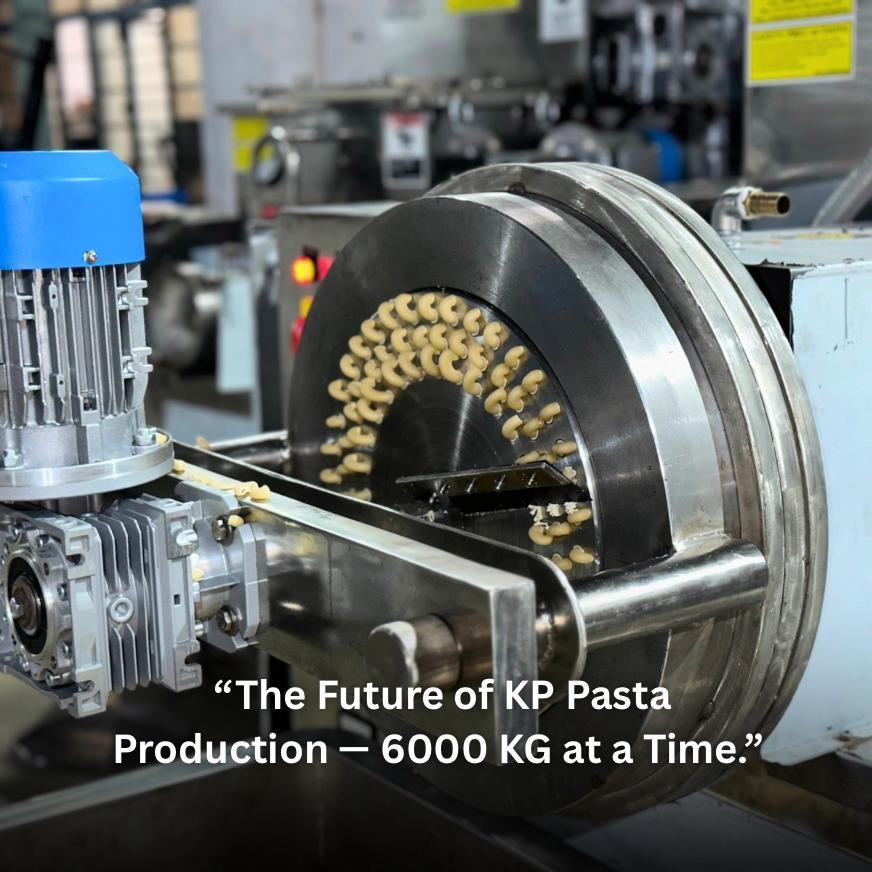
The pasta extrusion machine acts as the central link between upstream and downstream operations. It must receive a consistent supply of dough while delivering uniform output to the next stage.
In industrial pasta machines, improper integration at this stage can cause interruptions or overload conditions. If upstream processes do not supply material consistently, extrusion becomes unstable. Similarly, if downstream systems cannot handle the output rate, it creates bottlenecks.
Proper integration ensures that extrusion operates at a balanced and stable rate.
Drying System Integration and Flow Continuity
The pasta drying system must be fully integrated with the extrusion stage to maintain continuous production. Industrial pasta dryer units operate based on defined capacity and timing, which must match the output of the extrusion process.
If integration is poor, products may accumulate before entering the dryer or experience uneven loading. This affects drying efficiency and product quality. Integrated systems ensure that products move smoothly into the drying stage without delays.
Packaging Stage Synchronization in the Production Line
The final stage of the pasta production line involves transferring products to the pasta packing machine. Integration at this stage ensures that packaging keeps pace with production output.
In industrial environments, lack of synchronization can result in either accumulation of finished products or underutilization of packaging systems. Both scenarios reduce efficiency and increase operational costs.
Proper integration ensures that packaging operates in harmony with upstream processes.
Automation and Centralized Control Systems
Modern automatic pasta making machine systems rely on centralized control systems to achieve process integration. These systems monitor and control all stages of production from a single interface.
Sensors collect real-time data on parameters such as flow rate, temperature, and pressure. This data is used to adjust machine operations and maintain balance across the system. Automation reduces manual intervention and improves overall efficiency.
However, the effectiveness of integration depends on accurate system design and proper configuration.
Equipment Compatibility and System Design
Integration requires compatibility between different machines within the pasta production line. Equipment must be designed to operate together without causing disruptions.
In industrial pasta machines, mismatched capacities or incompatible designs can lead to inefficiencies. Proper system design ensures that all components work together seamlessly, supporting continuous production.
Maintenance and Sustaining Integration Efficiency
Over time, wear and tear can affect the integration of pasta machines. Misalignment, component degradation, or system inefficiencies can disrupt coordination between stages.
Regular maintenance is essential to sustain integration efficiency. Preventive maintenance practices help identify and resolve issues before they impact production.
Manufacturers operating in industrial hubs such as G.B D-372, D Block, Sector 10, Noida, Uttar Pradesh 201301 often emphasize reliable technical support. Accessible communication channels like +91 9310738142 and kpautomations372@gmail.com are typically maintained to address operational challenges efficiently.
Evaluating Pasta Making Machine Price Based on Integration Capability
When considering pasta making machine price, integration capability should be a key factor. Machines that support seamless coordination across the production line provide better efficiency and long-term value.
Although integrated systems may have higher initial costs, they reduce operational inefficiencies and improve overall productivity. Evaluating integration features helps manufacturers make informed investment decisions.
Energy Efficiency Through Integrated Operations
Process integration contributes to energy efficiency by reducing idle time and unnecessary machine operation. Industrial pasta dryer systems, which consume significant energy, operate more efficiently when integrated with upstream processes.
Efficient integration ensures that energy is used effectively, lowering operational costs and supporting sustainable production practices.
Future Trends in Integrated Pasta Machine Systems
Technological advancements are enhancing process integration in pasta machines. Digital platforms are enabling better communication between machines, improving coordination and control.
Adaptive systems are being developed to automatically adjust operations based on real-time data. These systems aim to maintain optimal integration without constant manual intervention.
Additionally, modular designs are allowing manufacturers to expand or modify production lines while maintaining integration.
Conclusion
Process integration is a critical factor in driving efficiency in industrial pasta machine operations. It ensures smooth coordination between all stages of the pasta production line, reducing inefficiencies and improving product quality.
By focusing on integration from raw material handling to final packaging, manufacturers can achieve continuous and reliable production. Automation, proper system design, and regular maintenance further support integrated operations.
In industrial pasta manufacturing, integration is not just about connecting machines. It is about creating a unified system that delivers consistent performance, high efficiency, and long-term operational success

 عربي
عربي