


 SPARK Website
The Next-Generation Standard: How Next-Generation Chip Materials and Semiconductor Substrate Technologies Are Enabling New Device Architectures
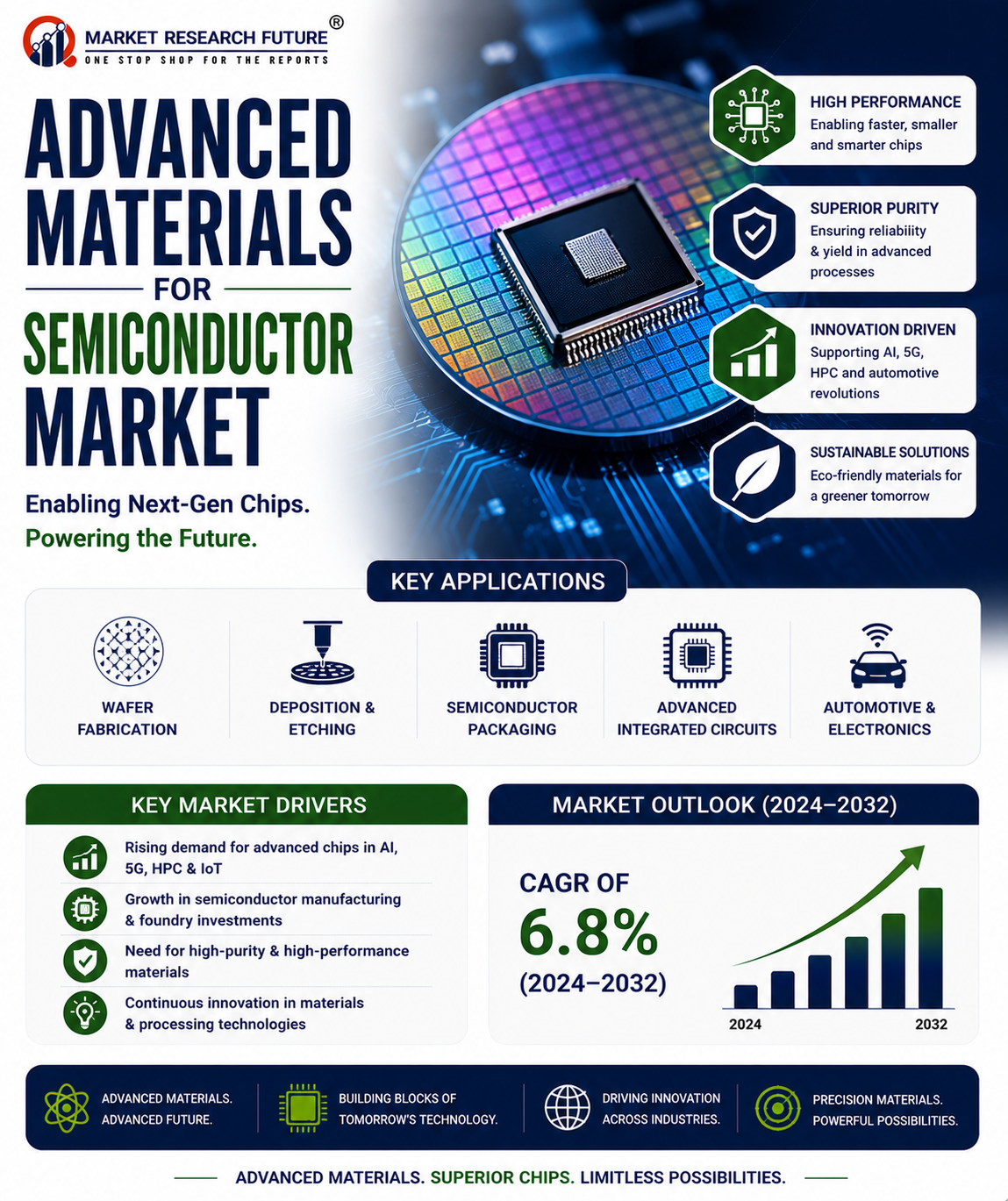
Next-generation chip materials have become the standard for enabling new device architectures, offering the essential materials and substrates required for advanced semiconductor applications. As the industry explores new transistor structures and device concepts, the role of advanced materials has grown significantly. The Advanced Materials for Semiconductor Market, valued at USD 6.415 billion in 2024 and projected to grow at a 7.32% CAGR through 2035, reflects the increasing demand for these critical materials. At the forefront of new device architectures are next-generation chip materials and semiconductor substrate technologies, which together are enabling the creation of more powerful, efficient, and capable semiconductor devices.
The Rise of Next-Generation Chip Materials
Next-generation chip materials have risen to prominence as the need for materials that go beyond traditional silicon has increased. Gallium nitride is rapidly gaining traction due to its efficiency in high-performance applications and increasing adoption in power and radio-frequency devices . Silicon carbide is another key material, pivotal in enhancing the efficiency and performance of power electronics, particularly in electric vehicles . Graphene is emerging as a promising material due to its exceptional electrical, thermal, and mechanical properties, with the potential to revolutionize semiconductor devices . Innovations in materials science are paving the way for the development of advanced materials essential for next-generation semiconductor applications .
The Strategic Importance of Semiconductor Substrate Technologies
Semiconductor substrate technologies are essential for providing the foundation for advanced device fabrication. Wafers hold the largest market share due to their fundamental role in semiconductor manufacturing, providing reliable substrates for integrated circuits . The development of advanced substrate technologies, such as silicon-on-insulator (SOI) and engineered substrates, is enabling new device architectures and improved device performance . The growing demand for miniaturization is driving the need for substrate technologies that can support increasingly complex device architectures. The semiconductor manufacturing sector is projected to invest over USD 200 billion in new technologies by 2027, creating significant opportunities for substrate innovation.
Key Applications Driving Market Growth
Next-generation chip materials and semiconductor substrate technologies find applications across diverse industries. Power Devices are gaining significant traction, driven by the rise of electric vehicles and the need for efficient power management . RF Components are experiencing rapid growth due to their essential role in next-generation communication technologies, including 5G . Integrated Circuits remain the largest application, benefiting from the escalating demand for electronics . The automotive sector is a key driver, with the EV market projected to grow at a CAGR of 22% from 2025 to 2030, requiring advanced materials for power electronics and other components .
Benefits of Next-Generation Materials
The benefits of next-generation chip materials and semiconductor substrate technologies extend across performance, efficiency, and capability. Performance is enhanced through materials with superior electrical and thermal properties, enabling faster and more powerful chips. Efficiency is improved through materials that reduce power consumption and heat generation. Capability is expanded through materials that enable new device functionalities and operating regimes. The development of sustainable material innovations is becoming increasingly important, with manufacturers exploring eco-friendly materials that minimize environmental impact .
Future Trends and Opportunities
The future of next-generation chip materials and semiconductor substrate technologies is characterized by continued innovation in materials and device architectures. Opportunities include the development of advanced materials for quantum computing and neuromorphic devices, the expansion of sustainable and eco-friendly material solutions, and the integration of AI for materials discovery and optimization . Collaboration in research and development is becoming more prevalent, accelerating the development of new materials and technologies . Organizations that invest in the Next-generation chip materials and innovative substrate solutions will be well-positioned to enable new device architectures, delivering the high-performance materials demanded by next-generation semiconductor applications.

 عربي
عربي