


 SPARK Website
Best VPN for Remote Work 2026 | Secure & Fast VPN
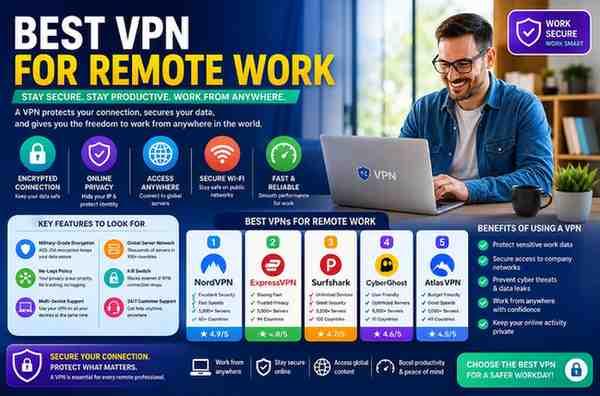
Discover the best VPN for remote work in 2026. Compare top VPNs for security, speed, privacy, and reliable access to business networks anywhere.
Introduction
Remote work has transformed the way businesses operate, allowing employees to work from virtually anywhere. Whether you're working from home, a coworking space, or traveling internationally, protecting sensitive company data is more important than ever.
Using the best VPN for remote work ensures your internet connection remains encrypted, your online activities stay private, and your business information is protected from cyber threats.
This comprehensive guide explains everything you need to know about choosing a VPN for remote work, including essential features, benefits, security protocols, and factors to consider before selecting a provider.
🛡️ Protect My Privacy
Why You Need a VPN for Remote Work
Working remotely exposes employees to numerous online security risks, especially when using public Wi-Fi networks.
Protect Sensitive Company Data
A VPN encrypts internet traffic, preventing hackers from intercepting confidential business information.
Secure Public Wi-Fi Connections
Coffee shops, airports, hotels, and coworking spaces often provide unsecured Wi-Fi networks. A VPN protects your data on these networks.
Access Company Resources Securely
Many organizations require employees to connect through a VPN to access:
- Internal applications
- Company databases
- Shared drives
- Business software
- Corporate email
Maintain Online Privacy
A VPN hides your IP address and encrypts your browsing activity, reducing the amount of personal information exposed online.
⚡ Claim VPN Discount
How Does a VPN Work?
A Virtual Private Network (VPN) creates a secure encrypted tunnel between your device and a remote server.
Encryption
All data transmitted through the VPN is encrypted, making it unreadable to unauthorized users.
IP Address Masking
Your real IP address is replaced with the VPN server's IP address, improving privacy.
Secure Data Transmission
Sensitive information such as passwords, financial records, and business documents remains protected during transmission.
Benefits of Using the Best VPN for Remote Work
Enhanced Security
Business communications remain protected with advanced encryption.
Improved Privacy
VPNs prevent internet service providers and third parties from tracking browsing activities.
Safe File Sharing
Remote employees can securely transfer files between devices and company servers.
Better Access to Company Networks
Many organizations use VPNs to provide secure access to internal systems.
Reduced Cybersecurity Risks
VPNs help minimize risks from:
- Data interception
- Man-in-the-middle attacks
- Identity theft
- Network monitoring
✅ Browse Safely Now
Features to Look for in a Remote Work VPN
Strong Encryption Standards
Choose VPNs that offer modern encryption technologies.
AES-256 Encryption
AES-256 remains one of the strongest encryption standards available.
Secure VPN Protocols
Look for support for:
- WireGuard
- OpenVPN
- IKEv2
- IPSec
Fast Connection Speeds
A VPN should provide:
- Low latency
- Stable connections
- Minimal speed loss
- Smooth video conferencing
Global Server Network
A large server network improves:
- Connection reliability
- Speed
- Geographic flexibility
Kill Switch
A Kill Switch automatically disconnects internet access if the VPN connection drops, preventing accidental exposure of sensitive data.
🚀 Download the Best Free VPN
Multi-Device Support
The best VPNs support:
- Windows
- macOS
- Linux
- Android
- iPhone
- Tablets
- Smart TVs
No-Logs Policy
Choose providers with a verified no-logs policy that do not store browsing history or connection data.
VPN Security Protocols Explained
WireGuard
WireGuard is known for:
- High speed
- Excellent security
- Low resource usage
OpenVPN
OpenVPN provides:
- Strong encryption
- High compatibility
- Excellent reliability
IKEv2/IPSec
Ideal for mobile devices because it reconnects quickly after network interruptions.
Internet Speed Requirements for VPN Users
VPNs require stable internet for smooth performance.
Recommended Speeds
| Activity | Recommended Speed |
|---|---|
| 5 Mbps | |
| Video Calls | 15 Mbps |
| HD Streaming | 20 Mbps |
| 4K Streaming | 30+ Mbps |
| Large File Transfers | 50+ Mbps |
How to Choose the Best VPN for Remote Work
Evaluate Security Features
Prioritize providers offering:
- Strong encryption
- Kill Switch
- DNS leak protection
- Multi-factor authentication support
Consider Server Locations
A wide server network improves flexibility and connection quality.
🌍 Browse the Internet Securely
Check Device Compatibility
Ensure the VPN supports all devices used for work.
Read Independent Reviews
Research user experiences regarding:
- Speed
- Reliability
- Customer support
- Ease of use
Common VPN Use Cases for Remote Professionals
Remote Employees
Secure access to corporate networks.
Freelancers
Protect client information while working from shared spaces.
Digital Nomads
Maintain secure internet access while traveling internationally.
Small Business Owners
Protect company communications and customer data.
Best Practices When Using a VPN
Enable Auto Connect
Automatically connect to the VPN whenever you join a network.
Keep Software Updated
Install updates regularly to receive the latest security improvements.
Use Strong Passwords
Secure VPN accounts with unique passwords and, when available, multi-factor authentication.
Avoid Untrusted Networks
Even with a VPN, avoid connecting to suspicious or unsecured Wi-Fi networks when possible.
🔐 Secure Your Internet Today
Common VPN Mistakes to Avoid
Choosing Based Only on Price
A low-cost VPN may lack essential security or performance features.
Ignoring Privacy Policies
Review the provider's privacy policy before subscribing.
Using Outdated VPN Software
Old software may contain security vulnerabilities.
Disabling Security Features
Keep features like the Kill Switch and DNS leak protection enabled for maximum security.
Frequently Asked Questions
What is the best VPN for remote work?
The best VPN for remote work combines strong security, fast speeds, reliable connections, and support for multiple devices while following a transparent no-logs policy.
Does a VPN slow down internet speed?
Some reduction in speed is normal because data is encrypted, but high-quality VPN providers minimize the impact.
Is a VPN necessary for working from home?
A VPN adds an important layer of security, especially when accessing company systems or handling sensitive information.
Can I use a VPN on multiple devices?
Many VPN services allow simultaneous connections on multiple devices, depending on the subscription plan.
Are free VPNs suitable for remote work?
Free VPNs often have limitations such as slower speeds, fewer servers, and data caps. For professional remote work, a reputable paid VPN is generally a better choice.
Final Thoughts
Choosing the best VPN for remote work is essential for protecting sensitive business information, maintaining privacy, and ensuring secure access to company resources. When evaluating VPN services, focus on strong encryption, reliable performance, broad device compatibility, and transparent privacy practices.
Investing in a trusted VPN solution helps remote professionals work confidently from anywhere while reducing cybersecurity risks and improving overall online security.

 عربي
عربي