


 SPARK Website
Egg Packaging Market Outlook 2031: Key Drivers, Opportunities and Regional Insights
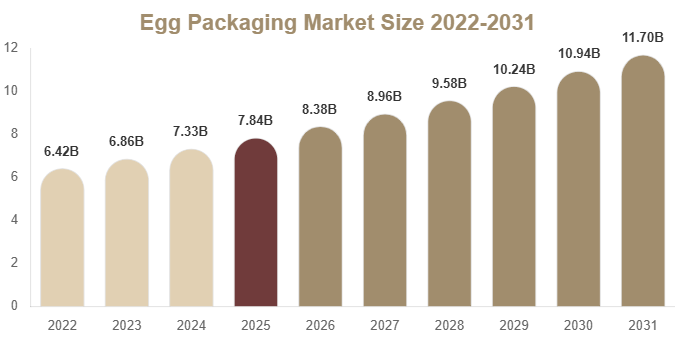
Egg Packaging Market: Size, Share and Growth Report (2025–2031)
Market Overview
The Egg Packaging Market is experiencing steady growth due to increasing global egg consumption, rising demand for protein-rich food products, and the continuous expansion of retail food supply chains. Egg packaging plays a vital role in protecting fragile eggs during storage, transportation, and retail display while maintaining hygiene and extending shelf life. Packaging manufacturers are increasingly focusing on durable, lightweight, and sustainable packaging solutions that minimize product breakage and logistical losses.
Molded fiber cartons, plastic clamshell containers, and recycled paper packaging remain widely used across the poultry supply chain. Growing consumer awareness regarding sustainable packaging has accelerated the adoption of biodegradable and recyclable egg cartons, particularly in developed markets. In addition, expanding supermarkets and hypermarkets have increased the need for standardized packaging solutions. Food safety regulations and labeling requirements have also encouraged poultry producers to adopt advanced packaging technologies that improve traceability and product integrity. As global egg production continues to expand, the Egg Packaging Market is expected to witness consistent demand from poultry farms, food processing companies, and retail distributors.
Request Sample Link:
https://packagingmarketinsights.com/report/egg-packaging-market/request-sample
Market Size and Forecast
The Egg Packaging Market size was valued at USD 7.84 billion in 2025 and is projected to reach USD 11.96 billion by 2030, expanding at a compound annual growth rate (CAGR) of 6.9% during the 2025–2031 forecast period.
Asia Pacific held the largest market share of 38.6% in 2025, making it the dominant regional market. Latin America is projected to be the fastest-growing region, registering a CAGR of 8.1% during the forecast period. Molded fiber cartons represented the leading material segment with a 46.8% market share in 2025, while recycled paper packaging is projected to grow at a CAGR of 7.9%. Egg cartons remained the dominant packaging type with a 61.3% market share, whereas egg trays are expected to expand at a CAGR of 7.4%. The United States represented the leading country, valued at USD 1.48 billion in 2025 and USD 1.56 billion in 2026.
Market Drivers
Increasing Global Egg Consumption
Eggs continue to be among the most affordable and widely consumed protein sources across the world. Population growth and changing dietary habits are increasing the demand for poultry products in both developed and developing economies. As egg consumption rises, poultry farms and food distributors require reliable packaging solutions that protect eggs throughout transportation and retail distribution. Specialized egg cartons and trays help prevent breakage while maintaining product quality, supporting continuous growth in the Egg Packaging Market.
Expansion of Organized Retail and Cold Supply Chains
The rapid development of supermarkets, convenience stores, and food service distribution networks has significantly increased the demand for standardized egg packaging formats. Packaging solutions are being designed to improve stacking, storage, transportation, and retail display efficiency. The expansion of cold storage logistics and improved transportation infrastructure has further strengthened regional and international egg trade, driving greater demand for durable egg packaging products.
Market Challenges
Fluctuating Raw Material Costs
One of the major challenges affecting the Egg Packaging Market is the volatility in raw material prices, particularly recycled paper pulp and plastic resins used in manufacturing cartons and trays. Price fluctuations caused by changes in recycling supply chains, energy costs, and global pulp production can reduce manufacturer profit margins.
Smaller packaging manufacturers may experience operational difficulties during periods of significant cost increases, affecting overall market stability. In addition, environmental regulations targeting plastic packaging encourage manufacturers to transition toward molded fiber and biodegradable alternatives. Although these materials offer sustainability benefits, they generally involve higher production costs, which may temporarily limit adoption in price-sensitive markets.
Market Opportunities
Growth in Biodegradable Packaging Technologies
Growing interest in environmentally friendly packaging is creating opportunities for biodegradable egg packaging materials. Manufacturers are developing packaging solutions using plant-based fibers, agricultural waste pulp, and compostable polymers. These innovations help companies align with sustainability goals while meeting regulatory requirements aimed at reducing plastic waste. Increasing consumer awareness of eco-friendly packaging is expected to create new revenue opportunities across the Egg Packaging Market.
Expansion of Egg Exports and International Trade
Improved cold chain logistics and international poultry production standards are supporting the expansion of global egg trade. Export-oriented poultry farms require specialized packaging capable of protecting eggs during long-distance transportation. Packaging designs that improve durability, stacking efficiency, and ventilation are becoming increasingly important, creating opportunities for manufacturers to develop advanced export packaging solutions.
Market Segmentation
By Material
Molded fiber cartons accounted for the largest market share of 46.8% in 2025 due to their durability, cost efficiency, and biodegradable properties. Plastic, recycled paper, and foam packaging also contribute to the market. Recycled paper packaging is expected to register the fastest growth with a CAGR of 7.9% as manufacturers continue investing in recycling technologies that convert post-consumer paper waste into durable egg cartons.
By Packaging Type
Egg cartons represented the largest share of 61.3% due to their ability to securely hold eggs while providing effective product labeling and stackability for retail environments. Egg trays are projected to expand at a CAGR of 7.4% as commercial poultry farms increase production volumes. Clamshell containers also remain part of the overall packaging landscape.
By End-Use Industry
Poultry farms held the largest market share of 54.6% because they rely extensively on packaging solutions to transport eggs safely throughout the supply chain. Retail distribution is projected to grow at a CAGR of 7.2% with the continued expansion of supermarkets, grocery chains, and convenience stores. Food processing also represents an important end-use segment.
Regional Analysis
Asia Pacific dominated the Egg Packaging Market with a 38.6% share in 2025, supported by high egg consumption, expanding poultry farming, rapid urbanization, and modern food retail development. China remained the leading country due to its large poultry production industry and strong domestic demand.
North America accounted for 24.1% of the market, driven by commercial poultry production and advanced retail distribution systems. The United States remained the dominant regional market because of its established poultry industry and demand for standardized packaging formats.
Europe represented 21.8% of the market and benefited from strong sustainability regulations encouraging recyclable and biodegradable packaging materials. Germany led the region through advanced recycling infrastructure and demand for premium packaging solutions.
The Middle East & Africa captured 8.7% of the market, supported by expanding poultry production and investments aimed at improving food security. Saudi Arabia remained the leading regional country.
Latin America accounted for 6.8% of the global market and is projected to record the fastest regional CAGR of 8.1% during the forecast period. Brazil led regional demand due to its large poultry industry and expanding egg exports.
Key Players
The competitive landscape includes global packaging manufacturers and regional suppliers focusing on sustainable materials, automation technologies, and innovative packaging designs. Leading companies continue investing in recycling technologies, product innovation, and partnerships with poultry producers.
Major companies operating in the Egg Packaging Market include:
-
Hartmann Packaging
-
Huhtamaki Oyj
-
Pactiv Evergreen Inc.
-
Tekni-Plex Inc.
-
CKF Inc.
-
Cascades Inc.
-
Dispak UK
-
Green Pulp Paper
Conclusion
The Egg Packaging Market is expected to maintain steady growth throughout the forecast period, supported by rising egg consumption, expanding poultry farming activities, sustainable packaging adoption, and the continued development of organized retail and cold supply chains. Innovations in biodegradable materials, digital traceability, and export-ready packaging solutions are expected to strengthen future market opportunities while helping manufacturers address evolving customer and regulatory requirements.
With a market size of USD 7.84 billion in 2025, projected to reach USD 11.96 billion by 2030 at a CAGR of 6.9%, the Egg Packaging Market presents significant opportunities for packaging manufacturers, poultry producers, food processors, and retail distributors. Continued investment in sustainable packaging materials, operational efficiency, and product innovation is expected to support long-term market development during the forecast period.
Report Link:
https://packagingmarketinsights.com/report/egg-packaging-market

 عربي
عربي