


 SPARK Website
The 'Sialic Acid Key': How a Single Glycan Could Unlock New Cancer Treatments
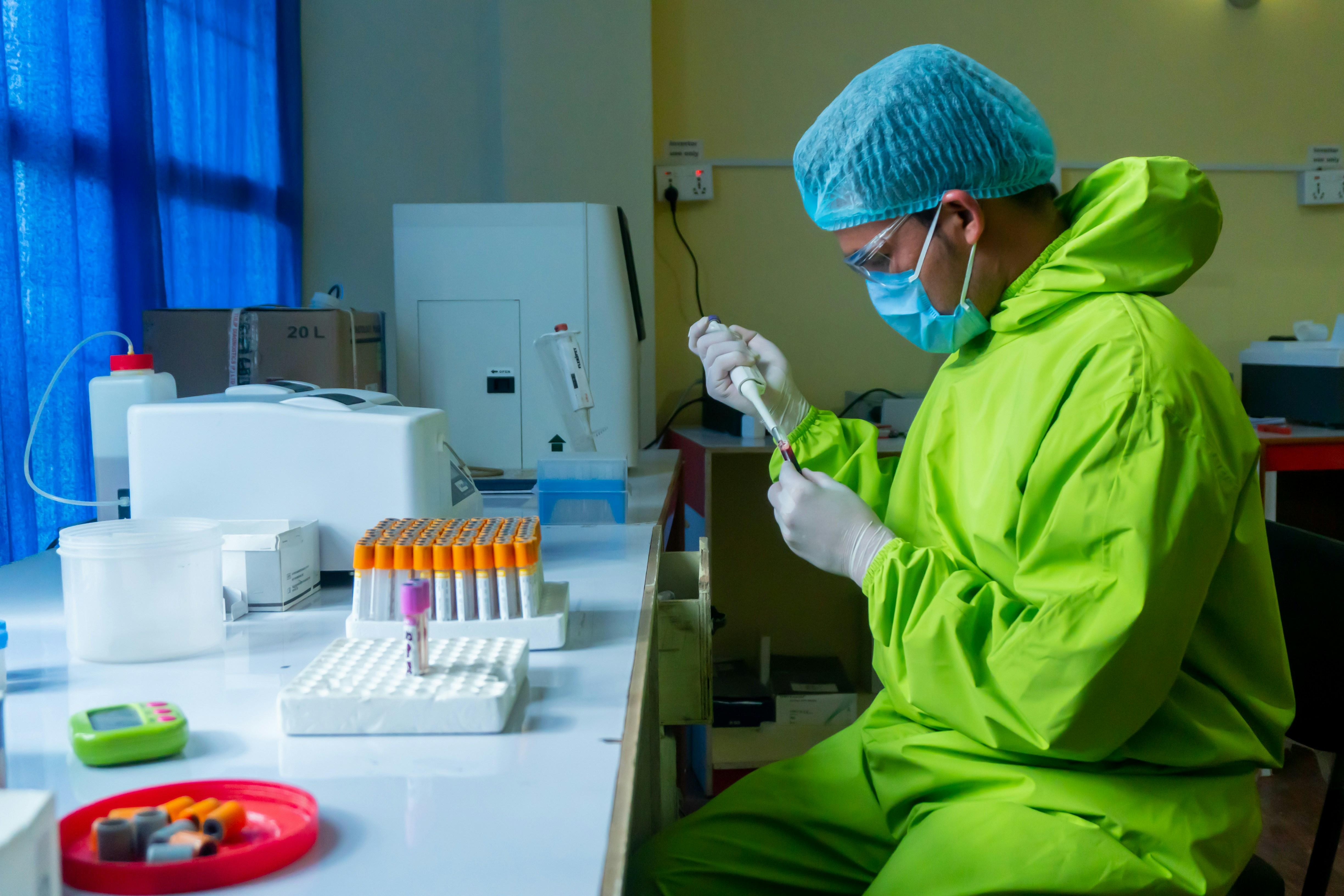
Your cells are coated in a secret language. You cannot see it, taste it, or feel it, but it decides whether you fight off the flu, develop a food allergy, or respond to a cancer drug. That language is written in Glycans – complex chains of sugar molecules that dangle from every cell surface like biological antennae. While DNA gets all the glory as the "blueprint of life," glycans do the real-time work of communication. They tell your immune system who is friend and who is foe. They are the docking stations viruses hijack. And for scientists racing to decode this sugar-based code, understanding glycans is becoming the next great frontier in medicine.
To study these interactions, researchers need more than just imagination – they need precise molecular tools. One such tool is a synthetic probe called Neu5Acα(2-6)Galβ(1-4)GlcNAcβ-Sp3-PAA-Biotin (also known as 6′SLN-PAA-Biotin for those who prefer breathing). Behind that intimidating name lies an elegant piece of engineering. The "Neu5Ac" portion is a sialic acid – a type of sugar that immune cells use as a "do not attack" signal. The "Galβ(1-4)GlcNAc" part extends the chain to mimic natural glycan structures found on human cells. And the "PAA-Biotin" tail acts like a sturdy handle, allowing scientists to glue this glycan onto test surfaces or beads. Together, these components create a molecular fishing hook for studying how cells recognize each other.
So what do you actually do with a molecular fishing hook like Neu5Acα(2-6)Galβ(1-4)GlcNAcβ-Sp3-PAA-Biotin? Scientists print it – along with dozens or even hundreds of other glycans – onto a glass slide to create what is called a glycan microarray. Then they wash a fluorescently labeled protein over the array. Wherever the protein sticks, that spot lights up. This simple "sticker chart" approach reveals which glycans a given protein recognizes. In the case of our sialylated probe, the target is often a family of immune receptors called Siglecs (Sialic acid-binding immunoglobulin-type lectins). These receptors help immune cells distinguish between "self" and "danger." By studying how Siglecs bind to Neu5Acα(2-6)Galβ(1-4)GlcNAcβ-Sp3-PAA-Biotin, researchers gain insight into autoimmune diseases, cancer evasion, and even potential drug targets.
Why does this matter beyond the laboratory? Because cancers have learned to exploit the very same glycans that normally calm your immune system. Tumor cells often coat themselves with high levels of sialic acid-containing glycans – exactly like the one our probe mimics. These sugary decorations bind to Siglec receptors on immune cells, effectively whispering "friend, do not attack." It is a molecular disguise, and it works terrifyingly well. By using probes such as Neu5Acα(2-6)Galβ(1-4)GlcNAcβ-Sp3-PAA-Biotin to dissect this interaction, scientists can now test ways to block it. Imagine an antibody that covers those cancerous glycans or a drug that releases the Siglec "brake" on your immune system. That is not science fiction – it is the leading edge of glyco-immunotherapy, and it is already in development.
The implications stretch far beyond cancer. Scientists are now designing drugs that use glycans as delivery vehicles. One breakthrough approach, called GalNAc conjugation, attaches a specific triantennary glycan to RNA therapies. This glycan acts like a zip code, directing the drug straight to liver cells with remarkable precision. Other researchers are glycoengineering antibodies – tweaking the sugar structures attached to them to double their cancer-killing power. Even human milk oligosaccharides (HMOs), a special class of glycans naturally found in breast milk, are being studied as next-generation prebiotics. A 2024 study in the journal Gut showed that one HMO, 2'-fucosyllactose, counteracted diet-induced obesity in mice by reshaping their gut microbiome and mucus production. The sugar code is finally being cracked – and it promises to rewrite our approach to medicine.
So the next time you hear about DNA or proteins, remember: they are only part of the story. Glycans are the forgotten half of biology – the sugar-coated antennae that whisper secrets between cells. From the flu virus grabbing a sialic acid handle to a cancer cell hiding behind a glycan disguise, these molecules shape your health in ways scientists are only beginning to understand. For researchers, each newly mapped glycan is a potential drug target, a diagnostic marker, or a delivery route. For the rest of us, the decoding of this ancient sugar language promises new treatments for cancer, autoimmunity, obesity, and infectious disease. The code is complex. But one by one, we are learning to read it.

 عربي
عربي