


 SPARK Website
SAP Automation for Manufacturing: From Shop Floor to Real-Time ERP Visibility
Manufacturing industries are moving toward a smarter and more connected ecosystem where speed, accuracy, and operational visibility define success. Traditional manufacturing systems often struggle with disconnected processes, manual data entry, delayed reporting, and limited visibility across operations. SAP Automation bridges this gap by integrating shop floor activities directly with enterprise systems and enabling real-time decision-making.
Key Areas of SAP Automation in Manufacturing
1. Real-Time Shop Floor Data Collection
- Automatically captures machine and production data.
- Reduces manual paperwork and human errors.
- Provides instant updates on production status.
2. Machine-to-ERP Integration
- Connects manufacturing equipment with SAP ERP systems.
- Transfers production metrics automatically.
- Creates seamless communication between machines and business processes.
3. Production Monitoring and Visibility
- Tracks inventory movement and production progress in real time.
- Enables managers to identify bottlenecks instantly.
- Supports proactive decision-making instead of reactive responses.
4. Predictive Maintenance
- Uses automated data collection and analytics.
- Detects equipment abnormalities before failures occur.
- Minimizes downtime and increases machine efficiency.
5. Automated Quality Management
- Monitors production quality during manufacturing processes.
- Generates alerts when deviations occur.
- Improves product consistency and compliance standards.
Benefits of SAP Manufacturing Automation
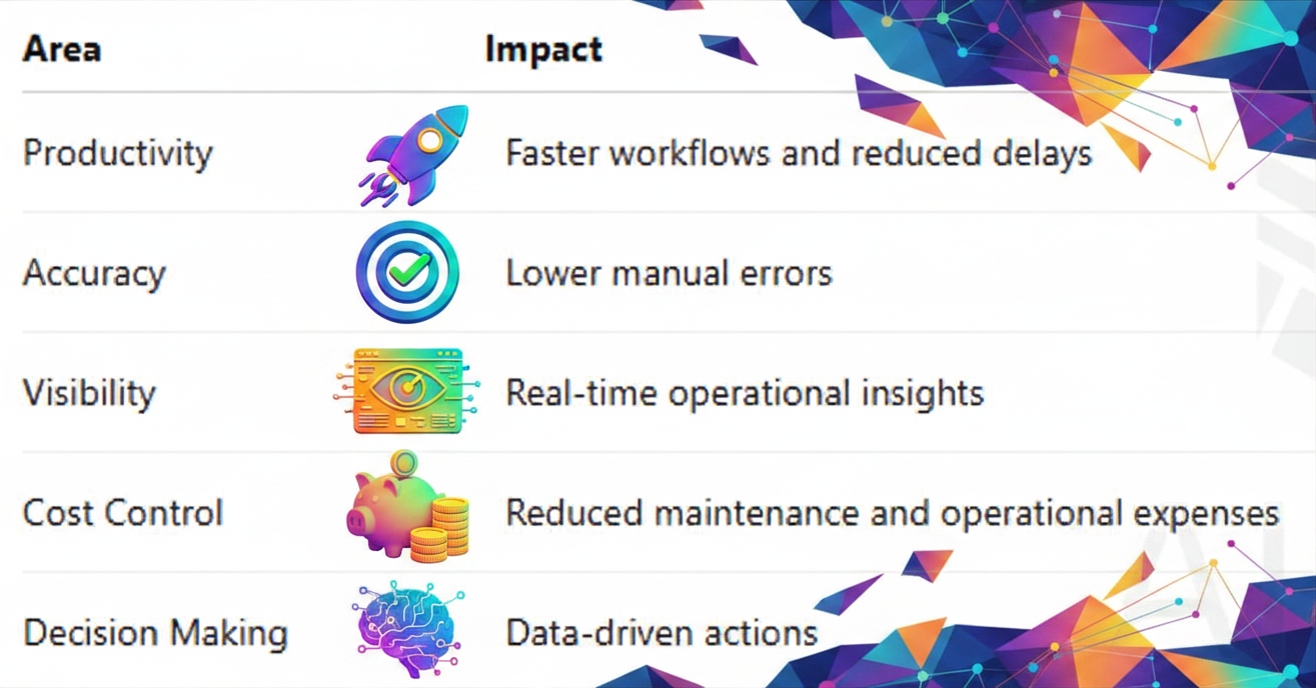
Think of a manufacturing plant as a moving train. Without visibility, the driver only sees a short distance ahead and reacts at the last minute. SAP automation acts like a high-speed control center, giving a complete view of the entire track in real time. From machine performance to inventory levels and production output, every process becomes connected.
As manufacturing moves toward smart factory models, businesses that adopt SAP automation gain stronger operational control, higher efficiency, and improved customer responsiveness. Real-time ERP visibility is no longer just an advantage, it has become a requirement for maintaining competitiveness in modern manufacturing environments.

 عربي
عربي