


 SPARK Website
ANPR-Integrated Boom Barriers: Achieving Touchless Access Control via License Plate Recognition
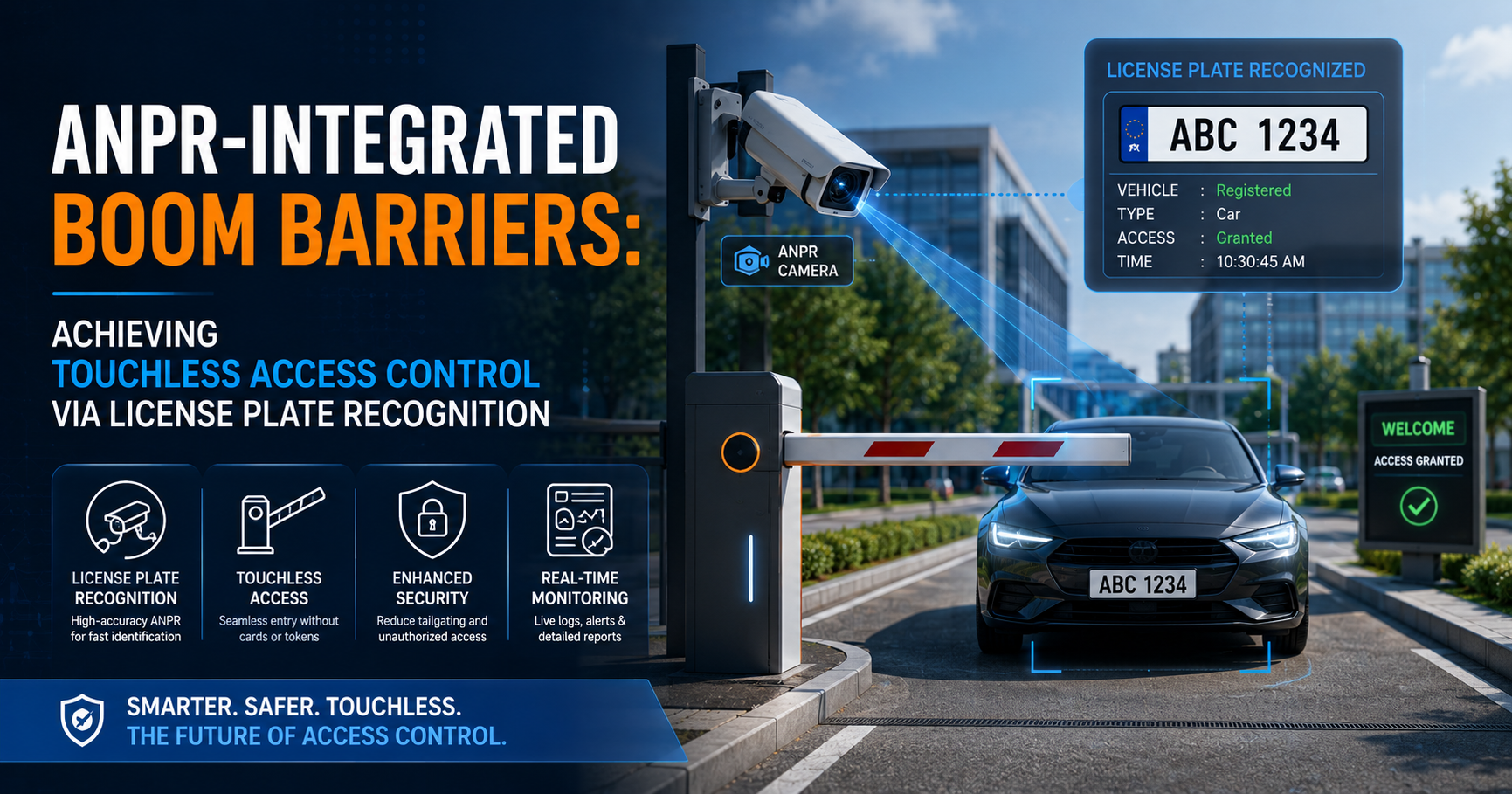
Modern facility management requires speed, security, and low operational friction. Traditional access control methods often cause traffic delays. Drivers must roll down windows, swipe cards, or enter PIN codes. These steps slow down entry points and increase labor dependencies.
An Automatic Boom Barrier combined with Automatic Number Plate Recognition (ANPR) addresses these issues. This hardware and software combination changes vehicle access control. It transforms a physical checkpoint into a touchless, automated entry way. This technical article explores the engineering components, operational steps, and system designs of ANPR-integrated barrier infrastructure.
The Growth of Touchless Vehicle Access
The global market for parking access control tools faces growing demand. Industrial studies show the market for these security components reached $2.8 billion in recent years. This valuation will likely hit $5.6 billion by 2034, showing a steady growth rate of 8.1%.
This growth stems from smart city initiatives and the need for touchless entry options. Integrating barrier hardware with automated software reduces gate waiting times by up to 24%. It also cuts facility operation costs by nearly 35% compared to manned security gates.
Implementing an Automatic Boom Barrier allows facilities to manage vehicle flow without physical contact. The system handles authentication in real time as the vehicle approaches the checkpoint.
Architectural Components of the System
An integrated perimeter gate relies on a multi-layered hardware setup. Each component must communicate with minimal latency. The system uses specific parts to capture data and operate the physical arm.
1. High-Performance ANPR Cameras
Standard security cameras cannot handle precise license plate reading. Specialized ANPR cameras use specific hardware features:
-
Infrared Illumination: Built-in IR LED arrays illuminate vehicle plates in dark conditions or bad weather.
-
High Shutter Speeds: Global shutter sensors run at high speeds to prevent motion blur from moving cars.
-
Optical Character Recognition Engines: Modern cameras often contain embedded processors to run OCR algorithms directly on the device.
2. The Automatic Boom Barrier System
The physical barrier stops or allows vehicular traffic based on data verification. A modern Automatic Boom Barrier System contains a three-phase motor, a balance spring, and an electronic drive controller.
The drive mechanism uses variable frequency drives to ensure smooth acceleration and deceleration curves. This prevents mechanical shock and extends the lifespan of the hardware. The controller accepts direct inputs from the camera processor to initiate the opening sequence.
3. Vehicle Detection Loops
Inductive loop detectors remain critical for safety and positional tracking. Technicians embed these wire loops into the asphalt surface before and after the gate.
They detect the metallic mass of a vehicle to trigger the camera shutter. They also prevent the physical arm of the Automatic Boom Barrier from lowering while a vehicle sits underneath.
The Technical Processing Flow
The touchless entry process finishes in milliseconds. The system processes data through four technical steps.
1. Vehicle Detection and Image Capture
As a car approaches the entry zone, it passes over the first inductive loop. The loop change in inductance signals the ANPR camera to take a high-resolution image.
2. Image Pre-processing and Segmentation
The system software processes the captured image frame to isolate the license plate.
-
Gradient Analysis: The algorithm scans for high-contrast rectangular shapes that match plate dimensions.
-
Normalization: The software adjusts contrast, alters brightness, and corrects skewed angles caused by the camera viewpoint.
-
Character Segmentation: The system divides the cleaned image plate area into distinct, individual alphanumeric blocks.
3. Character Recognition via Deep Learning
The segmented characters pass through an optical character recognition module. Modern systems use Convolutional Neural Networks to evaluate character shapes. The software converts pixel patterns into text strings. AI-based systems achieve text extraction accuracy levels above 90% in varied environments.
4. Database Validation and Barrier Execution
The generated text string moves to the access control database via a local network connection. The system checks the string against a whitelist. If it finds a match, the relay output board sends a 12V or 24V signal to the barrier control panel. The mechanical arm of the Automatic Boom Barrier then lifts to allow entry.
System Integration and Protocols
Reliable operation requires standard communication methods between hardware components and central software.
|
Protocol / Interface |
Primary Purpose |
Data Transmitted |
|
Wiegand / OSDP |
Connects edge readers to central control boards |
Card numbers, plate text strings |
|
TCP/IP Ethernet |
Delivers video streams and high-resolution images |
Raw MJPEG/H.264 video streams |
|
Dry Contact Relays |
Physical trigger for mechanical movement |
Open, close, and stop signals |
|
REST APIs / MQTT |
Connects local entry gates to cloud databases |
Log records, access timestamps |
Open Supervised Device Protocol offers better security than traditional Wiegand lines. It provides AES-128 encryption to protect data traveling between the camera processor and the Automatic Boom Barrier System controller box.
Key Technical Advantages
Using an integrated license plate reader with a motorized gate offers clear operating benefits over manual checks.
1. High Throughput and Reduced Congestion
A manual gate check or card-swipe system takes between 8 and 15 seconds per vehicle. An ANPR-driven barrier finishes checking credentials while the vehicle moves forward. The processing delay drops to under 1 second. This speed keeps traffic moving smoothly during peak commuting hours.
2. Complete Digital Audit Trails
The system records entry and exit events with precise data logs. Each entry log contains the exact timestamp, text string, and a cropped image file of the vehicle. This data gives facility managers reliable metrics for security reviews and space allocation planning.
3. Reduced Maintenance Costs
Traditional card systems require physical items like RFID tags, proximity cards, or paper tickets. These physical items wear out, break, or get lost.
An automated plate reader treats the vehicle plate as the access credential. By eliminating physical media, the Automatic Boom Barrier System lowers overall maintenance needs and operational overhead.
Challenges and Technical Solutions
Outdoor automation systems must handle environmental variables and security risks. Engineers use specific hardware and software designs to address these issues.
1. Handling Extreme Environmental Conditions
Heavy rain, snow, or thick dust can block camera lenses and lower OCR accuracy. To fix this, installations use IP67-rated housings with integrated sunshields and internal heaters. Software systems also use temporal frame analysis. The system checks multiple video frames of the same plate to find the clearest characters.
2. Preventing False Plates and Car Cloning
Intruders sometimes use printed paper plates or cloned registration numbers to bypass gates. Security teams address this by adding secondary authentication factors:
-
Dual-Lens Camera Systems: These systems combine standard visual sensors with thermal or depth sensors to confirm a real vehicle is present.
-
Overview Cameras: Secondary cameras capture the vehicle make, model, and color to verify the vehicle matches the registered plate data.
-
Directional Logic: Inductive loop sequences track the path of travel to ensure the vehicle moves forward correctly across the Automatic Boom Barrier sensor zone.
Real-World Use Cases
1. High-Density Commercial Parking Complexes
Corporate parking garages often face vehicle queues during morning arrival times. A large office park deployed five automated barrier systems connected to a central server.
This setup eliminated physical badge checks. The facility cut morning entry lines by 40%. Deploying the Automatic Boom Barrier infrastructure reduced gate guard requirements from three workers to one operator.
2. Restricted Logistics and Freight Yards
Distribution facilities use plate reading automation to manage freight flow. The system scans inbound delivery trucks at the gate. It verifies the plate number against scheduled shipping manifests.
If verified, the gate opens and logs the arrival time automatically. This automated logging helps logistics teams track dock loading times and spot transport delays without manual paperwork.
Installation Best Practices
Correct physical installation prevents read errors and system performance issues.
-
Camera Angle Angles: Keep the horizontal camera angle below 30 degrees relative to the vehicle path. Angles greater than 30 degrees distort character shapes and lower OCR accuracy.
-
Illumination Zones: Position the primary camera to focus on the area where vehicle headlights do not shine directly into the lens. This placement prevents image glare.
-
Loop Placement: Position the trigger loop exactly 3 to 4 meters ahead of the Automatic Boom Barrier System arm. This gives the camera and software enough time to process data before the vehicle arrives at the gate.
System Engineering Fundamentals
To hit full capacity, the architectural framework must balance optical precision with mechanical durability. System engineers split the core logic into localized network controllers and cloud databases. This hybrid method ensures operations continue even during internet outages.
The local controller keeps a local copy of the access list. When the camera reads a vehicle plate, the local computer matches the data locally. This process drops access latency from seconds to milliseconds.
The system sends log records up to the main database when the network connection returns. This structure maintains reliable access control at heavy commercial sites.
Advanced Detection Logic
Optical accuracy drops if a vehicle approaches the entry gate at an angle. To fix this, engineers design advanced software tracking scripts. These systems use spatial prediction to map the path of a moving car.
The processing software estimates where the plate will appear in the next image frame. This predictive processing reduces total compute time. The camera handles more vehicle entries per minute because it processes smaller image sections.
Furthermore, advanced filters handle changing light conditions. For instance, sunlight can cause harsh shadows across a vehicle plate. Adaptive threshold software adjusts lighting differences in real time. It balances dark and bright spots to ensure sharp, readable character shapes before triggering the Automatic Boom Barrier.
Mechanical System Calibration
An automated parking barrier must match the speed of the optical recognition software. If the mechanical arm lifts too slowly, vehicles must stop completely. This slow movement causes traffic backups.
High-speed mechanisms lift the barrier arm to a full 90-degree angle in under 1.5 seconds. Achieving this speed requires precise calibration of the internal tension springs. The internal springs offset the physical weight of the aluminum arm. This balance reduces the mechanical workload on the electric motor.
Engineers also use proximity sensors to track the exact position of the arm. These sensors slow down the motor speed right before the arm reaches its highest or lowest point. This buffer prevents mechanical bounce and protects the internal gear teeth of the Automatic Boom Barrier System from cracking over time.
Network Security Infrastructure
Connecting physical entrance gates to corporate computer networks introduces potential cybersecurity risks. Hackers could attempt to send false signals to open the gate barrier.
To protect the facility, system installers separate the access control hardware onto its own virtual local area network. This network isolation keeps security camera data separate from regular office web traffic.
Every communication link uses Secure Shell protocols or Transport Layer Security. The system encrypts text strings sent from the camera to the main controller database. If a malicious user splices into the network wire, they only see encrypted data blocks. The system rejects any command that lacks a valid security certificate.
Power Reliability and Surge Protection
Outdoor security setups regularly face electrical hazards from lightning strikes or power grid drops. Because these systems run automatically, a power loss can lock the entire gate assembly.
Installers add uninterruptible power supplies inside the main control housing. These battery systems keep the camera, sensors, and low-voltage relays working during blackouts.
The system configuration handles power failures based on building safety rules. It can lock the gate closed or release the arm to stay open for emergency evacuations. In addition, physical ground rods divert electrical surges away from sensitive circuit boards inside the Automatic Boom Barrier housing.
Data Management and Privacy Compliance
Automated tracking systems must store data carefully to follow local privacy laws. The storage software runs automated deletion schedules to save space and protect user privacy.
The data server can purge vehicle log images after 30 days while keeping anonymous text records for long-term traffic reports. The system also encrypts stored database files. This encryption prevents unauthorized personnel from downloading the entry logs or tracking specific vehicle movements.
Comparative Operational Metrics
Upgrading to automated gate architectures changes key operational performance metrics for security teams.
|
Operating Metric |
Manual Guard Gate |
Automated ANPR Gate |
|
Entry Validation Time |
12.5 Seconds average |
0.8 Seconds average |
|
Human Error Margin |
Variable based on focus |
Under 2.0% error rate |
|
Rainy Weather Speed |
Major slowdowns occur |
Constant operating speed |
|
Data Log Accuracy |
Manual paper log files |
Automatic encrypted records |
These metrics show why logistics centers and residential communities choose automation over manual checks. Installing an Automatic Boom Barrier System lowers errors and keeps traffic moving steadily in bad weather.
Conclusion
Integrating automated license plate recognition with automated gates provides a reliable approach to touchless vehicle management. This combination eliminates physical keys, speeds up traffic flow, and creates accurate digital logs. As facilities shift toward smart, connected infrastructure, combining intelligent software with a durable Automatic Boom Barrier System remains essential for secure property access.

 عربي
عربي