


 SPARK Website
Aspadol Tablet: A Complete Pain Management Solution Explained
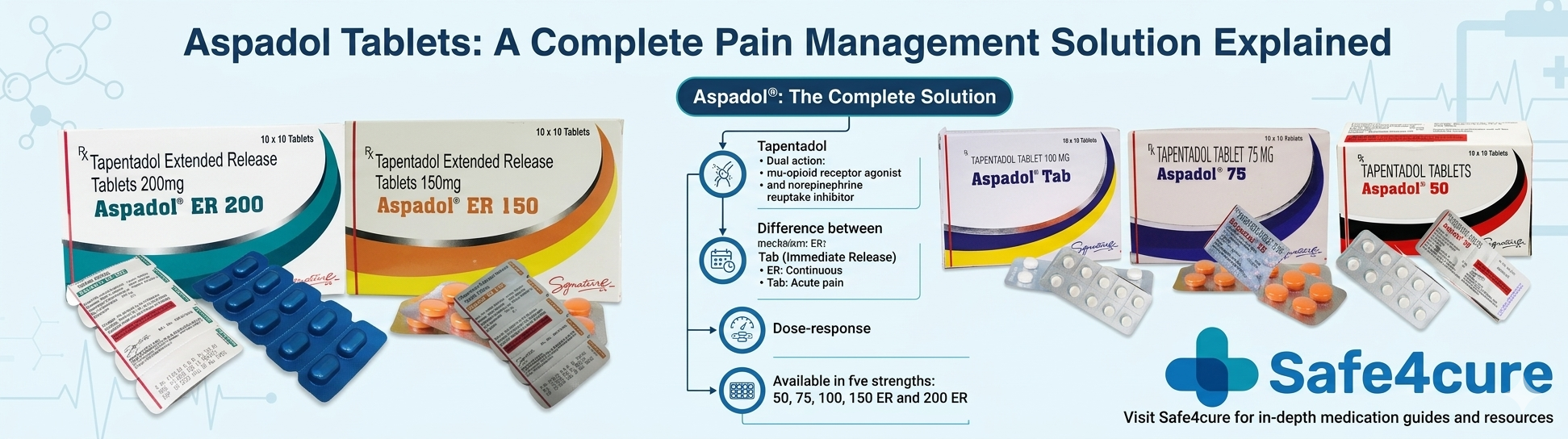
Living with persistent pain can be incredibly draining, affecting both physical comfort and overall quality of life. Whether it’s moderate post-surgical discomfort, nerve-related pain, or severe chronic conditions that continue day after day, finding dependable relief becomes essential rather than optional. This is where Aspadol tablets play a vital role. Aspadol tablets treat moderate to severe acute and chronic pain effectively, offering targeted relief for conditions that require stronger pain management. Widely trusted by healthcare professionals, this medication is known for its advanced formulation, delivering powerful results while maintaining a comparatively manageable side-effect profile compared to traditional opioid treatments.
This guide is meant to be comprehensive yet easy to follow. We'll break down everything you genuinely need to know, from how the drug works inside your body to safe ordering, storage, and practical precautions. Whether you've just been prescribed it by your doctor or you're researching options before your next appointment, this is the one resource worth reading in full.
What Is Aspadol Tablet?
Aspadol is a brand name for Tapentadol hydrochloride, a centrally acting analgesic approved for the management of moderate-to-severe acute and chronic pain in adults. It was developed to address a clear gap in pain therapy for patients who needed stronger relief than traditional NSAIDs could provide, but where older opioids like morphine caused side effects that were themselves unmanageable.
Manufactured by Signature Pharmaceuticals, this tablet is available in both immediate-release (IR) and extended-release (ER) formulations. That flexibility allows prescribers to tailor treatment directly to the patient's pain profile. Strengths typically range from 50 mg to 100 mg, giving clinicians meaningful room to customise care.
How Does Aspadol Tablet Work?
Understanding the science helps clarify why this medication performs differently and often more favourably than older pain drugs. Aspadol tablets Tapentadol operates through a dual mechanism of action that sets it apart:
1. Mu-Opioid Receptor (MOR) Agonism
Like traditional opioids, tapentadol binds to mu-opioid receptors in the brain and spinal cord. This binding dampens the transmission of pain signals and elevates the pain threshold. However, its opioid binding affinity is meaningfully lower than morphine's, which is a significant part of why its side-effect burden is generally lighter.
2. Norepinephrine Reuptake Inhibition (NRI)
This is the feature that makes tapentadol genuinely innovative. By blocking the reuptake of norepinephrine in the spinal cord, it strengthens the body's descending pain-inhibitory pathway essentially amplifying your own natural pain-suppression system. This dual action is especially valuable for neuropathic pain, a notoriously difficult condition that many pure opioids fail to address adequately.
Aspadol tablet Uses
The fast-acting pain relief this tablet delivers makes it a preferred clinical choice across a wide range of scenarios. Physicians prescribe it for conditions including:
· Acute post-operative pain: especially after orthopedic, abdominal, or major surgeries where significant discomfort is anticipated in the recovery period
· Chronic musculoskeletal pain: including lower back pain and osteoarthritis-related joint pain that doesn't respond adequately to milder analgesics
· Diabetic peripheral neuropathy: one of the most recognized applications; the NRI component is particularly valuable for nerve-based burning and shooting pain
· Cancer-related pain: for patients requiring around-the-clock opioid analgesia as part of a palliative or active treatment plan
· Injury-related acute pain: fractures, trauma, or sports injuries where over-the-counter options and NSAIDs provide insufficient coverage
· Fibromyalgia and central sensitization syndromes: used off-label in select populations under close specialist supervision
It's worth emphasizing that this medication is not a first-line treatment for mild pain. It occupies an important niche on the upper end of the analgesic ladder reserved for cases where pain is genuinely debilitating and simpler options have been tried and found lacking.
For more information, please Read full of blog : Everything About Aspadol 100mg Uses for Fast Pain Relief
Benefits of Aspadol
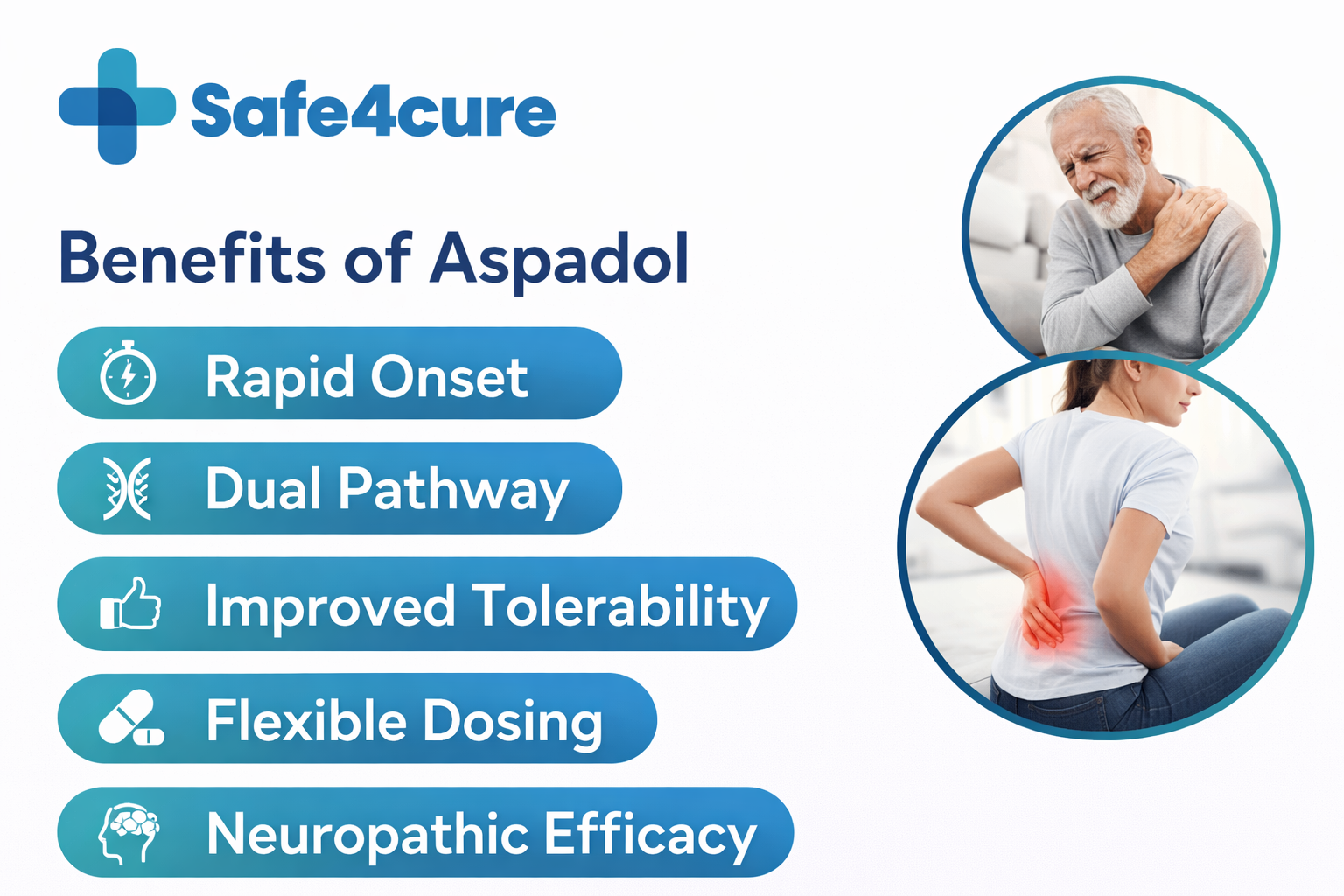
Patients and clinicians choose this analgesic over alternatives for several well-established reasons:
Rapid Onset
Relief typically begins within 30–60 minutes of oral administration, making the immediate-release form practical for acute flare-ups and breakthrough pain episodes.
Dual Pathway
The MOR-NRI mechanism addresses both nociceptive and neuropathic pain something single-mechanism opioids simply cannot reliably accomplish.
Improved Tolerability
Compared with equianalgesic morphine tapentadol doses tends to produce significantly less nausea, vomiting, and constipation quality-of-life factors that matter enormously over time.
Flexible Dosing
Both IR and ER formulations allow physicians to personalize treatment: acute targeted relief or steady around-the-clock pain coverage.
Neuropathic Efficacy
The NRI component makes it one of the few opioid-class drugs with demonstrated clinical efficacy specifically in diabetic neuropathy pain trials.
Side Effects Of Aspadol tablets
· Nausea often most pronounced in the first few days; taking the tablet with food can significantly reduce this
· Dizziness or lightheadedness particularly when standing up quickly (orthostatic hypotension)
· Drowsiness and somnolence do not drive or operate heavy machinery until you understand how it affects you
· Constipation less severe than with traditional opioids, but still worth managing proactively with hydration and fiber
· Headache usually mild and transient during the initial adjustment period
Aspadol Tablets Dosage for Adults
Getting the right dose is critical for both effectiveness and safety. The standard Aspadol tablets dosage for adults varies by pain type, severity, and formulation. The following reflects typical clinical practice; your prescriber will adjust based on your individual response.
|
Condition / Use |
Formulation |
Starting Dose |
Dosing Interval |
|
Acute moderate–severe pain |
Immediate-Release (IR) |
50 mg or 100 mg |
Every 4–6 hours |
|
Chronic musculoskeletal pain |
Extended-Release (ER) |
50 mg twice daily |
Every 12 hours |
|
Diabetic neuropathy |
Extended-Release (ER) |
50 mg twice daily |
Every 12 hours |
|
Post-operative pain |
Immediate-Release (IR) |
50–100 mg as needed |
Every 4–6 hours |
Maximum Daily Dose (do not exceed)
The maximum daily dose of Aspadol tablets is 600 mg for the immediate-release formulation. For the extended-release version, the ceiling is typically 500 mg per day. These limits exist for serious safety reasons. Exceeding them dramatically increases the risk of respiratory depression, seizures, and other life-threatening complications.
Missed Dose Protocol
If you miss a scheduled dose and your next dose is approaching, simply skip the missed one and continue your regular schedule. Never double up. Taking two doses too close together is dangerous with any centrally acting analgesic.
Elderly Patients and Organ Impairment
Older adults and patients with kidney or liver disease typically require lower starting doses and more conservative dose escalation. Physicians often start at 50 mg and monitor carefully before making any upward adjustments.
Aspadol Drug Interactions
Tapentadol drugs (aspadol) interacts with a meaningful number of substances. Full disclosure to your prescriber and pharmacist covering every medication, supplement, and herbal product you take is non-negotiable before starting therapy.
High-Risk Combinations : Avoid Unless Explicitly Directed
MAO Inhibitors (MAOIs): selegiline, phenelzine, tranylcypromine: potentially fatal serotonin syndrome. A minimum 14-day washout period is required between MAOI use and starting tapentadol.
Other CNS Depressants: benzodiazepines, sleep aids, muscle relaxants, certain antihistamines: the combined respiratory depression risk is substantially elevated
Serotonergic Drugs: SSRIs, SNRIs, triptans: serotonin syndrome risk; inform your doctor of all psychiatric medications
Alcohol: potentiates CNS depression profoundly; strictly avoid throughout the treatment period
Moderate Interactions Monitor Closely
Antifungals like fluconazole and certain antibiotics may alter tapentadol metabolism through CYP enzyme pathways
Anticholinergic medications: can worsen constipation and urinary retention
Antihypertensives: potential additive blood pressure-lowering effect requiring monitoring
Important Precautions
Certain patient populations require extra caution or may be contraindicated entirely. Discuss the following openly and honestly with your doctor before starting treatment:
History of substance use disorder: tapentadol pills carries abuse potential as a controlled opioid; careful monitoring and regular follow-up are essential
Seizure disorders : the NRI component may lower the seizure threshold; use with extreme caution in patients with epilepsy or other seizure conditions
Respiratory conditions: COPD, chronic asthma, or sleep apnea significantly increases respiratory depression risk
Pregnancy and breastfeeding : not recommended; neonatal opioid withdrawal syndrome is a serious and documented risk with prenatal opioid exposure
Pediatric patients: safety and efficacy in patients under 18 years of age have not been established
Head trauma or elevated intracranial pressure: opioids can obscure neurological status assessments and worsen outcomes in these cases
Pre-existing hypotension: this medication may further lower blood pressure; careful cardiovascular monitoring is warranted
Get fast and effective pain relief buy Aspadol tablets online from safe4cue . Experience reliable delivery, genuine medication, and the comfort you deserve.
Storage Information
Correct storage protects the medication's potency and critically prevents accidental access by children or others for whom it was not prescribed.
Temperature
Store at room temperature between 20°C and 25°C (68°F–77°F). Brief excursions to 15°C–30°C are generally acceptable per USP guidelines.
Moisture & Light
Keep away from humidity — bathrooms are not suitable storage locations. Protect from direct sunlight. A cool, dry cabinet works well.
Security
Lock away from children and teenagers. As a Schedule II substance, secure storage is both a safety imperative and a legal obligation.
Disposal
Never flush unused tablets down the drain. Use an FDA-approved drug take-back program, or mix with coffee grounds in a sealed bag before discarding in household trash.
Frequently Asked Questions
How quickly does this medication begin working?
The immediate-release form generally begins providing meaningful relief within 30 to 60 minutes of ingestion, with peak plasma concentration reached around 1.25 hours post-dose. The extended-release formulation builds to stable blood levels gradually over several days of consistent dosing it's not designed for immediate breakthrough relief.
Can I take the tablet with food?
Yes, and it's often a good idea especially if nausea is a concern. Food doesn't significantly affect the overall absorption profile of Aspadol medication (tapentadol), so you can take it with or without a meal based on personal comfort and tolerance.
Is this medication habit-forming?
As a centrally acting opioid, tapentadol does carry a risk of physical dependence and, in vulnerable individuals, psychological addiction. This is precisely why it requires a prescription and is classified as a controlled substance. Following your prescribed dose and duration strictly and never sharing your medication dramatically reduces personal risk.
Can I stop taking it suddenly?
No. Abruptly stopping tapentadol after prolonged use can trigger opioid withdrawal restlessness, muscle aches, sweating, insomnia, and gastrointestinal distress. Your physician will typically craft a gradual taper schedule to safely reduce the dose over time and avoid withdrawal symptoms entirely.
Is it safe to drive while on this medication?
Not until you understand how it personally affects you. Drowsiness, dizziness, and slowed reaction time are documented side effects particularly during the early dosing period. Avoid driving, operating machinery, or any activity requiring full cognitive alertness until your doctor confirms it is safe for you to do so.
Conclusion
In summary, Aspadol tablets (Tapentadol) represent a modern, dual-action approach to managing moderate to severe pain, especially in cases where conventional treatments fall short. By combining opioid receptor activity with norepinephrine reuptake inhibition, this medication offers effective relief for both nociceptive and neuropathic pain while maintaining a comparatively improved tolerability profile. However, due to its classification as a controlled opioid, it must be used strictly under medical supervision, with careful attention to dosage, interactions, and safety precautions. When taken responsibly, Aspadol can significantly improve quality of life, helping patients regain comfort, mobility, and day-to-day functionality.

 عربي
عربي