


 SPARK Website
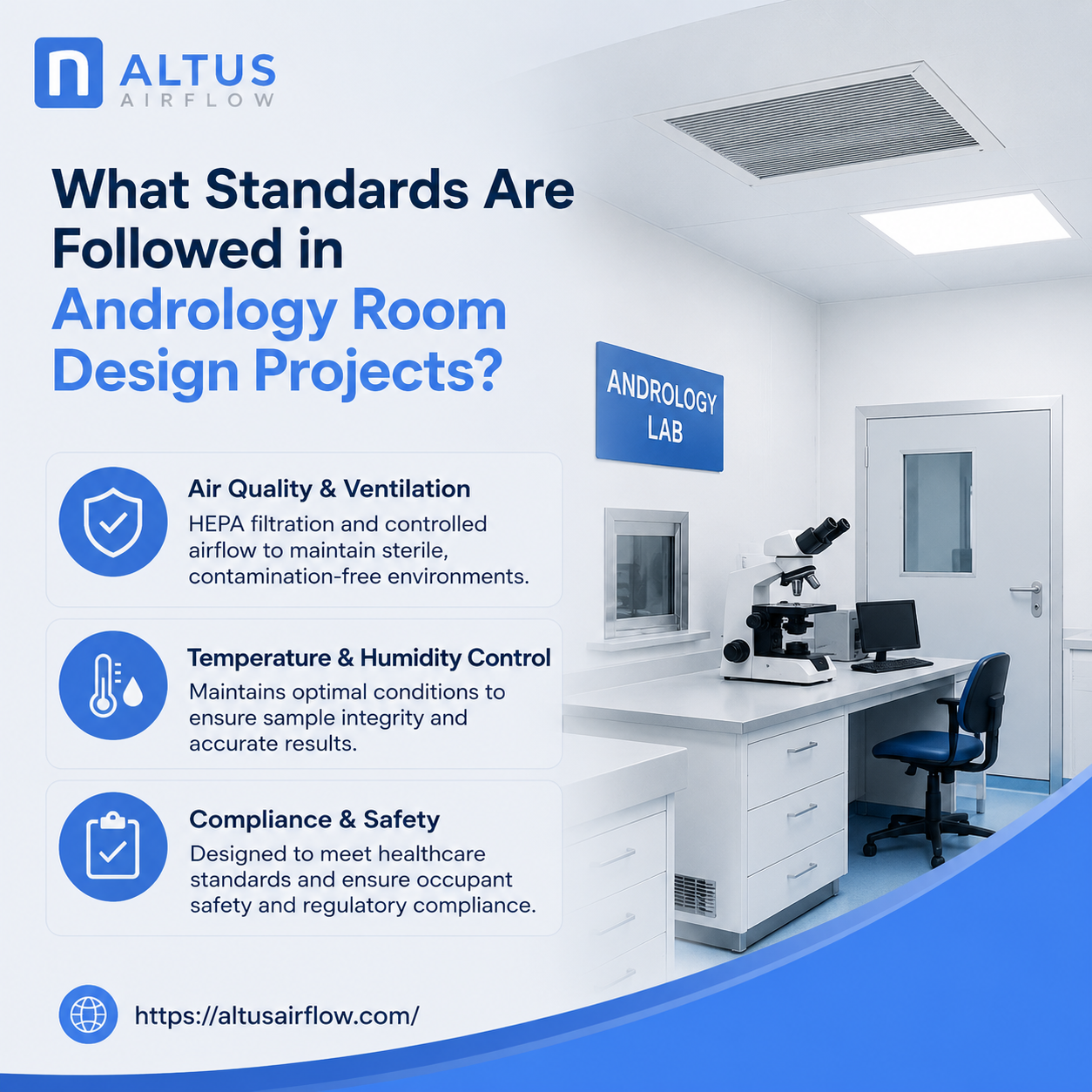
What Standards Are Followed in Andrology Room Design Projects?
Introduction
The success of fertility clinics and reproductive healthcare facilities depends heavily on the quality, safety, and functionality of their laboratory environments. An andrology laboratory is a highly specialized space where semen analysis, sperm preparation, cryopreservation, and various diagnostic procedures are performed. Because these processes involve sensitive biological samples, strict environmental control and compliance with healthcare standards are essential. An experienced Andrology Room Design Company ensures that every aspect of the laboratory is planned and constructed according to recognized industry standards to achieve accuracy, safety, and operational efficiency.
Unlike conventional laboratories, andrology rooms require precise control over air quality, temperature, humidity, contamination prevention, workflow management, and equipment integration. Failure to maintain proper standards can affect sample integrity, reduce testing accuracy, and compromise patient outcomes. For this reason, healthcare facilities rely on specialized laboratory designers who understand the unique requirements of reproductive medicine environments.
Importance of Standards in Andrology Laboratory Design
Standards provide a framework for creating safe and efficient laboratory environments.
They help ensure:
- Sample integrity
- Consistent testing accuracy
- Contamination control
- Regulatory compliance
- Staff safety
Following recognized standards improves both operational performance and patient outcomes.
Cleanroom Principles in Andrology Rooms
Many modern andrology laboratories incorporate cleanroom concepts.
These principles focus on:
- Controlled environments
- Reduced airborne contamination
- Environmental monitoring
- Clean airflow management
Cleanroom practices are essential for handling sensitive reproductive samples.
Air Quality Standards
Air quality is one of the most important factors in laboratory performance.
Design standards typically address:
- Particle control
- Air filtration
- Ventilation efficiency
- Contamination prevention
Maintaining clean air protects sample quality and laboratory operations.
HEPA Filtration Requirements
HEPA filtration systems are widely used in andrology laboratories.
These filters help remove:
- Dust particles
- Airborne microorganisms
- Allergens
- Environmental contaminants
A professional Andrology Room Design Company often incorporates HEPA filtration systems to maintain superior air cleanliness.
HVAC Design Standards
HVAC systems play a critical role in environmental control.
Standards typically cover:
- Airflow management
- Temperature regulation
- Humidity control
- Ventilation performance
Proper HVAC design ensures stable laboratory conditions throughout the year.
Temperature Control Standards
Temperature stability is crucial for reproductive laboratory procedures.
Design standards help maintain:
- Consistent working conditions
- Equipment performance
- Sample protection
Controlled temperatures support accurate laboratory results.
Humidity Control Requirements
Humidity levels influence both equipment operation and sample quality.
Proper humidity control helps:
- Reduce contamination risks
- Protect laboratory materials
- Improve environmental stability
Humidity standards contribute to overall laboratory performance.
Airflow Management Standards
Airflow systems are designed to support contamination control.
Key objectives include:
- Controlled air movement
- Prevention of stagnant zones
- Improved environmental cleanliness
Efficient airflow supports laboratory reliability.
Laboratory Layout Standards
Space planning standards help optimize workflow.
Well-designed laboratories include:
- Logical process flow
- Dedicated work areas
- Efficient movement patterns
Proper layouts improve productivity and reduce errors.
Functional Area Separation
Andrology laboratories typically include multiple specialized zones.
Common areas include:
- Sample collection rooms
- Sample receiving areas
- Analysis laboratories
- Processing stations
- Cryopreservation facilities
Functional separation reduces contamination risks.
Sample Handling Standards
Sample integrity is a primary concern in reproductive laboratories.
Standards focus on:
- Proper identification
- Traceability
- Controlled transport
- Secure storage
Careful sample handling improves testing accuracy.
Cryopreservation Facility Standards
Cryogenic storage requires specialized environmental controls.
Design requirements include:
- Secure storage systems
- Temperature monitoring
- Backup power support
Proper storage protects valuable biological materials.
Infection Control Standards
Infection prevention is an essential component of laboratory design.
Measures often include:
- Surface sanitation
- Air filtration
- Controlled access
- Cleaning protocols
Infection control standards improve laboratory safety.
Surface Material Requirements
Laboratory surfaces should be:
- Smooth
- Non-porous
- Durable
- Easy to disinfect
Appropriate materials help maintain cleanliness.
Seamless Construction Standards
Seamless wall and ceiling systems reduce contamination risks.
Benefits include:
- Easier cleaning
- Reduced particle accumulation
- Improved hygiene
Seamless construction supports long-term laboratory maintenance.
Flooring Standards
Laboratory flooring must meet healthcare requirements.
Desired characteristics include:
- Chemical resistance
- Durability
- Easy cleaning
- Seamless installation
Specialized flooring contributes to contamination control.
Electrical Safety Standards
Laboratory equipment depends on reliable electrical systems.
Standards address:
- Power distribution
- Grounding systems
- Equipment protection
- Emergency backup support
Electrical reliability ensures uninterrupted operations.
Emergency Power Requirements
Backup power systems support critical laboratory functions.
These systems help maintain:
- Environmental controls
- Equipment operation
- Sample preservation
Power continuity is essential for reproductive laboratories.
Lighting Standards
Proper lighting improves laboratory accuracy and safety.
Requirements may include:
- Uniform illumination
- Reduced glare
- Energy efficiency
Good lighting enhances productivity.
Equipment Integration Standards
Laboratory equipment must be installed according to manufacturer recommendations.
Integration standards support:
- Safe operation
- Efficient workflow
- Equipment longevity
Proper installation reduces operational disruptions.
Ergonomic Design Principles
Staff comfort contributes to laboratory efficiency.
Ergonomic standards focus on:
- Workstation design
- Equipment accessibility
- Reduced physical strain
Comfortable environments improve productivity.
Laboratory Information Management Systems
Digital systems support modern laboratory operations.
Functions include:
- Sample tracking
- Data management
- Documentation control
Technology improves accuracy and workflow efficiency.
Environmental Monitoring Standards
Continuous monitoring helps verify environmental conditions.
Parameters often monitored include:
- Temperature
- Humidity
- Air quality
- Pressure levels
Monitoring supports compliance and quality assurance.
Pressure Control Standards
Pressure management may be required in specialized laboratory areas.
Benefits include:
- Contamination prevention
- Airflow control
- Environmental stability
Pressure monitoring improves operational reliability.
Quality Management Requirements
Laboratory design projects often align with quality management practices.
These practices emphasize:
- Process consistency
- Documentation
- Continuous improvement
Quality systems support laboratory excellence.
Safety Standards for Personnel
Staff safety is a major consideration.
Design standards include:
- Emergency exits
- Fire safety systems
- Accessible layouts
Safe workplaces improve operational effectiveness.
Waste Management Standards
Laboratories generate biological and chemical waste.
Waste management systems help ensure:
- Safe disposal
- Regulatory compliance
- Environmental protection
Proper handling reduces operational risks.
Regulatory Compliance Requirements
Healthcare facilities must comply with local and international regulations.
Compliance may involve:
- Building codes
- Healthcare guidelines
- Laboratory standards
Meeting requirements supports accreditation and operational approval.
Commissioning and Validation Standards
Before becoming operational, laboratories undergo validation procedures.
These processes verify:
- Environmental performance
- Equipment functionality
- Safety compliance
Validation confirms readiness for clinical use.
Documentation Standards
Comprehensive documentation supports quality assurance.
Documentation may include:
- Design specifications
- Testing records
- Maintenance schedules
Accurate records improve accountability.
Future-Proofing Laboratory Designs
Modern laboratories should be adaptable to future growth.
Design standards increasingly support:
- Equipment upgrades
- Service expansion
- Technological integration
Flexible facilities provide long-term value.
Benefits of Following Design Standards
Compliance with recognized standards provides several advantages:
- Better sample protection
- Improved testing accuracy
- Enhanced patient outcomes
- Reduced contamination risks
- Easier regulatory compliance
These benefits support overall laboratory success.
Why Professional Expertise Matters
Designing an andrology laboratory requires specialized knowledge.
An experienced Andrology Room Design Company understands the technical, operational, and regulatory requirements needed to create high-performance laboratory environments.
Professional expertise helps ensure every component functions effectively and complies with industry expectations.
Conclusion
Standards play a crucial role in the planning, construction, and operation of andrology laboratories. From HVAC systems and HEPA filtration to workflow planning, environmental monitoring, infection control, and quality management, every aspect of laboratory design must align with established healthcare and laboratory guidelines. These standards ensure that reproductive laboratories provide safe, efficient, and reliable environments for handling sensitive biological samples and supporting fertility treatments.
Choosing a trusted Andrology Room Design Company is essential for achieving compliance, operational efficiency, and long-term success. Organizations such as Altus Airflow provide specialized laboratory infrastructure solutions that meet modern healthcare requirements. By partnering with experienced providers like Altus Airflow, fertility clinics can create advanced andrology laboratories that deliver consistent performance, support patient care, and maintain the highest standards of quality and safety.
FAQs
1. What standards does an Andrology Room Design Company follow?
An Andrology Room Design Company typically follows standards related to HVAC performance, HEPA filtration, contamination control, laboratory workflow, environmental monitoring, safety systems, and healthcare compliance requirements.
2. Why are HEPA filters important in andrology laboratories?
HEPA filters remove airborne contaminants and help maintain clean air conditions required for sensitive laboratory procedures.
3. What temperature is typically maintained in an andrology laboratory?
Temperature requirements vary, but laboratories generally maintain stable environmental conditions to support sample integrity and equipment performance.
4. Why is workflow planning important in andrology room design?
Efficient workflow reduces errors, improves productivity, and helps maintain contamination control.
5. What role does HVAC play in laboratory standards?
HVAC systems regulate temperature, humidity, airflow, and air quality to create controlled laboratory environments.
Read Our Previous Blog --------------->How do manufacturers ensure infection control in cardiac OTs?

 English