


 SPARK Website
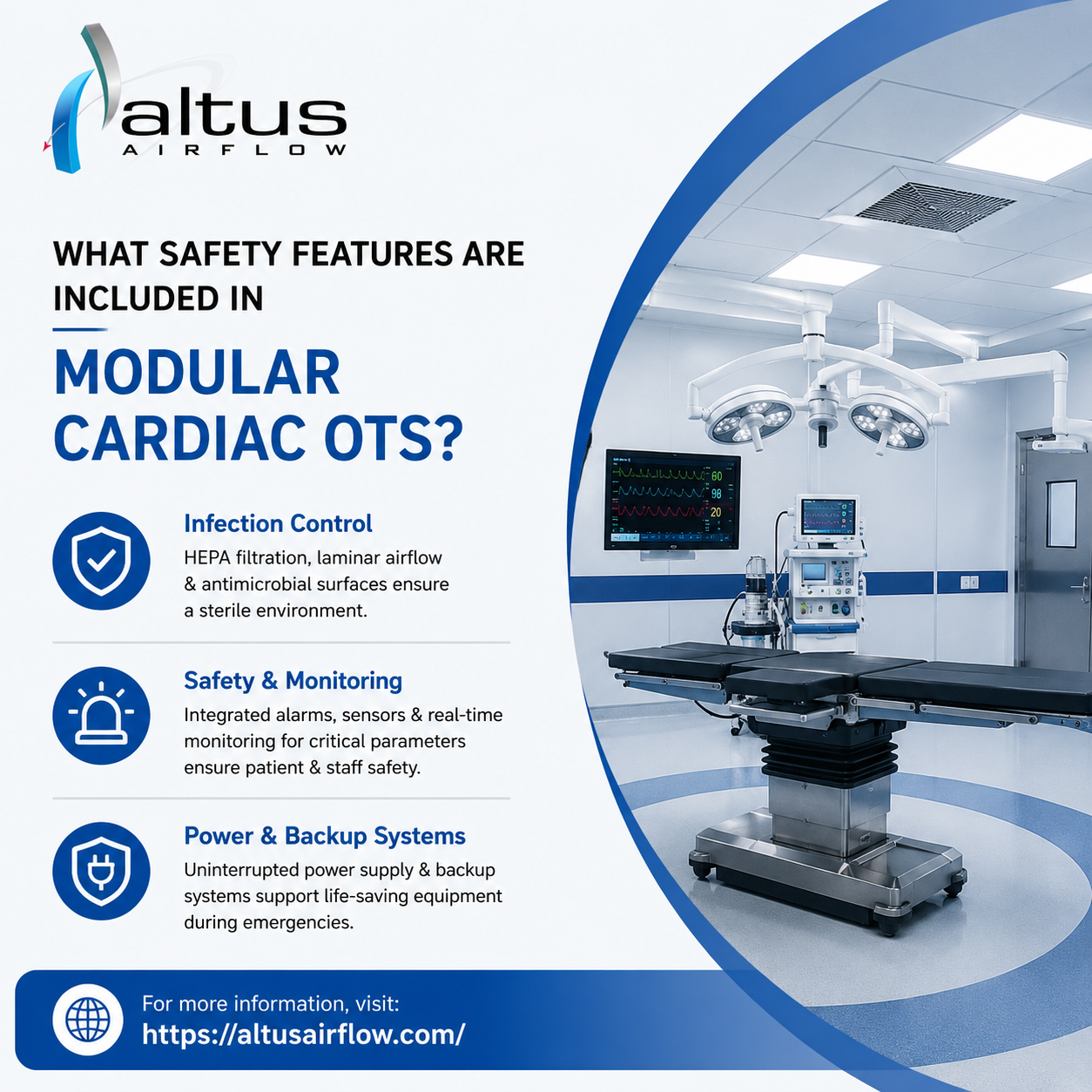
What Safety Features Are Included in Modular Cardiac OTs?
Introduction
A Modular Cardiac Operation Theatre is one of the most advanced healthcare infrastructures designed to support complex heart surgeries while ensuring maximum safety for patients, surgeons, and medical staff. Cardiac procedures often involve long operating hours, sophisticated medical equipment, critical patient monitoring, and strict infection control requirements. Because of these factors, safety becomes a primary consideration in every aspect of operation theatre design and engineering.
Modern hospitals increasingly prefer modular operation theatres because they provide a controlled environment with integrated safety systems that help reduce surgical risks and improve clinical outcomes. Unlike conventional operating rooms, modular cardiac OTs are designed using specialized materials, advanced HVAC systems, intelligent monitoring technologies, and stringent engineering standards. These features work together to create a safe and efficient environment where life-saving cardiac procedures can be performed with confidence.
Importance of Safety in Cardiac Operation Theatres
Cardiac surgeries are among the most complex medical procedures performed in hospitals.
Safety measures help:
- Protect patients
- Support surgical precision
- Prevent infections
- Ensure equipment reliability
- Reduce operational risks
A safe surgical environment contributes directly to successful outcomes.
Controlled Environment Design
One of the key advantages of a Modular Cardiac Operation Theatre is its ability to maintain a highly controlled environment.
Environmental control includes:
- Temperature regulation
- Humidity management
- Air quality control
- Pressure monitoring
These factors help maintain optimal surgical conditions.
Advanced HVAC Systems
HVAC systems play a major role in OT safety.
Their functions include:
- Air filtration
- Temperature control
- Humidity regulation
- Air circulation
A properly designed HVAC system supports infection prevention and patient safety.
HEPA Filtration Systems
HEPA filters are essential components of cardiac operation theatres.
Benefits include:
- Removal of airborne particles
- Reduction of microbial contamination
- Improved air cleanliness
These filters help maintain sterile conditions throughout surgical procedures.
Laminar Airflow Technology
Laminar airflow systems provide a continuous flow of filtered air across the surgical area.
Advantages include:
- Reduced airborne contamination
- Uniform airflow distribution
- Enhanced infection control
This technology is widely used in modern cardiac OTs.
Positive Pressure Environment
Most cardiac OTs operate under positive pressure conditions.
Positive pressure helps:
- Prevent contaminated air from entering
- Maintain sterile environments
- Support infection control measures
It is one of the most important safety features in surgical settings.
Infection Control Systems
Preventing infections is a top priority in cardiac surgery.
Safety features include:
- Sterile surfaces
- Controlled airflow
- Antimicrobial materials
- Air filtration technologies
Together, these systems reduce the risk of surgical site infections.
Antibacterial Wall Panels
Modular wall panels are manufactured using materials that resist microbial growth.
Benefits include:
- Easier cleaning
- Improved hygiene
- Reduced contamination risks
These panels support long-term infection control efforts.
Seamless Surface Construction
Modular operation theatres use seamless construction techniques.
Advantages include:
- Fewer dust collection points
- Easier sanitization
- Improved cleanliness
Smooth surfaces contribute to safer environments.
Specialized OT Flooring
Cardiac OTs utilize seamless conductive flooring systems.
Features include:
- Antistatic properties
- Chemical resistance
- Slip resistance
These characteristics improve both safety and durability.
Electrical Safety Systems
Modern cardiac surgeries depend on numerous electrical devices.
Electrical safety measures include:
- Isolated power systems
- Grounding protection
- Surge protection
- Backup power integration
These systems reduce the risk of electrical failures.
Uninterruptible Power Supply (UPS)
Power interruptions during surgery can be dangerous.
UPS systems provide:
- Continuous power supply
- Equipment protection
- Operational stability
They ensure uninterrupted surgical procedures.
Backup Generator Support
Hospitals maintain backup generators for emergency situations.
Benefits include:
- Power continuity
- Protection against outages
- Reliable operation of critical equipment
Backup systems are essential for patient safety.
Medical Gas Pipeline Safety
Cardiac surgeries require multiple medical gases.
Safety measures include:
- Leak detection systems
- Pressure monitoring
- Color-coded pipelines
- Emergency shutoff valves
These features ensure safe gas delivery.
Real-Time Monitoring Systems
Continuous monitoring improves operational safety.
Modern OTs monitor:
- Air pressure
- Temperature
- Humidity
- Air quality
Real-time data helps maintain ideal conditions.
Environmental Alarm Systems
Environmental monitoring systems are connected to alarms.
Alerts are generated when:
- Temperature exceeds limits
- Pressure changes occur
- Air quality deteriorates
Rapid response prevents safety issues.
Fire Detection Systems
Fire safety is an important aspect of OT design.
Systems include:
- Smoke detectors
- Heat detectors
- Fire alarms
Early detection minimizes risks.
Fire-Resistant Construction Materials
Modular operation theatres often use fire-resistant materials.
Advantages include:
- Improved safety
- Reduced fire spread
- Enhanced structural protection
These materials support emergency preparedness.
Emergency Exit Planning
Emergency evacuation routes are incorporated into OT planning.
Features include:
- Clearly marked exits
- Accessible pathways
- Emergency lighting
These provisions improve emergency response capabilities.
Hermetically Sealed Doors
Specialized OT doors help maintain environmental control.
Benefits include:
- Airtight sealing
- Contamination prevention
- Pressure stability
These doors support infection control strategies.
Access Control Systems
Unauthorized access can compromise OT safety.
Modern systems include:
- Biometric access
- RFID access cards
- Security monitoring
Controlled access protects critical areas.
Surgical Lighting Safety
Advanced surgical lights contribute to safe operations.
Features include:
- Shadow-free illumination
- Low heat generation
- Adjustable positioning
Proper lighting supports surgical accuracy.
Equipment Integration Safety
Modern cardiac OTs contain numerous medical devices.
Safety considerations include:
- Organized cable management
- Equipment positioning
- Utility integration
Proper planning reduces operational hazards.
Radiation Protection Features
Some cardiac procedures involve imaging technologies.
Protective measures may include:
- Lead shielding
- Radiation barriers
- Controlled exposure zones
These systems protect staff and patients.
Air Quality Monitoring
Air quality directly impacts patient safety.
Monitoring systems track:
- Particle levels
- Airflow performance
- Filtration efficiency
Continuous monitoring ensures compliance with standards.
Temperature Control Systems
Maintaining stable temperatures is essential.
Benefits include:
- Improved patient comfort
- Better equipment performance
- Enhanced environmental stability
Temperature control supports surgical success.
Humidity Management Systems
Humidity levels affect both infection control and equipment operation.
Proper management helps:
- Prevent microbial growth
- Reduce static electricity
- Improve comfort
Humidity control is a critical safety measure.
Noise Reduction Features
Excessive noise can distract surgical teams.
Modular construction incorporates:
- Acoustic insulation
- Sound-absorbing materials
A quieter environment supports concentration.
Staff Safety Provisions
Operation theatres are designed to protect healthcare workers.
Features include:
- Ergonomic layouts
- Safe equipment placement
- Hygiene stations
These elements improve workplace safety.
Emergency Communication Systems
Communication is essential during critical procedures.
Modern systems support:
- Rapid coordination
- Emergency alerts
- Team collaboration
Reliable communication improves response times.
Compliance with Healthcare Standards
Cardiac OTs must comply with recognized healthcare standards.
Compliance ensures:
- Safe operations
- Regulatory approval
- Consistent performance
Standardized design supports patient safety.
Validation and Testing Procedures
Before operation, all safety systems undergo testing.
Validation includes:
- HVAC performance checks
- Airflow testing
- Electrical inspections
- Gas pipeline verification
Testing confirms operational readiness.
Importance of Preventive Maintenance
Safety systems require routine maintenance.
Regular maintenance helps:
- Prevent failures
- Improve reliability
- Extend equipment lifespan
Preventive care supports long-term performance.
Future Safety Technologies in Cardiac OTs
Healthcare infrastructure continues to evolve.
Emerging innovations include:
- AI-powered monitoring
- Smart sensors
- Predictive maintenance systems
These technologies will further improve OT safety.
Conclusion
Safety is the foundation of every successful cardiac surgery, and modern modular operation theatres are specifically engineered to meet the highest standards of protection and reliability. Features such as HEPA filtration, laminar airflow systems, positive pressure environments, advanced HVAC systems, electrical safeguards, medical gas monitoring, fire protection systems, and real-time environmental controls work together to create a highly secure surgical environment. These integrated safety measures help reduce risks, improve infection control, and support superior clinical outcomes.
A well-designed Modular Cardiac Operation Theatre not only enhances patient safety but also improves operational efficiency and long-term healthcare performance. Companies such as Altus Airflow specialize in delivering advanced operation theatre solutions that incorporate industry-leading safety technologies and engineering standards. By partnering with experienced providers like Altus Airflow, hospitals can establish state-of-the-art cardiac surgical facilities that prioritize safety, reliability, and excellence in patient care.
FAQs
1. What safety features are included in a Modular Cardiac Operation Theatre?
A Modular Cardiac Operation Theatre includes HEPA filtration, laminar airflow systems, positive pressure environments, fire safety systems, electrical protection, medical gas monitoring, environmental controls, and infection prevention measures.
2. Why is positive pressure important in cardiac OTs?
Positive pressure prevents contaminated air from entering the operation theatre and helps maintain sterile conditions.
3. What role do HEPA filters play in OT safety?
HEPA filters remove airborne particles and microorganisms, improving air quality and reducing infection risks.
4. How do modular wall panels improve safety?
They provide seamless, antibacterial surfaces that are easy to clean and resistant to microbial growth.
5. Are backup power systems necessary in cardiac OTs?
Yes, UPS systems and backup generators ensure uninterrupted operation during power failures.
Read Our Previous Blog --------------->How long does it take to install a modular cardiac OT?

 عربي
عربي