


 SPARK Website
Best Software for Lawn Care Business: Why Some Lawn Care Companies Grow Faster Than Others
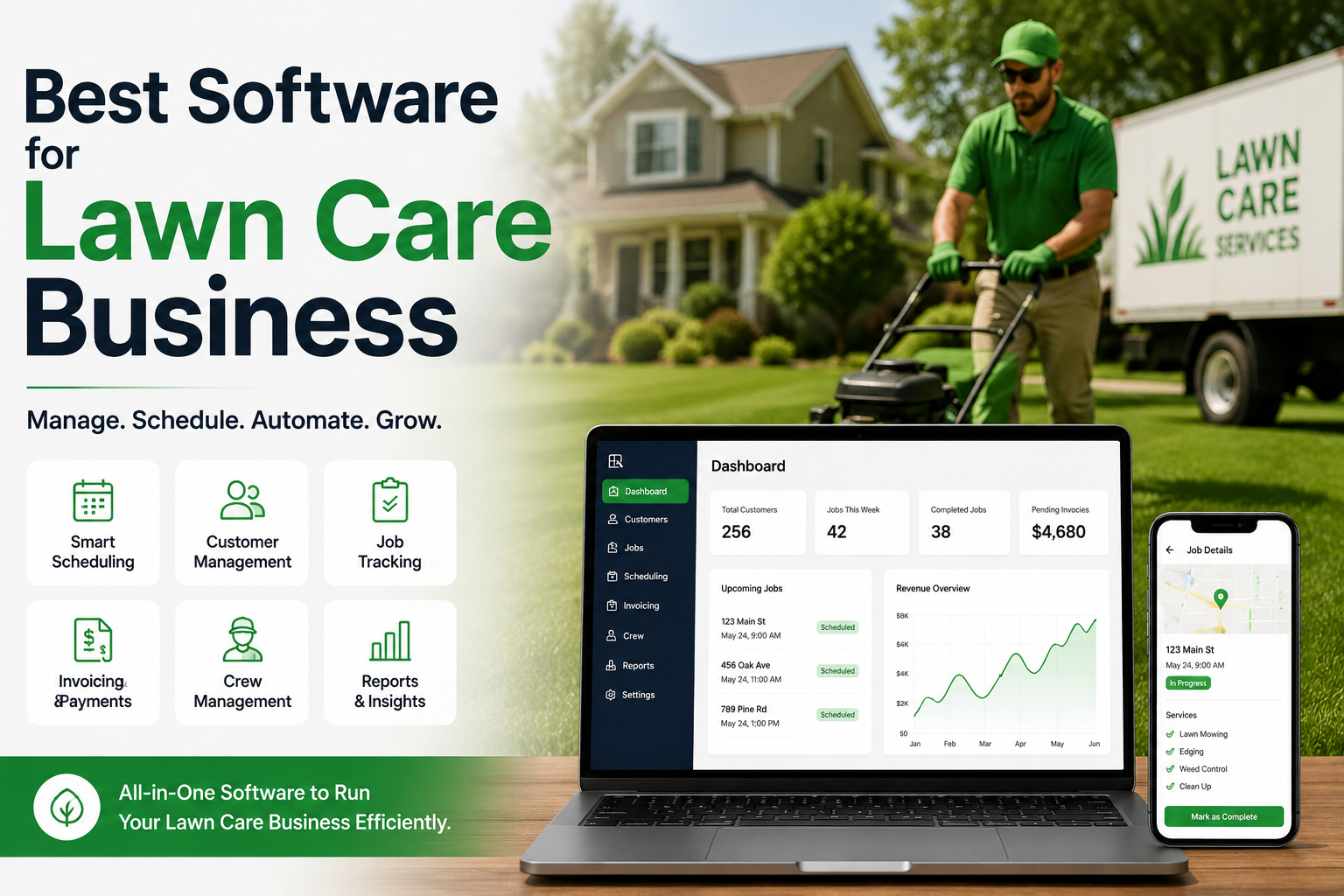
Why do two lawn care companies in the same area, offering similar services, often see different levels of growth and operational success?
The difference often lies in systems and organization. While quality service is essential, efficient operations are critical for long-term success. The best software for lawn care business management can make a significant impact.
Modern lawn care businesses simplify daily operations by using digital solutions instead of managing phone calls, paper schedules, invoices, and customer requests manually.
The Hidden Problem Slowing Down Lawn Care Businesses
Many owners spend more time on daily management than on business growth.
A typical day may involve:
-
Confirming appointments.
-
Updating customer records.
-
Creating invoices.
-
Coordinating crews.
-
Tracking completed work.
-
Responding to customer inquiries.
Individually, these tasks seem minor, but together they can take up several hours each week.
The best lawn care software reduces repetitive administrative work and streamlines workflows.
Why Organization Matters More Than Ever
Customers today expect convenience.
They want service reminders, accurate invoices, quick responses, and reliable appointment scheduling.
Customers often notice when a business lacks organization.
Common issues include:
-
Missed appointments.
-
Delayed invoices.
-
Double-booked schedules.
-
Poor communication.
-
Lost customer information.
The right software helps prevent these issues before they affect customer satisfaction.
What Makes Great Lawn Care Software Different?
Not every platform delivers the same value.
The most effective solutions focus on improving efficiency across every stage of the customer journey.
Scheduling Without the Chaos
One of the biggest challenges for lawn care companies is coordinating recurring services.
Modern lawn mowing scheduling software helps businesses automatically organize appointments, reducing scheduling conflicts and improving route efficiency.
Advantages include:
-
Better crew coordination.
-
Fewer scheduling mistakes.
-
More jobs are completed each day.
-
Improved customer experience.
Digital Job Tracking
Tracking completed work becomes more difficult as a business grows.
Digital job tracking allows teams to:
-
Record service details.
-
Upload property photos.
-
Update job status instantly.
-
Document customer requests.
This increases accountability and improves service quality.
Simplified Time Monitoring
Labor is one of the largest expenses for lawn care businesses.
Time-tracking tools help owners understand the following:
-
How long jobs actually take.
-
Which services are most profitable?
-
Where operational improvements are needed.
-
How employee productivity changes over time.
Faster Customer Communication
Customers appreciate timely updates.
Many software platforms include automated notifications that keep customers informed about upcoming visits, completed services, and billing information.
This helps strengthen customer relationships and build trust.
The Connection Between Efficiency and Profitability
Growing revenue is important, but profitability often depends on operational efficiency.
A company that reduces wasted time, unnecessary travel, and administrative work can often increase profits without adding new customers.
The best software for lawn care business operations helps owners understand financial performance while reducing bookkeeping challenges.
Better financial visibility often leads to smarter business decisions.
Can Small Lawn Care Businesses Benefit?
Absolutely.
Many people assume software is only useful for larger organizations, but small companies often see the biggest improvements.
A startup handling twenty clients may not experience major challenges initially. However, managing one hundred or more recurring customers becomes much more difficult without organized systems.
This is why many entrepreneurs search for the following:
-
The best software for a lawn care business is free.
-
Free lawn care software for small businesses.
-
Free apps for lawn care business.
These options can help newer companies establish better processes while controlling costs.
A Realistic Growth Scenario
Imagine a lawn care company with three crews servicing residential neighborhoods.
Initially, scheduling is managed through phone calls and spreadsheets.
As customer demand increases:
-
Scheduling errors become more common.
-
Customer requests get overlooked.
-
Administrative work grows significantly.
-
Employees spend extra time seeking instructions.
After implementing software-based workflows:
-
Appointments become easier to manage.
-
Customer information is instantly accessible.
-
Job completion tracking improves.
-
Administrative workload decreases.
The owner gains more time to focus on customer acquisition and business development, rather than on daily coordination.
Choosing Software That Matches Your Needs
Before selecting a platform, evaluate your operational priorities.
Consider whether you need the following:
Customer Management
A centralized customer database improves communication and service consistency.
Scheduling Automation
Automated scheduling helps eliminate manual coordination and reduces errors.
Expense Tracking
Understanding operational costs helps improve profitability.
Mobile Accessibility
Field teams should have access to schedules and job details while working remotely.
Reporting Features
Business insights help owners make informed decisions based on real performance data.
Common Mistakes When Selecting Lawn Care Software
Choosing Based Only on Price
Low-cost solutions may lack key features that save time and improve efficiency.
Ignoring Future Growth
A system that works now may become limiting as your business grows.
Overlooking Ease of Use
Complicated software often leads to poor employee adoption.
Skipping Staff Training
Even the best software delivers limited results without proper implementation.
Frequently Asked Questions
What is the best software for lawn care business operations?
The ideal solution depends on your company size, service offerings, and workflow requirements. Businesses should prioritize scheduling, customer management, invoicing, and reporting capabilities.
Are free lawn care software options available?
Yes. Several providers offer free plans or trial versions that allow businesses to test features before committing to a paid solution.
Why is lawn mowing scheduling software important?
Scheduling software helps manage recurring appointments, improve route planning, reduce missed visits, and increase overall efficiency.
Can software improve customer retention?
Yes. Better communication, organized scheduling, and consistent service delivery often lead to higher customer satisfaction and loyalty.
Is software useful for small lawn care startups?
Absolutely. Organized systems help startups establish professional workflows and prepare for future growth.
Conclusion
Success in the lawn care industry depends not only on property maintenance but also on effective operational management.
The best software for lawn care business simplifies scheduling, improves customer communication, organizes daily activities, and supports growth. Companies that adopt smarter processes are better prepared to meet demand, deliver excellent service, and achieve long-term success.

 عربي
عربي