


 SPARK Website
What Type of Flooring Is Used in Modular Cardiac OTs?
Introduction
Modern healthcare facilities are increasingly adopting modular operation theatres to improve surgical efficiency, patient safety, and infection control. Cardiac operation theatres, in particular, require highly specialized environments because they support complex and life-saving procedures. Every component of a cardiac OT is carefully designed to meet strict healthcare standards, and flooring is one of the most important elements. Hospitals investing in Modular Cardiac OT Setup Services understand that flooring is not simply a surface to walk on—it plays a crucial role in maintaining hygiene, safety, durability, and operational performance.
The flooring used in a modular cardiac OT must withstand heavy equipment loads, frequent cleaning, chemical exposure, and continuous foot traffic. At the same time, it must support infection control by preventing the accumulation of dust, bacteria, and contaminants. Unlike conventional hospital flooring, cardiac OT flooring is specifically engineered to create a seamless, easy-to-clean, and contamination-resistant environment.
Importance of Flooring in Cardiac Operation Theatres
Flooring is a critical component of the operation theatre environment.
It influences:
- Infection control
- Staff safety
- Equipment performance
- Maintenance efficiency
Proper flooring supports both clinical and operational objectives.
Why Specialized Flooring Is Necessary
Cardiac surgeries require highly controlled conditions.
Traditional flooring may:
- Harbor contaminants
- Develop cracks
- Wear quickly under heavy use
Specialized flooring solutions are designed specifically to meet healthcare requirements.
Characteristics of Cardiac OT Flooring
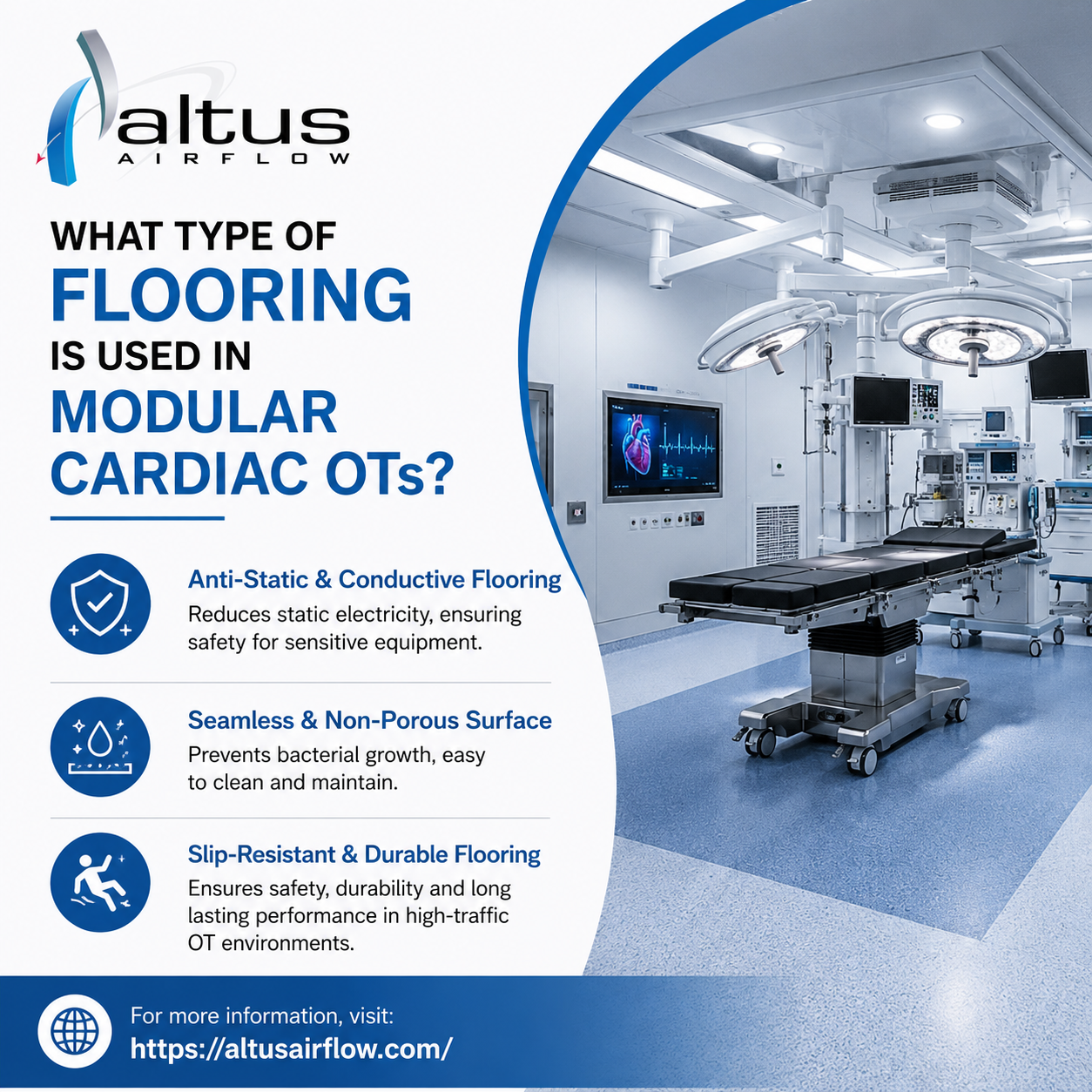
Flooring used in modular cardiac OTs must provide:
- Seamless construction
- Durability
- Chemical resistance
- Easy cleaning
- Anti-static performance
These features contribute to long-term reliability.
Role of Flooring in Infection Control
One of the primary goals of Modular Cardiac OT Setup Services is infection prevention.
Flooring supports this objective by:
- Minimizing contamination traps
- Reducing microbial growth
- Simplifying sanitation procedures
Clean flooring contributes to safer surgical environments.
Seamless Vinyl Flooring
Seamless vinyl flooring is one of the most common options used in cardiac operation theatres.
Benefits include:
- Smooth surfaces
- Easy maintenance
- High durability
- Excellent hygiene performance
Vinyl flooring remains a popular healthcare flooring solution.
Homogeneous Vinyl Flooring
Homogeneous vinyl flooring consists of a single material layer throughout its thickness.
Advantages include:
- Uniform performance
- Enhanced durability
- Long service life
Its consistency makes it suitable for demanding healthcare environments.
Conductive Vinyl Flooring
Conductive flooring helps control static electricity.
Benefits include:
- Protection of sensitive equipment
- Improved electrical safety
- Reduced static discharge
This flooring is often selected for operation theatres containing advanced medical devices.
Anti-Static Flooring Systems
Static electricity can interfere with medical equipment and create safety concerns.
Anti-static flooring provides:
- Controlled electrical resistance
- Enhanced equipment protection
- Improved operational safety
These systems are commonly used in modern cardiac OTs.
Epoxy Flooring Systems
Epoxy flooring is another option used in healthcare environments.
Key features include:
- Seamless installation
- Chemical resistance
- Durability
Epoxy surfaces are capable of withstanding rigorous cleaning procedures.
Polyurethane Flooring Solutions
Polyurethane flooring offers flexibility and durability.
Advantages include:
- Impact resistance
- Comfort underfoot
- Chemical resistance
Its resilience makes it suitable for healthcare applications.
Chemical Resistance Properties
Operation theatres are regularly exposed to cleaning agents and disinfectants.
Flooring materials must resist:
- Chemical damage
- Surface deterioration
- Staining
Chemical resistance helps maintain appearance and performance.
Antimicrobial Flooring Technologies
Some flooring systems incorporate antimicrobial additives.
These technologies help:
- Inhibit microbial growth
- Improve hygiene
- Support infection control
Antimicrobial surfaces provide an additional layer of protection.
Easy-to-Clean Surfaces
Cleaning efficiency is essential in healthcare facilities.
Modern flooring systems feature:
- Smooth finishes
- Non-porous surfaces
- Minimal joints
These characteristics simplify maintenance.
Dust-Free Flooring Design
Dust particles can contribute to contamination.
Specialized flooring minimizes dust accumulation through:
- Seamless construction
- Smooth surfaces
- Effective cleaning compatibility
Dust control supports air quality management.
Joint-Free Installation Benefits
Traditional flooring often contains joints and seams where contaminants can accumulate.
Seamless installation eliminates these concerns by:
- Reducing contamination traps
- Improving cleanliness
- Enhancing durability
Joint-free surfaces are ideal for operation theatres.
Slip Resistance and Staff Safety
Healthcare professionals frequently move quickly within operation theatres.
Slip-resistant flooring helps:
- Prevent accidents
- Improve safety
- Enhance workplace efficiency
Staff safety remains a critical consideration.
Heavy Equipment Load Capacity
Cardiac OTs contain substantial medical equipment.
Flooring systems must support:
- Surgical tables
- Imaging devices
- Monitoring systems
High load-bearing capacity ensures long-term performance.
Impact Resistance
Medical equipment may occasionally be moved or repositioned.
Impact-resistant flooring helps:
- Prevent damage
- Extend lifespan
- Reduce maintenance requirements
Durability is essential for busy healthcare environments.
Moisture Resistance
Moisture can compromise flooring performance and hygiene.
Healthcare flooring materials are designed to:
- Resist water penetration
- Prevent microbial growth
- Maintain structural integrity
Moisture resistance supports cleanliness.
Fire Safety Compliance
Flooring used in operation theatres must comply with fire safety regulations.
Approved materials provide:
- Flame resistance
- Reduced smoke generation
- Enhanced safety
Fire compliance contributes to healthcare facility protection.
Acoustic Performance Benefits
Certain flooring systems help reduce noise levels.
Benefits include:
- Improved communication
- Enhanced concentration
- Better working conditions
Noise control supports surgical precision.
Compatibility with HVAC Systems
Flooring works alongside HVAC systems to support environmental control.
Together, they contribute to:
- Cleanliness
- Temperature stability
- Air quality management
Integrated design improves overall performance.
Flooring and Air Quality
Proper flooring supports air quality by:
- Minimizing dust generation
- Simplifying cleaning
- Reducing particle accumulation
This helps maintain sterile conditions.
Long-Term Maintenance Advantages
Modern flooring systems require relatively low maintenance.
Benefits include:
- Reduced repair costs
- Longer lifespan
- Consistent performance
Hospitals benefit from lower operational expenses.
Sustainability Considerations
Many healthcare facilities now prioritize environmentally responsible construction.
Sustainable flooring options offer:
- Reduced environmental impact
- Energy-efficient production
- Long-term durability
Sustainability is becoming increasingly important.
Flooring Installation Process
A professional provider of Modular Cardiac OT Setup Services follows a structured installation process.
Steps typically include:
- Surface preparation
- Material installation
- Seam sealing
- Quality inspection
Proper installation ensures optimal performance.
Quality Testing and Validation
Before use, flooring systems undergo quality evaluations.
Testing may include:
- Slip resistance assessment
- Conductivity testing
- Surface integrity inspections
Validation ensures compliance with healthcare standards.
Compliance with Healthcare Standards
Operation theatre flooring must comply with healthcare regulations.
Requirements typically address:
- Hygiene
- Safety
- Durability
- Environmental performance
Compliance ensures suitability for surgical environments.
Why Flooring Selection Matters
Selecting the right flooring affects:
- Infection control
- Equipment protection
- Staff safety
- Maintenance efficiency
Proper material selection contributes to overall OT performance.
Future Trends in Healthcare Flooring
Emerging innovations include:
- Smart flooring systems
- Advanced antimicrobial technologies
- Sustainable materials
- Enhanced conductive surfaces
These developments will continue improving healthcare infrastructure.
Why Hospitals Choose Professional OT Flooring Solutions
Hospitals rely on expert providers because they understand the complex requirements of surgical environments.
Professional solutions deliver:
- Superior performance
- Regulatory compliance
- Long-term durability
Expert planning ensures optimal outcomes.
Conclusion
Professional Modular Cardiac OT Setup Services ensure that flooring systems are carefully selected, installed, and integrated with the overall operation theatre infrastructure. Companies such as Altus Airflow specialize in designing and implementing advanced cardiac OT environments that combine healthcare engineering expertise with high-performance construction materials. By partnering with experienced providers like Altus Airflow, hospitals can create reliable, compliant, and future-ready cardiac operation theatres that support exceptional patient care and long-term operational success.
FAQs
1. What type of flooring is included in Modular Cardiac OT Setup Services?
Modular Cardiac OT Setup Services commonly include seamless vinyl flooring, conductive flooring, anti-static flooring, epoxy flooring, and other healthcare-grade flooring systems designed for infection control and durability.
2. Why is seamless flooring preferred in cardiac OTs?
Seamless flooring minimizes contamination traps, improves hygiene, and simplifies cleaning.
3. What is conductive flooring?
Conductive flooring helps control static electricity and protects sensitive medical equipment.
4. Is vinyl flooring suitable for operation theatres?
Yes, homogeneous and conductive vinyl flooring are widely used because they are durable, hygienic, and easy to maintain.
5. How does flooring contribute to infection control?
It provides seamless, non-porous surfaces that reduce microbial growth and simplify sanitation.
Read Our Previous Blog ---------------> What services are covered under a turnkey andrology room project?

 عربي
عربي