The vacation rental industry has changed how people travel, book stays, and monetize properties. Users now expect smooth mobile experiences where they can search properties, compare pricing, check availability, book instantly, communicate with hosts, and manage trips directly from their phones.
This growing demand is why many startups and businesses are exploring an Airbnb clone as a faster way to launch a rental marketplace platform. Instead of building every system from scratch, founders can start with a ready-made marketplace structure and customize it based on their business model, region, and audience.
What Is an Airbnb Clone?
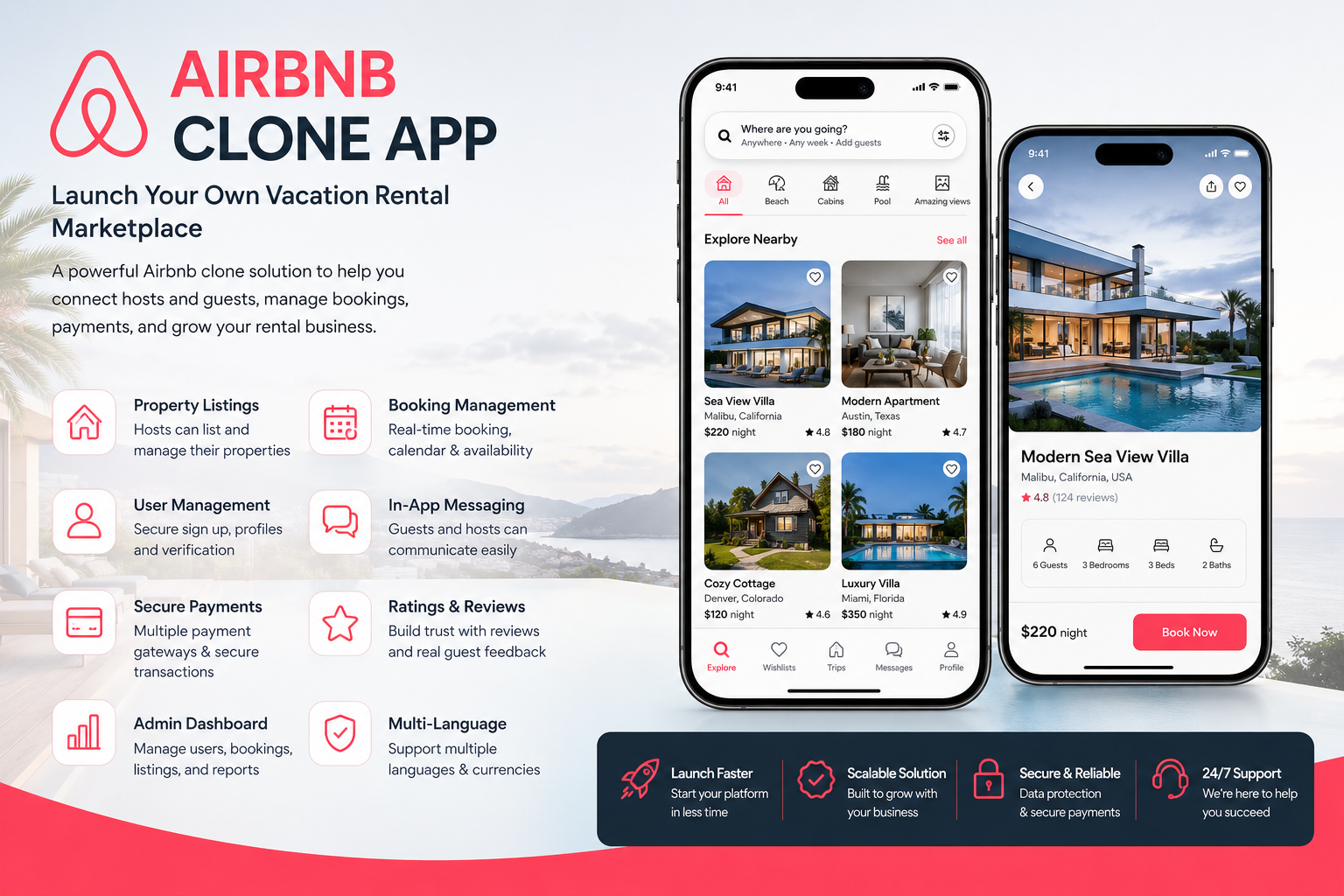
An Airbnb clone is a white-label vacation rental marketplace solution designed to replicate the core functionality of platforms like Airbnb. It connects hosts who list properties with guests searching for short-term or long-term stays.
The platform usually includes:
Guest booking system
Host dashboards
Property listing management
Real-time availability calendars
Secure payment gateways
Ratings and reviews
Booking management
Admin controls
Messaging systems
Multi-device support
Businesses can customize the platform for vacation rentals, luxury villas, homestays, coworking spaces, event rentals, or regional accommodation marketplaces.
Why Startups Choose Airbnb Clone Solutions
Building a rental marketplace from zero requires major investment in design, backend systems, booking workflows, payment logic, and trust infrastructure. An Airbnb clone helps reduce launch complexity while accelerating time-to-market.
Many founders prefer clone-based development because it offers:
Faster deployment
Lower initial development cost
Proven marketplace workflows
Easier scalability
Ready booking architecture
Simplified admin management
Faster testing of business ideas
For startups, speed matters. Launching earlier allows businesses to onboard hosts, attract guests, validate pricing models, and improve platform operations through real market feedback.
Core Features Every Airbnb Clone Needs
A scalable rental marketplace requires much more than property listings. The platform must support trust, operations, payments, communication, and long-term growth.
Guest Features
Guests expect a smooth booking experience with:
Smart property search
Filters by location, price, amenities, and ratings
Instant booking options
Secure checkout
Wishlist and saved listings
Booking history
In-app messaging
Ratings and reviews
Multi-language and multi-currency support
Host Features
Hosts need tools to manage listings and bookings efficiently:
Property upload and editing
Pricing controls
Availability calendars
Booking approvals
Earnings dashboard
Guest communication
Property analytics
Cancellation management
Admin Features
The admin side controls the marketplace ecosystem:
User management
Property approval
Commission settings
Revenue tracking
Dispute management
Fraud monitoring
Booking analytics
Promotional controls
Platform moderation
These systems help maintain operational stability as the marketplace grows.
Trust and Safety Systems Matter
One of the biggest challenges in rental marketplaces is trust. Guests need confidence before booking, while hosts need protection against fraud and misuse.
Modern Airbnb clone platforms often include:
Identity verification
Document uploads
Review systems
Secure payment processing
Fraud prevention logic
Encrypted transactions
Host verification
Booking protection workflows
Miracuves focuses heavily on these trust systems because marketplace growth depends on user confidence and transaction reliability.
Revenue Models for Airbnb Clone Platforms
A rental marketplace can generate revenue through multiple channels:
Commission per booking
Guest service fees
Featured property listings
Host subscription plans
Premium placement fees
Advertising opportunities
Concierge services
Insurance partnerships
This multi-revenue approach helps businesses build sustainable recurring income while scaling inventory and user activity.
Technology Stack Behind Airbnb Clone Development
A strong Airbnb clone platform requires scalable technology that can handle bookings, messaging, transactions, and user traffic efficiently.
Common technologies include:
React or Flutter for frontend apps
Node.js or Python for backend systems
PostgreSQL or MongoDB databases
AWS or Google Cloud infrastructure
Stripe or PayPal integrations
Firebase or Socket.io for real-time communication
Scalable architecture becomes critical when handling growing property listings, simultaneous bookings, and real-time availability updates.
Future Trends in Vacation Rental Platforms
The rental marketplace industry continues evolving with new technologies and traveler expectations.
Emerging trends include:
AI-based pricing recommendations
Smart property automation
Contactless check-ins
Dynamic pricing engines
Personalized recommendations
Sustainable travel filters
Experience-based bookings
Blockchain-backed payment systems
Businesses entering the market today should think beyond simple booking functionality and focus on long-term platform adaptability.
Final Thoughts
An Airbnb clone gives startups and businesses a practical way to launch a scalable rental marketplace without starting from scratch. With the right combination of booking workflows, trust systems, payment infrastructure, and scalable technology, founders can build platforms that compete in modern travel and rental markets.
Whether the goal is vacation rentals, luxury stays, local homestays, or niche property marketplaces, an Airbnb clone provides the foundation needed to launch faster and grow efficiently.



 SPARK Website

 عربي
عربي