


 SPARK Website
Transportation Sensors Market Fueled by Autonomous Vehicle Adoption
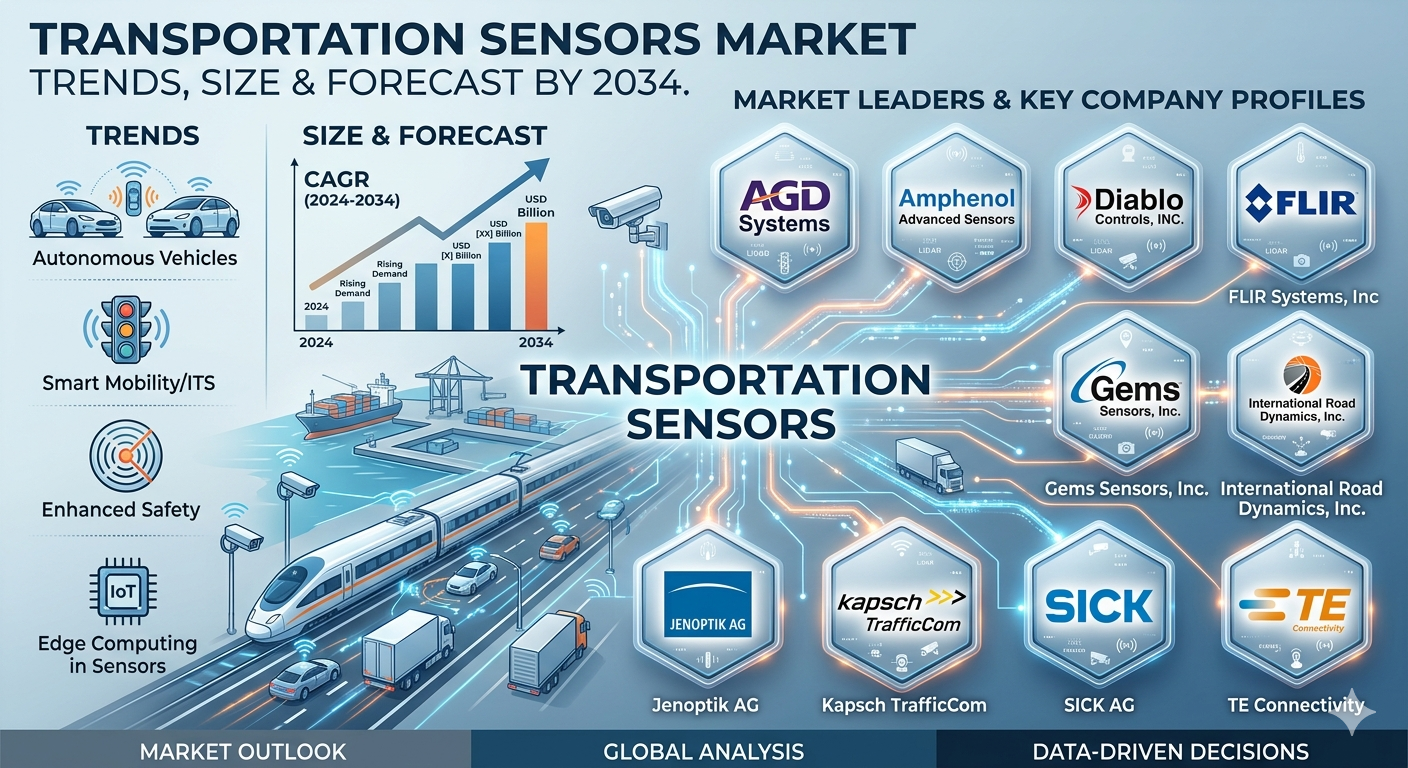
The transportation industry is undergoing a significant technological transformation as governments, logistics providers, automotive manufacturers, and public transit operators increasingly invest in smart infrastructure and connected mobility solutions. Sensors have become a critical component of modern transportation ecosystems, enabling real-time monitoring, traffic management, vehicle safety, predictive maintenance, and data-driven decision-making. The growing adoption of autonomous vehicles, advanced driver assistance systems (ADAS), and intelligent transportation networks is creating substantial demand for transportation sensors across developed and emerging economies.
The Transportation Sensors Market Size is witnessing robust growth as transportation authorities and private enterprises focus on enhancing operational efficiency, reducing accidents, and improving passenger experiences. According to industry analysis, the global transportation sensors market size is projected to reach US$ 14,120.45 million by 2034 from US$ 7,498.78 million in 2025. The industry is anticipated to register a CAGR of 7.29% during the forecast period from 2026 to 2034.
Download Sample PDF Link:https://www.theinsightpartners.com/sample/TIPRE00017515
Key Drivers Accelerating Industry Growth
One of the primary growth drivers is the rapid deployment of intelligent transportation systems (ITS) worldwide. Governments are investing heavily in smart roads, traffic monitoring systems, connected infrastructure, and urban mobility projects to address traffic congestion and improve road safety. Transportation sensors play a crucial role in collecting real-time data related to vehicle movement, road conditions, traffic density, and environmental factors.
The increasing adoption of autonomous and connected vehicles is another major factor contributing to industry expansion. Modern vehicles rely on a variety of sensors, including radar, LiDAR, ultrasonic, temperature, pressure, and motion sensors, to support navigation, collision avoidance, lane-keeping assistance, and adaptive cruise control. As automakers continue advancing vehicle automation technologies, demand for high-performance transportation sensors is expected to grow significantly.
Rising Investments in Smart City Projects
The development of smart cities across regions such as North America, Europe, and Asia Pacific is creating new opportunities for sensor manufacturers. Urban planners and transportation authorities are integrating sensor-based technologies into traffic management systems, parking management solutions, public transit networks, and infrastructure monitoring systems.
Smart city initiatives require real-time data collection and analysis to optimize transportation operations. Transportation sensors help monitor traffic flow, detect incidents, manage parking spaces, and improve commuter experiences. The growing focus on urban mobility and sustainable transportation solutions is expected to support long-term industry growth.
Growing Need for Vehicle Safety and Regulatory Compliance
Road safety remains a top priority for governments and transportation agencies worldwide. Regulatory authorities continue introducing stricter vehicle safety standards, encouraging manufacturers to integrate advanced sensing technologies into automobiles and commercial vehicles.
Sensors enable critical safety functions such as blind-spot detection, emergency braking, collision warning systems, tire pressure monitoring, and driver assistance applications. As safety regulations become more stringent, transportation sensor adoption is expected to increase across passenger vehicles, commercial fleets, railways, and public transportation systems.
Expansion of Logistics and Freight Transportation
Global trade growth and the expansion of e-commerce networks have significantly increased the demand for efficient logistics and freight transportation solutions. Transportation sensors help logistics operators track vehicle performance, monitor cargo conditions, optimize routes, and reduce operational downtime.
Fleet operators increasingly utilize sensor-based monitoring systems to improve fuel efficiency, ensure regulatory compliance, and enhance asset utilization. The ability to generate actionable insights through real-time sensor data is becoming a key competitive advantage in modern transportation and logistics operations.
Technological Advancements Creating New Opportunities
Continuous advancements in sensor technology are enhancing accuracy, reliability, and operational efficiency. Innovations in Internet of Things (IoT), artificial intelligence (AI), machine learning, and edge computing are enabling smarter transportation systems capable of processing vast amounts of data in real time.
Miniaturized sensors, wireless communication technologies, and cloud-based analytics platforms are expanding the scope of transportation applications. These technological developments are expected to create lucrative opportunities for industry participants throughout the forecast period.
Regional Insights
North America remains one of the leading regions due to strong investments in intelligent transportation infrastructure, connected vehicle technologies, and smart city projects. The United States continues to witness substantial adoption of advanced transportation management systems and autonomous vehicle technologies.
Europe is also experiencing steady growth driven by stringent safety regulations, environmental sustainability initiatives, and the expansion of smart mobility programs. Meanwhile, Asia Pacific is expected to emerge as a high-growth region due to rapid urbanization, infrastructure development, and increasing government investments in transportation modernization projects.
Leading Companies
Several prominent companies are actively contributing to industry growth through technological innovation, strategic partnerships, and product development initiatives. Key players operating in the transportation sensors industry include:
- Bosch Sensortec GmbH
- Continental AG
- Honeywell International Inc.
- TE Connectivity Ltd.
- STMicroelectronics N.V.
- Infineon Technologies AG
- Analog Devices, Inc.
- Texas Instruments Incorporated
- NXP Semiconductors N.V.
- DENSO Corporation
These companies continue investing in research and development to introduce advanced sensor solutions capable of meeting the evolving requirements of transportation and mobility applications.
Future Outlook
The future outlook for the transportation sensors industry remains highly promising through 2034. Increasing adoption of autonomous vehicles, connected transportation infrastructure, electric mobility solutions, and smart city initiatives will continue driving demand for advanced sensing technologies. As transportation networks become increasingly digitized and data-driven, sensors will play a central role in ensuring safety, efficiency, sustainability, and operational intelligence.
Emerging technologies such as AI-powered traffic management systems, vehicle-to-everything (V2X) communication, and predictive maintenance platforms are expected to further accelerate industry growth. Continuous innovation and expanding transportation modernization projects worldwide will create substantial opportunities for manufacturers, technology providers, and stakeholders throughout the forecast period.
About Us
The Insight Partners is a leading market research and consulting firm delivering actionable insights across various industries. Our comprehensive reports provide detailed analysis of emerging trends, growth opportunities, competitive landscapes, and technological developments, enabling businesses to make informed strategic decisions.
Contact Us
The Insight Partners
Email: sales@theinsightpartners.com
Phone: +1-646-491-9876
Website: https://www.theinsightpartners.com
Related Reports -
Data Center Cooling Fans Market Analysis, Share, Trend, and Growth
Commercial Vehicle Wiring Harness Market Analysis, Share, Trend, and Growth

 عربي
عربي