


 SPARK Website
Carbon Credit Industry Forecast to Grow 4.3X, Reaching USD 576.4 Billion by 2035
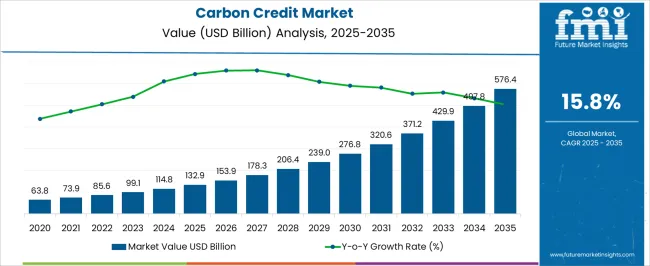
According to the latest market analysis by Future Market Insights (FMI), the global Carbon Credit Market is entering a strong growth phase as governments, corporations, financial institutions, and sustainability-focused organizations increasingly prioritize carbon neutrality, emissions reduction, and verified offset mechanisms across industrial, agricultural, energy, and transportation sectors worldwide.
The market, valued at USD 132.9 billion in 2025, is projected to reach USD 576.4 billion by 2035, registering a CAGR of 15.8% during the forecast period. Growth is being driven by expanding carbon pricing frameworks, rising corporate ESG commitments, increasing participation in voluntary carbon markets, and growing demand for scalable carbon offset solutions across global industries.
Request for a Sample: https://www.futuremarketinsights.com/reports/sample/rep-gb-25622
Carbon credits are increasingly evolving from compliance-focused environmental instruments into strategic sustainability assets capable of supporting net-zero commitments, climate finance initiatives, renewable energy investments, and long-term decarbonization strategies across global markets.
Summary of Carbon Credit Market
• Market Size (2025): USD 132.9 Billion
• Market Size (2035): USD 576.4 Billion
• Growth Rate: 15.8% CAGR (2025–2035)
• Leading Type Segment: Voluntary Carbon Credits (38.6% share)
• Leading End-use Segment: Agriculture (38.6% share)
• Key Growth Regions: North America, Asia-Pacific, Europe
• Fastest Growing Markets: China (21.3% CAGR) and India (19.8% CAGR)
• Key Players: 3Degrees, Allcot, Atmosfair, Carbon Clear, Carbon Collective, The Carbon Trust, Climeco, Climate Impact Partners, EcoAct, Ecosecurities, Green Mountain Energy, Shell, South Pole, Sterling Planet, Terrapass, Verra, WGL Holdings
Rising Net-Zero Commitments Driving Market Expansion
The carbon credit market is witnessing significant momentum as businesses, governments, and financial institutions intensify efforts to reduce greenhouse gas emissions and comply with global climate objectives.
Industry stakeholders are increasingly prioritizing:
• Expansion of voluntary and compliance carbon trading systems
• Development of high-quality verified carbon offset projects
• Adoption of carbon neutrality and ESG-focused corporate strategies
• Increased investments in renewable energy and nature-based solutions
• Enhanced transparency through advanced monitoring and verification technologies
This transition reflects broader global demand for scalable climate mitigation solutions capable of supporting regulatory compliance, sustainability reporting, and long-term environmental commitments across industries.
Product and Segment Trends
Market segmentation highlights strong demand across carbon offset applications:
• Voluntary Carbon Credits (38.6%) dominate the type segment due to increasing corporate sustainability commitments and ESG adoption
• Agriculture (38.6%) leads the end-use segment owing to rising adoption of regenerative farming, agroforestry, and soil carbon sequestration initiatives
• Renewable energy and forestry projects continue expanding due to strong investor and regulatory support
• Carbon capture and storage technologies are gaining traction as industries pursue long-term emission reduction strategies
• Waste management and transportation sectors are increasingly participating in carbon offset programs to achieve sustainability targets
Carbon credits are increasingly becoming critical tools for corporate decarbonization, environmental compliance, and climate risk management worldwide.
Access Full Report: https://www.futuremarketinsights.com/reports/carbon-credit-market
Technology Advancements and Verified Carbon Standards Accelerating Adoption
Market participants and sustainability organizations are increasingly focusing on:
• Development of blockchain-enabled carbon trading platforms
• Expansion of transparent carbon measurement and verification systems
• Improved traceability for carbon offset transactions
• Growth of certified nature-based carbon projects
• Advanced MRV (Measurement, Reporting, and Verification) technologies
The market is witnessing increased investment in sustainable environmental infrastructure, including:
• Expansion of renewable energy carbon offset programs
• Greater adoption of reforestation and biodiversity conservation initiatives
• Increased development of soil carbon and regenerative agriculture projects
• Strengthening international carbon trading partnerships
• Modernization of climate finance and green investment mechanisms
These strategies are helping businesses improve sustainability performance, strengthen ESG reporting, and achieve carbon neutrality targets while ensuring transparency and credibility in carbon offset transactions.
Regional Outlook and Growth Opportunities
The market demonstrates strong regional growth dynamics:
• China (21.3% CAGR): National carbon trading systems and renewable energy investments driving strong market growth
• India (19.8% CAGR): Expanding clean energy initiatives and industrial emission reduction programs accelerating demand
• Germany (18.2% CAGR): Strong environmental regulations and carbon neutrality targets supporting market expansion
• France (16.6% CAGR): EU ETS participation and renewable energy adoption fueling demand for carbon credits
• United Kingdom (15.0% CAGR): Net-zero commitments and carbon trading mechanisms supporting rapid market development
• United States (13.4% CAGR): Federal and state-level climate initiatives strengthening carbon market participation
• Brazil (11.9% CAGR): Forestry and land-use carbon projects supporting steady market growth
The global carbon credit market remains a vital component of international climate action strategies as corporations, governments, and investors increasingly prioritize decarbonization, sustainable finance, and verified environmental impact reduction.
Competitive Landscape and Strategic Positioning
Leading market participants are increasingly focusing on verified offset programs, technology-enabled trading platforms, and strategic sustainability partnerships to strengthen their market position.
Key competitive strategies include:
• Expansion of verified carbon offset project portfolios
• Increasing investment in blockchain-enabled carbon marketplaces
• Strengthening renewable energy and nature-based project capabilities
• Development of transparent and traceable verification systems
• Enhancement of customer-specific ESG and sustainability consulting services
Major carbon market participants are continuing to invest heavily in environmental project development, climate finance mechanisms, and international carbon trading infrastructure to support long-term market growth.
About Future Market Insights (FMI)
Future Market Insights (FMI) is a leading provider of market intelligence and consulting services, serving clients in over 150 countries. Headquartered in Delaware, USA, with a global delivery center in India and offices in the UK and UAE, FMI delivers actionable insights to businesses across industries including energy, environmental services, sustainable technologies, industrial manufacturing, healthcare, and advanced materials.
For Press & Corporate Inquiries
Rahul Singh
AVP - Marketing and Growth Strategy
Future Market Insights, Inc.
+91 8600020075
For Sales – sales@futuremarketinsights.com
For Media – Rahul.singh@futuremarketinsights.com

 English