


 SPARK Website
How Wollmatten Improves Comfort and Everyday Living
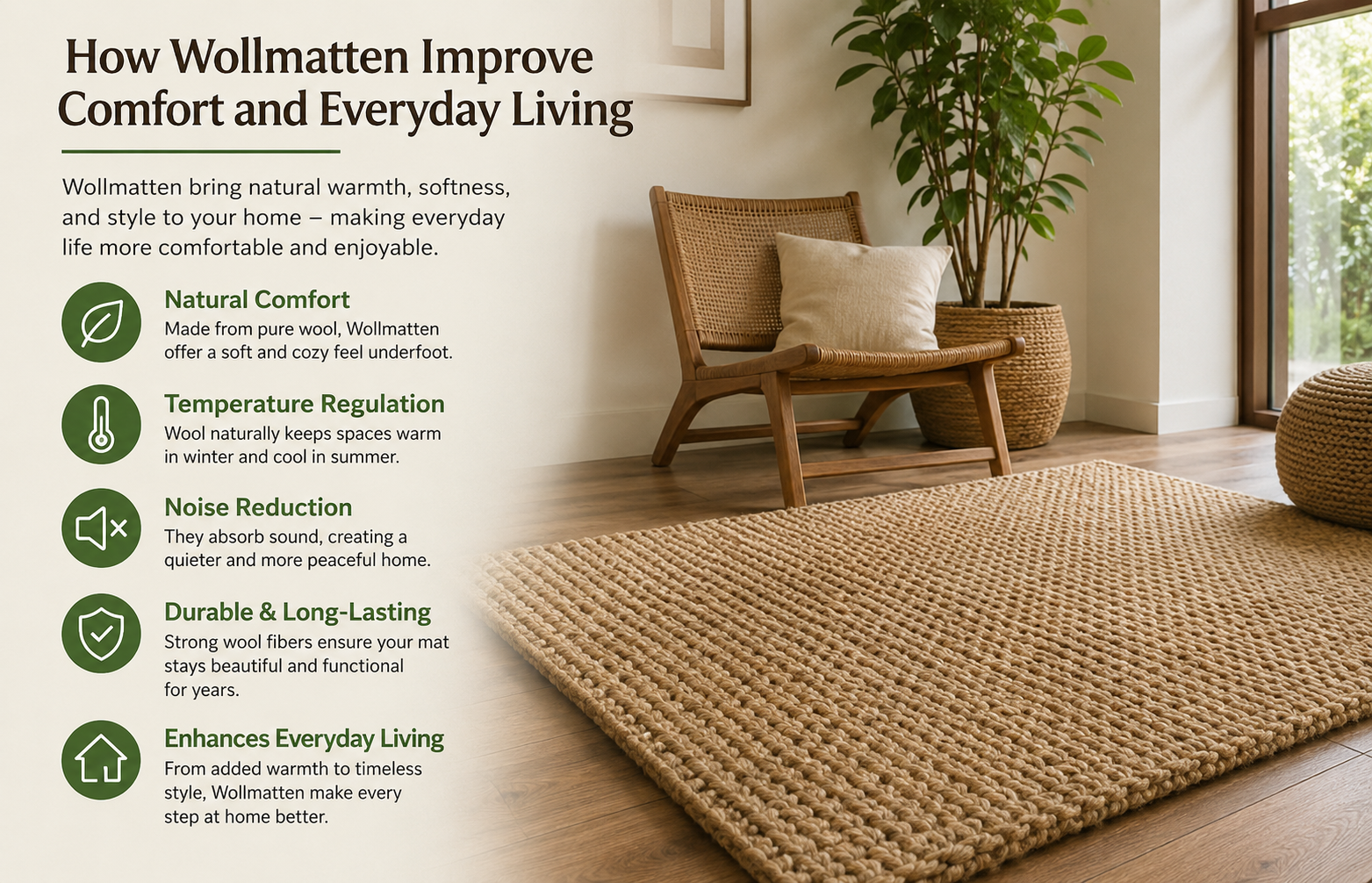
Walk barefoot across a cold stone floor on a winter morning, and the need for a good rug becomes immediately obvious. Now imagine replacing that sharp chill with the quiet warmth of natural wool underfoot — that is the difference a Wollmatte makes in daily life.
Wollmatten, the German term for wool mats or wool rugs, are not simply decorative floor coverings. They are functional items rooted in centuries of Alpine and Northern European living, where managing cold, moisture, and comfort was a matter of necessity. Today, they continue to earn their place in modern homes for very practical reasons.
What Makes Wool Different From Synthetic Alternatives
Most synthetic rugs and mats are made from nylon, polyester, or polypropylene — materials that are cheap to produce and easy to clean, but offer little in terms of natural comfort or climate regulation.
Wool fibres are structurally hollow. This microscopic hollow core is what gives wool its ability to trap air and regulate temperature — keeping your feet warm in winter and surprisingly cool in summer. No synthetic material replicates this passively.
Beyond temperature, wool fibres are naturally crimped, which gives them resilience. A high-quality Wollmatte bounces back after foot traffic rather than flattening out over months of use. This is not marketing — it is basic fibre science, and it is why wool mats outlast cheaper alternatives by years.
Everyday Benefits That Actually Matter
1. Thermal Comfort Underfoot
Cold floors are one of the most overlooked sources of discomfort at home. In apartments, older homes, and spaces with tile or hardwood flooring, the floor temperature can drop significantly in colder months. Wollmatten act as a thermal buffer — reducing the shock of stepping onto a cold surface and maintaining a warmer microclimate in frequently used areas such as bedside, kitchen, or bathroom floors.
This is not a luxury concern. Persistent cold underfoot contributes to joint stiffness, especially in older adults, and creates a low-level discomfort that affects how relaxing a space truly feels.
2. Natural Sound Absorption
Hard floors reflect sound. This is a well-documented acoustic problem in urban apartments and open-plan living spaces. Wollmatten absorbs sound naturally, reducing echo and the impact noise that travels between floors — footsteps, dropped objects, chair movement.
For anyone working from home, living in a multi-story building, or sharing a space with children, this acoustic softening makes a tangible difference in the noise quality of a room.
3. Air Quality and Humidity Regulation
Wool is hygroscopic — it can absorb up to 35% of its own weight in moisture from the surrounding air without feeling damp. In rooms where humidity fluctuates, such as kitchens or bathrooms, a Wollmatte helps passively moderate moisture levels.
Additionally, wool does not off-gas volatile organic compounds (VOCs) the way many synthetic materials do. For households with asthma, allergies, or young children, this matters.
4. Safety Through Natural Grip and Cushioning
A well-constructed Wollmatte with a non-slip backing reduces the risk of slipping — particularly relevant in entryways and bathrooms. Wool also provides natural cushioning, reducing fatigue during extended standing, which matters in a kitchen or a workspace where you stand for long periods.
Where Wollmatten Fit Best in a Home
- Bedroom — Placed beside the bed, a wool mat transforms the first step of the morning from an unpleasant one to a comfortable one. The psychological impact of this small change is underrated.
- Living Room — A larger Wollmatte defines a seating area, anchors furniture, and improves the acoustic warmth of the room simultaneously.
- Kitchen — Anti-fatigue properties make this the highest-return placement for anyone who cooks regularly.
- Entryway — Wool's natural dirt-trapping structure captures debris effectively, reducing what gets tracked into the rest of the home.
- Children's Spaces — Non-toxic, naturally fire-resistant, and cushioned — wool ticks every practical box for a child's room or play area.
Choosing the Right Wollmatten: What to Look For
Not all wool mats are equal. When evaluating a purchase, consider these factors:
- Wool content: Look for 100% natural wool or a high-wool-content blend. Avoid products that use the term loosely to describe a primarily synthetic mat with minimal wool inclusion.
- Pile height and density: Higher density means better durability. A loosely constructed pile will flatten and wear far sooner.
- Backing material: Natural latex or cotton backing offers grip without the off-gassing associated with synthetic rubber.
- Origin and certifications: Wool sourced and processed in regions with strong animal welfare and environmental standards (such as New Zealand, Austria, or Germany) typically means higher fibre quality and more consistent production.
The Long View: Cost Per Year of Comfort
A quality Wollmatten costs more upfront than a budget synthetic rug. But spread that cost across a lifespan of 10 to 20 years — which is realistic for a well-made wool mat with reasonable care — and the economics shift entirely.
Cheaper rugs flatten, pill, or shed within two to three years. They end up in a landfill. Wool, being a natural protein fibre, is biodegradable. The investment aligns with both long-term value and reduced household waste.
Final Thought
Wollmatten improves everyday living in ways that are easy to overlook until you have experienced the difference firsthand. Warmer floors, quieter rooms, cleaner air, and safer footing — none of these is dramatic claims. They are quiet, cumulative improvements to the quality of daily life that a good wool mat delivers reliably, year after year.
If comfort at home matters to you, it is worth looking at what is underfoot.

 English