


 SPARK Website
What Materials Are Used in Andrology Room Construction?
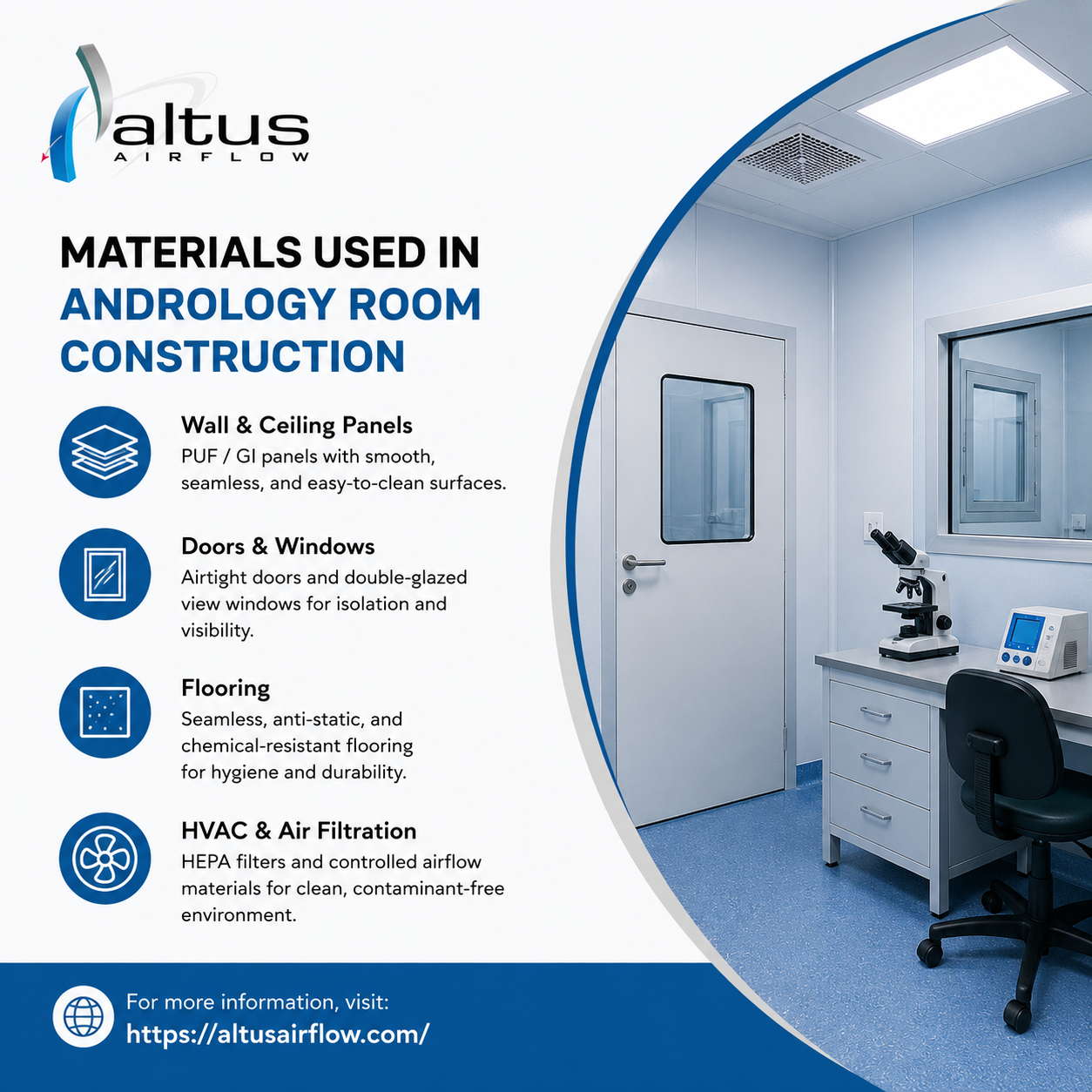
Introduction
The fertility and reproductive healthcare industry has advanced rapidly over the years, leading to increased demand for specialized laboratory environments capable of supporting sensitive reproductive procedures. Modern fertility clinics and reproductive laboratories require highly controlled environments where contamination prevention, hygiene, airflow management, and environmental stability are carefully maintained. This is why professional Andrology Room Design focuses heavily on selecting high-quality construction materials that support sterility, durability, safety, and operational efficiency. Companies like Altus Airflow help fertility clinics establish advanced andrology laboratories using specialized materials and integrated engineering systems designed for modern reproductive healthcare applications.
Understanding Andrology Room Construction
Professional Andrology Room Design involves the integration of specialized materials and technologies that support:
- Contamination control
- Sterile airflow
- Environmental stability
- Easy cleaning
- Long-term durability
- Laboratory safety
Every construction material is carefully selected to maintain laboratory hygiene and support sensitive fertility procedures.
Importance of Material Selection in Andrology Labs
The quality of construction materials directly affects:
- Air quality
- Contamination prevention
- Sample protection
- Laboratory maintenance
- Operational efficiency
Since reproductive samples are highly sensitive, laboratories require materials that support sterile and stable environments.
Modular Wall Panels
One of the most important materials used in andrology room construction is modular wall paneling.
Common wall panel materials include:
- Stainless steel
- Powder-coated galvanized steel
- High-pressure laminate panels
- Aluminum composite panels
These materials provide:
- Smooth surfaces
- Antibacterial properties
- Easy cleaning
- Corrosion resistance
Wall panels in a professional Andrology Room Design are installed seamlessly to reduce dust accumulation and microbial growth.
Stainless Steel Panels
Stainless steel is widely used in fertility laboratory construction because of its hygienic properties.
Advantages include:
- Corrosion resistance
- Chemical resistance
- Long lifespan
- Easy sterilization
- Smooth non-porous surfaces
Stainless steel helps maintain sterile laboratory environments even after repeated cleaning and disinfecting.
Powder-Coated Galvanized Steel
Galvanized steel panels are commonly powder-coated for improved hygiene and durability.
Benefits include:
- Structural strength
- Rust protection
- Easy maintenance
- Long-term reliability
Powder-coated surfaces also improve the aesthetic appearance of laboratory interiors.
High-Pressure Laminate Panels
High-pressure laminate (HPL) panels are frequently used in modular laboratory construction.
Advantages include:
- Scratch resistance
- Moisture resistance
- Antibacterial surfaces
- Decorative flexibility
HPL panels are suitable for cleanroom-based laboratory environments.
Aluminum Composite Panels
Aluminum composite panels are lightweight and durable materials commonly used in laboratory ceilings and partitions.
Benefits include:
- Corrosion resistance
- Lightweight structure
- Smooth finish
- Easy installation
These panels support efficient modular construction.
Modular Ceiling Systems
Ceiling systems in andrology laboratories are designed using hygienic and durable materials.
Common ceiling materials include:
- Powder-coated steel
- Aluminum panels
- Stainless steel systems
Ceilings support:
- HVAC integration
- Laminar airflow diffusers
- Lighting systems
- Utility access
Modular ceilings improve maintenance efficiency and contamination control.
Seamless PVC Flooring
Flooring is a critical component of laboratory hygiene management.
Seamless PVC flooring is commonly used because it provides:
- Antibacterial properties
- Slip resistance
- Easy cleaning
- Chemical resistance
Seamless flooring prevents dirt accumulation and microbial growth.
Epoxy Flooring Systems
Epoxy flooring is another popular choice in laboratory construction.
Advantages include:
- Seamless surfaces
- High durability
- Moisture resistance
- Chemical resistance
Epoxy flooring improves long-term maintenance efficiency.
Conductive Flooring Materials
Certain laboratory environments use conductive flooring systems to reduce static electricity.
Benefits include:
- Electrical safety
- Equipment protection
- Reduced static buildup
Conductive flooring is especially important for sensitive laboratory equipment.
Hermetically Sealed Doors
Andrology laboratories require airtight doors to maintain contamination-free environments.
These doors are generally constructed using:
- Stainless steel
- Powder-coated steel
- Aluminum frames
Features include:
- Air-tight sealing
- Smooth operation
- Easy cleaning
- Automatic closing systems
Hermetically sealed doors support positive pressure environments.
Laboratory Observation Windows
Observation windows are usually constructed using:
- Double-glazed toughened glass
- Laminated safety glass
Benefits include:
- Visibility
- Sound insulation
- Air-tight sealing
- Safety protection
Double glazing also improves thermal insulation.
HVAC Ducting Materials
HVAC systems require durable ducting materials that support clean airflow circulation.
Common materials include:
- Galvanized iron ducts
- Aluminum ducts
- Stainless steel ducting
These materials maintain:
- Clean airflow
- Structural strength
- Corrosion resistance
Proper HVAC ducting supports air quality management in a professional Andrology Room Design.
HEPA Filter Housing Materials
HEPA filtration systems use specialized housing materials such as:
- Stainless steel
- Aluminum frames
- Powder-coated steel casings
These materials support contamination control and filter durability.
Laminar Airflow Diffusers
Laminar airflow systems use specialized diffusers made from:
- Aluminum
- Stainless steel
- Powder-coated metal
These materials help distribute filtered air uniformly across laboratory workspaces.
Medical Gas Pipeline Materials
Some advanced fertility laboratories require medical gas systems.
Pipeline materials generally include:
- Copper pipes
- Stainless steel fittings
- Medical-grade valves
Copper piping offers:
- Corrosion resistance
- Long operational life
- Safe gas transportation
Medical gas systems support laboratory functionality.
Electrical Infrastructure Materials
Laboratory electrical systems require reliable and safe materials.
Common materials include:
- Copper wiring
- PVC conduits
- Fire-resistant cables
- Insulation systems
These materials improve electrical safety and operational reliability.
Fire-Resistant Materials
Laboratory construction includes fire-resistant materials for enhanced safety.
Examples include:
- Fire-rated panels
- Flame-resistant cables
- Fireproof insulation materials
Fire-resistant systems improve healthcare compliance and safety.
Antibacterial Surface Coatings
Many laboratory surfaces include antibacterial coatings that help reduce microbial growth.
Benefits include:
- Improved hygiene
- Easier cleaning
- Better contamination control
Antibacterial coatings are important in fertility laboratories.
Acoustic Insulation Materials
Fertility laboratories require quiet environments for concentration and privacy.
Acoustic materials include:
- Soundproof wall panels
- Acoustic ceiling systems
- Noise-reduction insulation
These materials improve staff comfort and patient privacy.
Cleanroom-Compatible Materials
Modern andrology laboratories often use cleanroom-compatible materials that generate minimal particles.
Benefits include:
- Low particulate emission
- Smooth surfaces
- Easy sterilization
Cleanroom-compatible materials improve air quality and contamination control.
Chemical-Resistant Surfaces
Laboratory surfaces are frequently exposed to disinfectants and cleaning chemicals.
Chemical-resistant materials help prevent:
- Surface damage
- Corrosion
- Material deterioration
These materials improve long-term durability.
Importance of Non-Porous Materials
Non-porous materials are preferred in laboratory construction because they do not absorb contaminants or moisture.
Benefits include:
- Better hygiene
- Easier sterilization
- Reduced microbial growth
Non-porous materials improve contamination prevention.
Smart Modular Construction Technologies
Modern andrology laboratories increasingly use smart modular technologies such as:
- Pre-engineered wall systems
- Integrated utility panels
- Smart airflow systems
- Digital environmental monitoring
These technologies improve laboratory efficiency and scalability.
Sustainable Construction Materials
Healthcare facilities are increasingly adopting sustainable building materials.
Examples include:
- Recyclable aluminum
- Eco-friendly coatings
- Energy-efficient insulation materials
Sustainable construction supports environmental responsibility.
Compliance With Healthcare Standards
Construction materials used in fertility laboratories must comply with healthcare standards related to:
- Hygiene
- Fire safety
- Air quality
- Electrical safety
Compliance improves laboratory accreditation and operational reliability.
Future Trends in Laboratory Construction Materials
Future andrology laboratories may include:
- Self-disinfecting surfaces
- Nanotechnology coatings
- Smart antimicrobial materials
- AI-integrated cleanroom systems
These innovations will continue improving laboratory performance and contamination control.
Importance of Professional Laboratory Engineering
Laboratory construction requires specialized engineering expertise in:
- Cleanroom technologies
- HVAC integration
- Modular construction
- Environmental control
Professional engineering ensures long-term operational efficiency and laboratory reliability.
Conclusion
A professionally engineered Andrology Room Design depends heavily on specialized construction materials that support contamination prevention, airflow management, and cleanroom performance. Companies like Altus Airflow contribute significantly to developing advanced fertility laboratories equipped with durable modular infrastructure, sophisticated HVAC systems, and cleanroom-compatible technologies. By partnering with experienced providers such as Altus Airflow, healthcare institutions can establish future-ready andrology laboratories that support superior reproductive healthcare and operational excellence.
FAQs
1. What is Andrology Room Design?
Andrology Room Design involves creating specialized fertility laboratory environments using modular construction, HVAC systems, cleanroom technologies, and contamination-control materials for reproductive healthcare procedures.
2. What materials are commonly used in andrology room walls?
Common materials include stainless steel, powder-coated galvanized steel, high-pressure laminate panels, and aluminum composite panels.
3. Why is seamless flooring important in andrology laboratories?
Seamless flooring prevents dirt accumulation, improves hygiene, and reduces contamination risks.
4. What materials are used in HVAC ducting systems?
HVAC ducting systems typically use galvanized iron, aluminum, and stainless steel materials.
5. Why are hermetically sealed doors used in fertility laboratories?
They help maintain positive pressure environments and prevent contaminated external air from entering the laboratory.
Read Our Previous Blog ---------------> What role does laminar airflow play in cardiac operation theatres?

 عربي
عربي