


 SPARK Website
Sequence Learning and Natural Language Processing
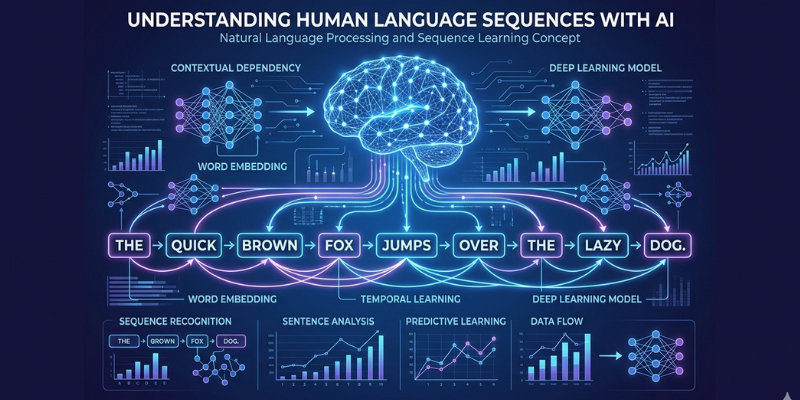
Sequence learning is a key concept in modern artificial intelligence that helps machines understand ordered data. Unlike simple data processing, sequence learning focuses on information where order matters, such as sentences, speech, or time-based signals. In natural language processing, this becomes especially important because human language is naturally structured in sequences of words that depend on context and order. This is why understanding sequence learning is essential for building intelligent language systems that can read, interpret, and respond like humans. If you want to strengthen your foundation in these concepts, consider enrolling in an Artificial Intelligence Course in Trivandrum at FITA Academy, where you can explore structured learning paths that simplify core AI topics.
Understanding How Sequence Learning Works
Sequence learning allows machines to analyze data step by step while remembering what came before. This is important because the meaning in language often depends on earlier words in a sentence. For example, the meaning of a word can change based on the words surrounding it. Traditional machine learning models struggle with this kind of dependency, but sequence learning models are designed to handle it effectively.
In natural language processing, sequence learning is used to break sentences into smaller parts and understand relationships between them. This helps machines perform tasks like translation, sentiment analysis, and speech recognition. These models learn patterns over time and improve their predictions based on context. By training on large datasets, they gradually become better at understanding how language flows and how meaning is built across sequences.
Role of Memory in Sequence Models
One of the most important features of sequence learning is memory. Unlike basic models that treat every input independently, sequence models remember previous inputs to make better predictions. This memory helps in understanding long sentences where early words influence later meaning.
For example, in a sentence describing an event, the subject introduced at the beginning must be remembered throughout the sentence to maintain accuracy. This ability makes sequence learning powerful in natural language processing tasks such as chatbots, voice assistants, and text prediction systems. The better the memory handling, the more natural and human-like the output becomes.
Applications in Natural Language Processing
Sequence learning plays a major role in many real-world applications of natural language processing. Machine translation systems depend on it to change sentences from one language to another while maintaining their meaning. Voice assistants use it to understand spoken commands and respond correctly based on context. Even search engines use sequence-based models to understand user queries more accurately.
Sentiment analysis is another important application where sequence learning helps identify emotions in text. Through the examination of word placement and context, systems can identify if a message carries a positive, negative, or neutral connotation. These applications show how deeply sequence learning is integrated into everyday digital experiences.
For learners who want to dive deeper into these practical applications and understand how AI systems are built in real environments, exploring the Artificial Intelligence Course in Kochi can provide hands-on exposure to tools and techniques used in the industry.
Challenges in Sequence Learning
Despite its advantages, sequence learning comes with challenges. One major issue is handling long sequences of data. As the sequence becomes longer, it becomes harder for models to remember earlier information accurately. This may result in a lack of context and inaccurate forecasts.
Another challenge is computational complexity. Sequence models require more processing power compared to simpler models because they analyze data step by step. Researchers continuously work on improving efficiency and accuracy to overcome these limitations and make models more scalable.
Future of Sequence Learning in NLP
The future of sequence learning in natural language processing is very promising. With advancements in deep learning, models are becoming better at understanding context and generating human-like responses. New architectures are improving how machines handle long sequences and complex language structures.
As AI continues to evolve, sequence learning will remain a core foundation for building smarter systems. It will play a major role in conversational AI, real-time translation, and advanced text generation tools that can assist in various industries.
For those aiming to build a strong career in artificial intelligence and explore advanced concepts in depth, joining an Artificial Intelligence Course in Pune can help you gain structured knowledge and practical skills needed for future AI roles.
Also check: How Optimization Shapes Intelligent Systems

 English