


 SPARK Website
How Do NICU Manufacturers Design Units for Neonatal Safety?
Introduction
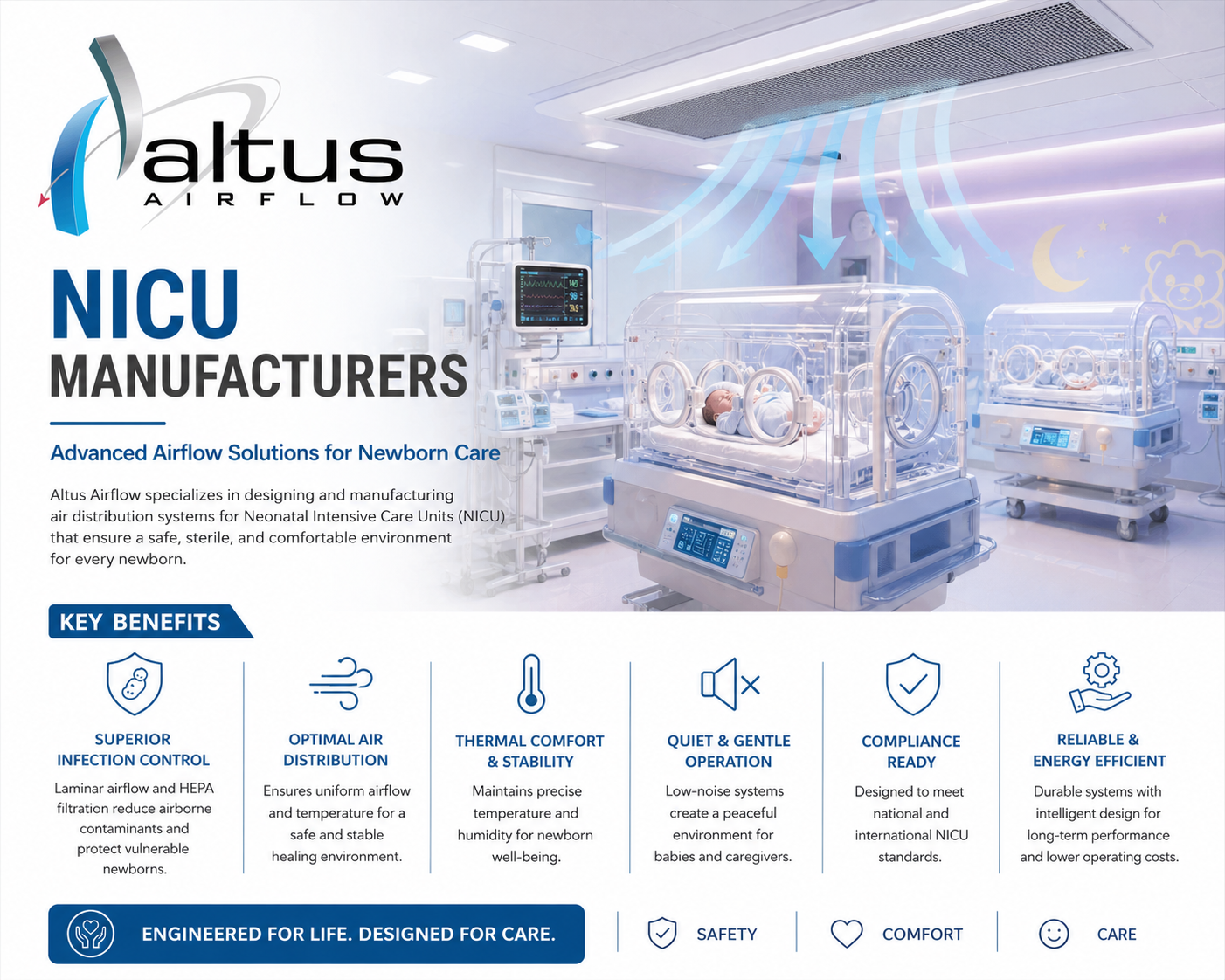
Neonatal Intensive Care Units (NICUs) are highly specialized hospital environments designed to care for premature babies, low-birth-weight infants, and newborns with medical complications. Because newborns are extremely vulnerable, every aspect of NICU design must prioritize safety, precision, and infection prevention. NICU Manufacturers play a crucial role in creating controlled, technology-driven environments that support both medical treatment and healthy development. Their design approach focuses on combining clinical efficiency with neonatal comfort and long-term safety outcomes.
Why Neonatal Safety is a Priority in NICU Design
Newborns in NICUs often have underdeveloped immune systems, fragile organs, and limited ability to regulate body temperature. Even minor environmental changes can affect their health significantly.
For this reason, NICU design must ensure strict control over air quality, temperature, humidity, noise levels, infection risks, and medical intervention accuracy. Safety-focused design helps reduce complications and improves survival rates in critical neonatal cases.
Controlled Environmental Design
One of the primary considerations for NICU Manufacturers is environmental control.
NICUs are designed with systems that maintain stable temperature and humidity levels, ensuring that newborns remain in a physiologically safe environment. Incubators and radiant warmers are integrated into the layout to support thermal regulation.
Lighting systems are carefully designed to mimic natural day-night cycles while minimizing stress on infants.
Advanced Infection Control Planning
Infection prevention is one of the most critical aspects of NICU safety.
Manufacturers incorporate HEPA-filtered HVAC systems that remove airborne contaminants and maintain sterile air quality. Controlled airflow systems help prevent cross-contamination between patient zones.
Non-porous, antimicrobial materials are used for walls, flooring, and surfaces to reduce bacterial growth and simplify cleaning processes.
Specialized Incubator Integration
Incubators are central to neonatal safety design.
NICU manufacturers ensure proper placement of incubators to allow easy access for healthcare providers while maintaining isolation from external contaminants. Modern incubators provide precise control of temperature, humidity, oxygen levels, and noise reduction.
This integration ensures that premature infants receive stable and controlled care conditions.
Smart Monitoring and Real-Time Alerts
Continuous monitoring is essential in neonatal care.
NICUs are designed with advanced monitoring systems that track vital signs such as heart rate, oxygen saturation, respiratory rate, and temperature. These systems provide real-time alerts to healthcare staff in case of abnormalities.
Centralized monitoring stations allow nurses and doctors to observe multiple infants simultaneously, improving response time and clinical efficiency.
Medical Gas Pipeline Safety
Reliable oxygen and respiratory support are essential for neonatal survival.
NICU manufacturers design medical gas pipeline systems with strict safety standards, ensuring uninterrupted oxygen supply and backup support systems. These systems include pressure regulators, alarms, and safety valves to prevent disruptions.
Safe gas delivery is critical for infants requiring respiratory assistance.
Noise and Vibration Reduction
Excessive noise can negatively impact neonatal development.
Designers incorporate sound-absorbing materials, insulated walls, and strategic equipment placement to reduce noise levels in NICUs. Equipment is selected and arranged to minimize vibration and operational sound.
A quieter environment supports better sleep cycles and neurological development in newborns.
Ergonomic and Efficient Layout Design
NICU layouts are carefully planned to improve workflow efficiency for healthcare professionals.
Bed spacing is optimized to allow easy access for medical staff while maintaining infection control standards. Nursing stations are positioned centrally for better visibility and faster response times.
This ergonomic design ensures that medical teams can provide efficient and timely care.
Family-Centered Design Elements
Modern NICUs also consider the emotional needs of families.
Some NICU Manufacturers include family-friendly zones, private consultation areas, and controlled access spaces where parents can interact safely with their newborns.
Family involvement is known to improve emotional bonding and support neonatal recovery.
Emergency Preparedness Systems
NICUs must be prepared for sudden medical emergencies.
Designs include strategically placed emergency equipment such as crash carts, resuscitation units, and defibrillators. Clear pathways and unobstructed access routes ensure rapid response during critical situations.
Backup power systems also guarantee uninterrupted operation of life-support equipment.
Data Integration and Digital Connectivity
Modern NICUs use integrated digital systems for better coordination and record-keeping.
Patient data from monitoring devices is stored electronically and shared across hospital systems. This improves communication between departments and supports better clinical decision-making.
Digital integration also helps in long-term tracking of neonatal health progress.
Hygiene and Waste Management Systems
Strict hygiene protocols are essential in NICU environments.
Manufacturers include dedicated hand hygiene stations, sterilization zones, and biomedical waste disposal systems within the design. These systems help maintain cleanliness and reduce infection risks.
Proper waste segregation ensures safe handling of medical materials.
Conclusion
NICU Manufacturers design neonatal intensive care units with a strong focus on safety, precision, and environmental control. Through advanced infection control systems, incubator integration, smart monitoring technologies, medical gas safety, and ergonomic layouts, they create highly specialized environments for newborn care. Every design element is carefully planned to protect vulnerable infants while supporting healthcare professionals in delivering effective treatment. A well-designed NICU significantly improves neonatal outcomes and ensures a safer start to life.
FAQs
1. How do NICU Manufacturers design units for neonatal safety?
NICU Manufacturers use controlled environments, infection prevention systems, smart monitoring, incubator integration, and ergonomic layouts to ensure neonatal safety.
2. Why is environmental control important in NICUs?
It helps maintain stable temperature, humidity, and air quality essential for premature and critically ill newborns.
3. How is infection controlled in NICU design?
Through HEPA filtration, antimicrobial materials, controlled airflow systems, and strict hygiene planning.
4. What role do incubators play in NICU safety?
Incubators provide controlled temperature, humidity, and oxygen levels to support infant stability and development.
5. Why is digital monitoring important in NICUs?
It enables real-time tracking of vital signs and improves response time during medical emergencies.
Read Our Previous Blog----------->How do recovery room designers optimize patient safety and workflow?

 English